Panettone and gluten: what every buyer needs to know
Artisanal sourdough panettone contains gluten. Without exception.
Three points to remember before going further:
- Yes, it contains gluten: any product sheet for a classic panettone must include "cereals containing gluten" among the allergens.
- No, sourdough does not remove it: long fermentation improves digestibility for some mild sensitivities but does not eliminate gluten.
- Immediate action: if you are buying as a gift, check the label. The absence of a certified "gluten-free" statement means the product contains gluten.
Key points
Artisanal sourdough panettone inherently contains gluten, and long fermentation improves its digestibility without ever making it safe for people with celiac disease.
| Point | Details |
|---|---|
| Gluten present without exception | Any panettone made with wheat flour contains gluten, sourdough or not. |
| Long fermentation: limited benefit | 72-hour fermentation improves digestibility for mild sensitivities, not for celiac disease. |
| Three purchasing criteria to check | Strong flour, two-dough process, allergens declared on the product sheet. |
| Shelf life up to 5 weeks | A well-packaged panettone can be kept sealed for up to five weeks, ideal for advance gifting. |
| Christophe Louie: artisanal reference | Live sourdough, Italian flours, sweet/savory range, B2B options, and national delivery from Paris. |
Table of contents
- Why is gluten essential to the structure of panettone?
- What long fermentation does (and does not do) to gluten
- How to verify that a panettone is safe for your recipient?
- Who should avoid sourdough panettone, and what to offer instead?
- How to buy and give artisanal sourdough panettone in France?
- How to store sourdough panettone for several weeks?
- Christophe Louie’s 72-hour sourdough panettone: why choose it for a premium gift?
- Why I do not compromise on the traditional method
- Christophe Louie: artisanal sourdough panettone delivered everywhere in France
- Sources
Why is gluten essential to the structure of panettone?
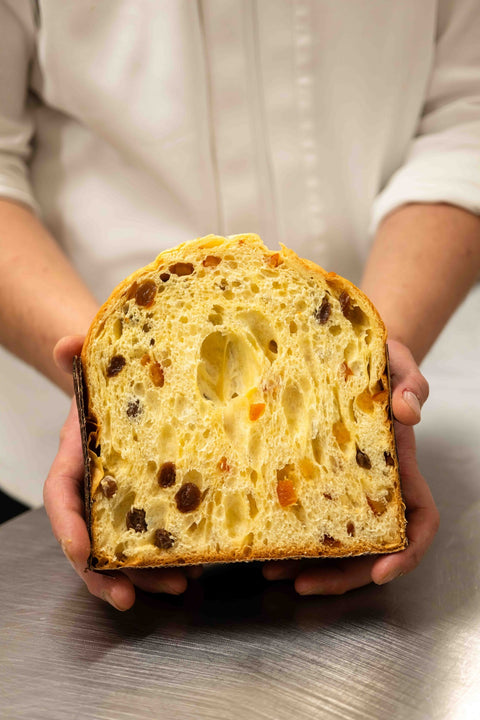
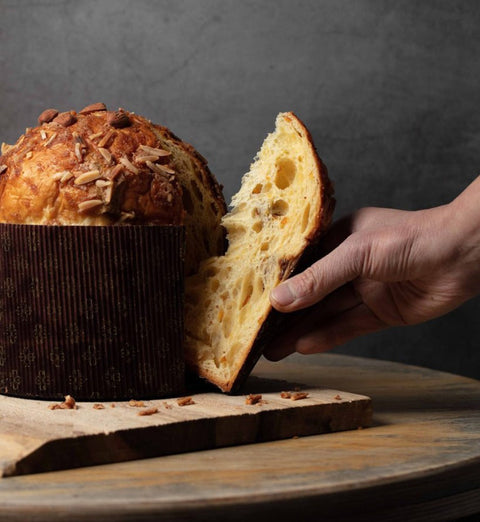
Panettone is not an ordinary brioche. Its stringy crumb, regular air pockets, and ability to absorb butter, egg yolks, and candied fruits without collapsing—all of this relies on a particularly developed gluten network. Without gluten, the traditional structure simply cannot exist.
Serious artisans use so-called "strong" flours—often Manitoba type or technical Italian flours like those from Grassi or Dalla Giovanna mills—whose high protein content allows for the construction of this network. It is this network that traps fermentation gases and supports the weight of the fillings during baking and cooling.
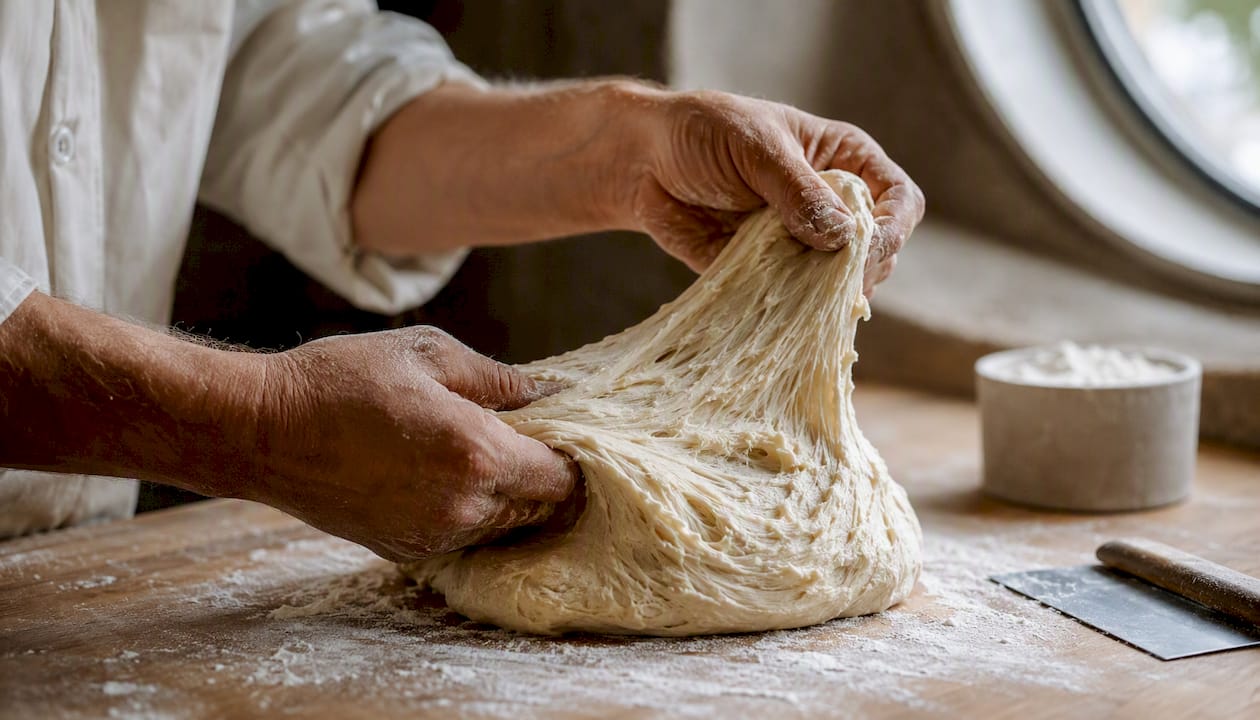
The two-dough method further strengthens this network: a first dough develops the basic structure, and the second gradually enriches it with fats without breaking it. Removing gluten from this equation means removing the entire mechanics of the product.
Pro tip: On an artisanal product sheet, look for terms like "strong flour," "lievito madre," and "two-dough process." Their simultaneous presence is a reliable indicator of high-end production.
What long fermentation does (and does not do) to gluten
Long fermentation with natural sourdough is often misunderstood. It genuinely improves certain things—but not always the ones people imagine.
Here is what actually happens during the 72 hours of fermentation:
- Partial protein degradation: the yeasts and lactobacilli in the lievito madre act on wheat proteins, making them more digestible for some people.
- Reduction of FODMAPs: fermentation breaks down part of the fermentable sugars, which can improve tolerance in people suffering from irritable bowel syndrome.
- Aromatic development: the organic acids produced give panettone its characteristic flavor complexity.
- Prolonged natural preservation: the slight acidification of the crumb slows microbial development, contributing to a shelf life of up to five weeks.
What fermentation does not do: it does not remove gluten. The degradation remains partial, and the proteins responsible for the immune reaction in celiac individuals remain present in significant quantities.
Long fermentation can make some breads easier to digest for mild sensitivities, but any claim that sourdough totally eliminates gluten is scientifically inaccurate and potentially dangerous for people with celiac disease.
For a mild sensitivity or irritable bowel syndrome, a 72-hour sourdough panettone may be better tolerated than an industrial product. For confirmed celiac disease or severe intolerance, consult a health professional before consumption.
How to verify that a panettone is safe for your recipient?
In France, regulations require the declaration of all major allergens on the packaging or online product sheet. For panettone, this systematically includes cereals containing gluten, as well as eggs, milk, and sometimes soy. Commercial product sheets clearly illustrate this: no classic panettone escapes this mention.
Practical checklist before purchasing:
- "Contains" statement: verify that allergens are listed explicitly, not just in tiny print in the ingredient list.
- Absence of "gluten-free" certification: if this mention does not appear with a certified logo (crossed-out wheat stalk), the product contains gluten.
- Traces and cross-contamination: for highly sensitive individuals, look for the statement "may contain traces of..." or ask the producer about their cleaning procedures.
- For B2B or corporate gifting orders: request a technical sheet with ingredient traceability and written confirmation of the absence of gluten-free procedures in the workshop.
For a person with celiac disease, the only safe option remains a certified gluten-free product, made in a dedicated workshop. An artisanal sourdough panettone, however careful, does not meet this criterion.
Who should avoid sourdough panettone, and what to offer instead?
Some recipients cannot consume traditional panettone, regardless of the fermentation quality:
- People with celiac disease: immune reaction to gluten, no tolerance possible.
- Those suffering from severe non-celiac gluten intolerance: significant digestive symptoms even in small quantities.
- People with multiple allergies including wheat.
For a gift destined for these profiles, there are two options:
- Order a certified gluten-free panettone from an artisan or specialized grocery store, verifying the certification and the dedicated workshop.
- Opt for another pastry guaranteed to be gluten-free (macarons, certain almond cakes) and include an explanatory note.
Practical advice for gifting: if you are ordering for a group or a works council, always include an ingredient list in the box and provide a substitute option when ordering. A forward-thinking buyer avoids delicate situations.
How to buy and give artisanal sourdough panettone in France?
A good artisanal panettone is recognizable even before opening it. Here is what to check:
- Ingredients: strong wheat flour (Manitoba or equivalent), lievito madre, butter, egg yolks, quality candied fruits or chocolate.
- Process: explicit mention of long fermentation (several dozen hours in two successive doughs) and work with two doughs.
- Allergens: clearly declared, with information on possible traces.
- Flour origin: specialized Italian mills (Grassi, Dalla Giovanna) are a recognized technical reference.
For gifting, plan ahead. Personalized or bulk B2B orders generally require 5 to 10 days' notice. Click & collect in-store remains the fastest solution for last-minute purchases.
| Parameter | Reference value |
|---|---|
| Fermentation duration | 72 hours (two successive doughs) |
| Sealed storage | Several weeks |
| Baking temperature | Gentle and progressive (according to Valrhona technical sheets) |
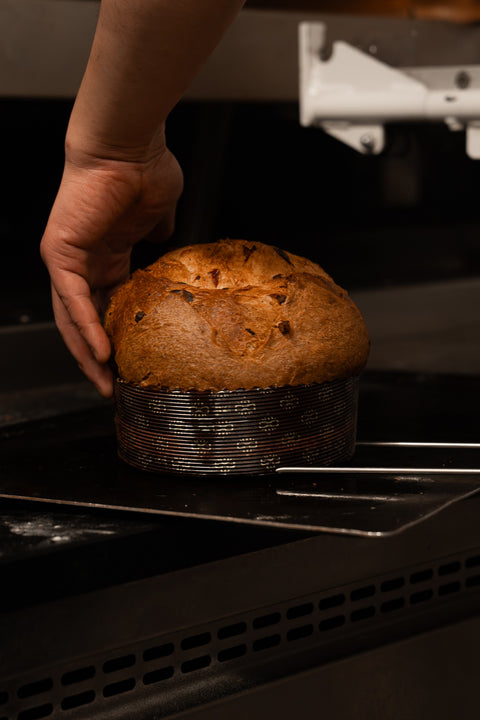
| Cooling | Upside down, to preserve the gluten network |
For gift packaging, prefer a rigid box with a ribbon, a personalized card, and, for B2B orders, the possibility of branding with company colors. A carefully chosen drink pairing completes the gift set: artisanal spirits or non-alcoholic options pair well with the aromatic richness of a sourdough panettone.
How to store sourdough panettone for several weeks?
A well-made and well-packaged panettone keeps remarkably well. A few simple rules to preserve its quality:
- Sealed, at room temperature (18–20°C), away from light and humidity: up to five weeks.
- After opening: wrap it in cling film or place it back in its original packaging. Consume within 5 to 7 days.
- Freezing possible: slice before freezing, thaw at room temperature for 2 to 3 hours. Never in the microwave, which destroys the stringy crumb.
- Reheating: a few minutes in an oven at 150°C are enough to revive the aromas and texture.
- Signs of quality loss: rancid smell, visible mold, abnormally sticky or dry texture. In these cases, do not consume.
Christophe Louie’s 72-hour sourdough panettone: why choose it for a premium gift?
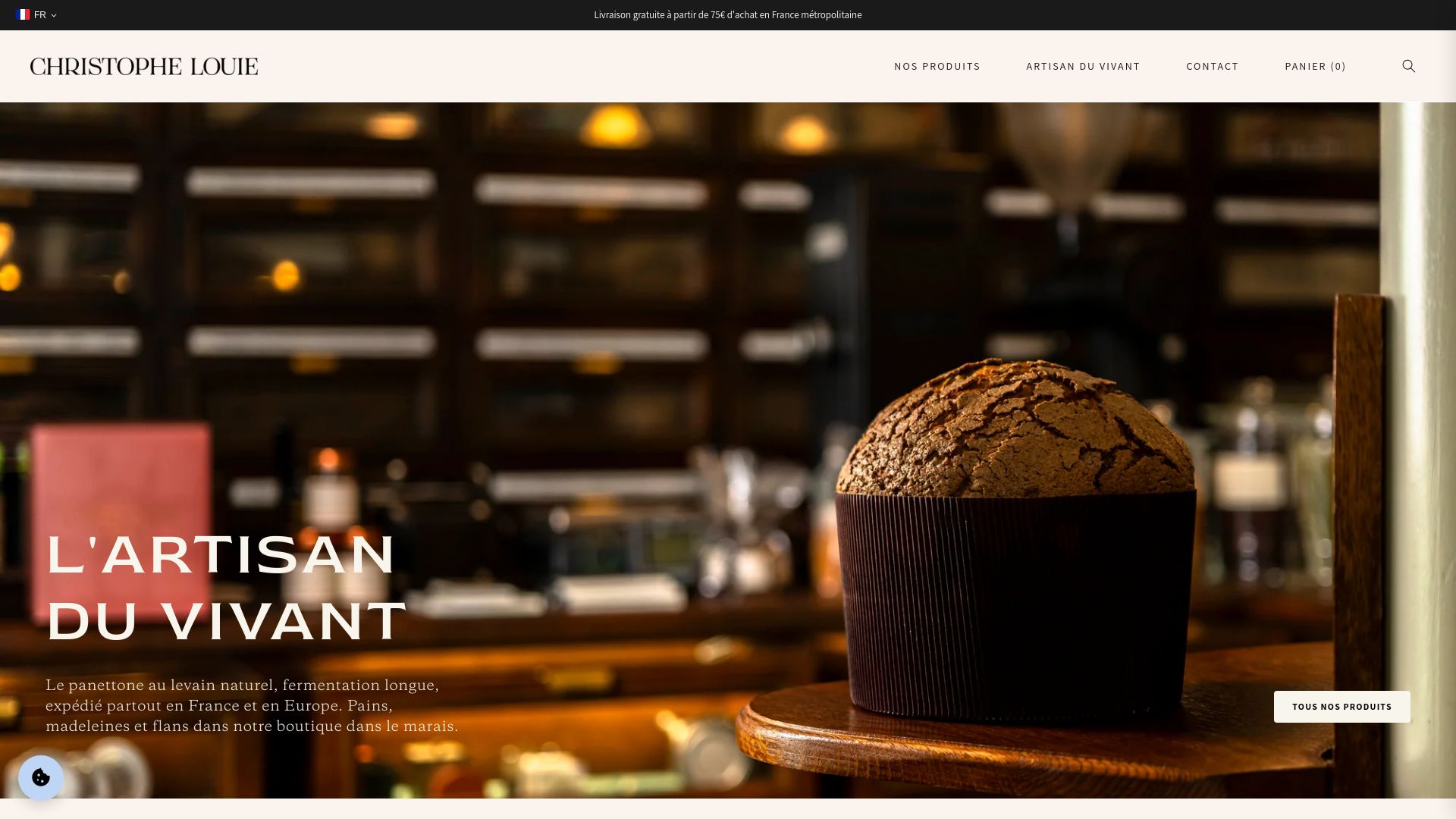
Christophe Louie is an artisanal house located in the Marais (Paris 3rd), founded by pastry chef Christophe Louie, formerly of the Jules Verne and the Grande Épicerie de Paris. Here, panettone is treated as a technical product in its own right, not as a seasonal item.
What concretely distinguishes the offer:
- Live sourdough (lievito madre) hydrated at 40–50%, fed and maintained continuously for stable and reproducible fermentation.
- Two-dough process over several days, with selected Italian flours (Grassi, Dalla Giovanna) for their strength and aromatic profile.
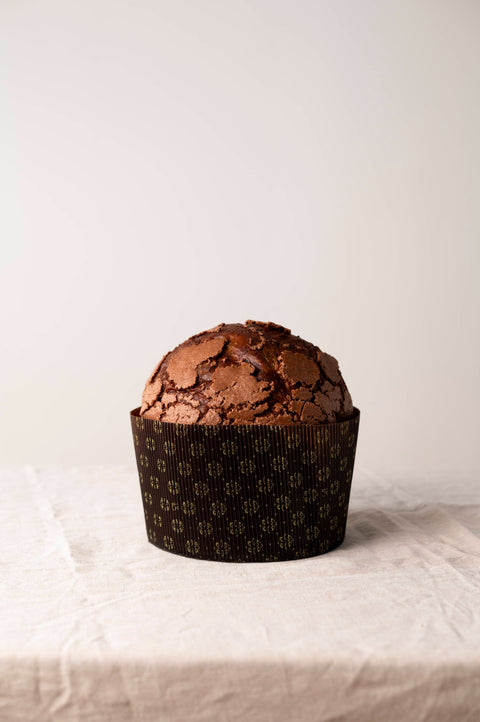
- Sweet and savory range: from the Milanese Classico to the Gianduja chocolate, including the cacio e pepe version for savory lovers.
- Natural preservation for several weeks, without additives, making it an ideal gift for advance orders.
- B2B options: customization, volumes, national delivery, and click & collect in the Marais.
Order directly at Christophelouie or visit the boutique at 12 rue Dupetit-Thouars, Paris 3rd.
Why I do not compromise on the traditional method
Natural sourdough is not a marketing gimmick. It is a technical constraint I chose deliberately because it produces something no accelerated process can replicate: a crumb that pulls apart, persistent aromas, and preservation that lasts without additives.
The two-dough work over 72 hours requires constant attention—temperature, sourdough hydration, kneading timing. Grassi and Dalla Giovanna flours are not chosen by tradition: they have the protein strength necessary to support the progressive enrichment in butter and yolks without the network giving way. It is measurable, reproducible, and that is what justifies the price of a serious artisanal panettone.
For my B2B clients and buyers giving gifts: I am committed to the quality of every batch, the traceability of ingredients, and logistics that respect the product until delivery. If you have specific needs—volumes, customization, tight deadlines—contact me directly.
Christophe Louie: artisanal sourdough panettone delivered everywhere in France
Are you looking for a panettone that keeps its promises, with a transparent technical sheet and packaging worthy of a premium gift? Christophe Louie offers a complete range of sourdough panettones, from classic with candied fruits to savory versions, available year-round in the Marais boutique and via national delivery.
For B2B purchases, works councils, or bulk gift sets, the house offers customization options and adapted logistics. Each order benefits from the same rigor: live sourdough, Italian flours, 72 hours of fermentation, and declared allergens.
Browse the online shop or visit us directly at 12 rue Dupetit-Thouars, Paris 3rd, to choose your panettone and organize your gifting with complete peace of mind.
This article provides general information and does not replace the advice of a qualified physician. Consult a qualified healthcare professional regarding your personal situation before acting on the basis of this content.
Sources
- Fact or Fiction: Is Sourdough Bread Gluten-Free? Nutritionists Respond - ZunZún Blog
- Sourdough Panettone: The Real Recipe (Guide)
- Is sourdough bread gluten-free? - Dr. Henry
- Classic Panettone 500g – Biocoop
- Panettone recipe – Valrhona Selection