Panettone for an afternoon snack: how to choose, serve, and pair it
Yes: panettone is an excellent option for an afternoon snack. For children, opt for a light fruity or citrus panettone; for an afternoon snack between adults, turn to a chocolate version or a sourdough panettone, which is more complex on the palate. Served warm, in generous slices, it is just as perfect at 4 p.m. as it is for a weekend breakfast.
In short:
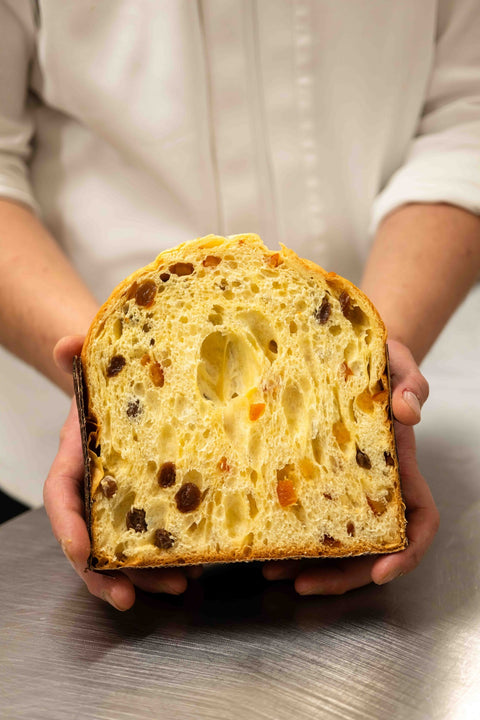
- An artisanal panettone fermented with natural sourdough develops a stringier crumb and more complex aromas than an industrial version.
- The ideal way to cut it is to slice it vertically into regular wedges to preserve the airy structure and stringy texture.
- It is served warm, in a generous slice, and is best accompanied by coffee, black tea, or a sweet wine like Moscato d’Asti.
- Optimal storage is at room temperature, in its original packaging, to avoid the drying effect of the refrigerator.
- The choice of panettone depends on the desired profile: light fruity for children, chocolate or sourdough for a richer and more complex taste.
Table of contents
- Which panettone to choose for an afternoon snack: varieties and flavor profiles
- How to serve and cut a panettone for an afternoon snack
- Pairings and accompaniments for an afternoon snack: drinks and light preparations
- Transforming stale panettone: quick recipes for an afternoon snack
- Storage and when to buy your panettone for an afternoon snack
- Sourdough panettone explained by Maison Christophe Louie
- Why we offer panettone for afternoon snacks all year round
- Where to order a sourdough panettone for your next afternoon snack
- Frequently asked questions
- Sources
Which panettone to choose for an afternoon snack: varieties and flavor profiles
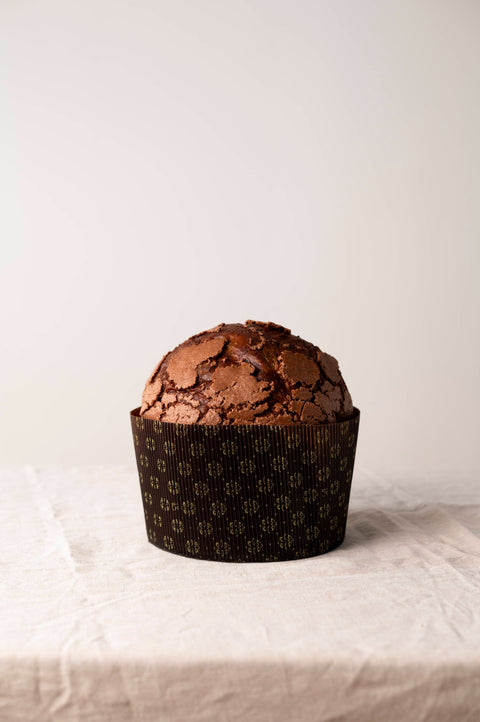
The classic panettone blends candied fruit and raisins in an airy crumb: it is the most popular version, pleasing to both children and grandparents. Chocolate panettone, enriched with gianduja or chips, appeals to those seeking a more indulgent snack and is particularly suitable for adults looking for a bold coffee break. Citrus versions, with candied orange or lemon, add a freshness that lightens the tasting experience in the late afternoon, while pistachio panettone or more modern, sometimes savory creations, are aimed at curious palates.
A few benchmarks help you recognize a good panettone before choosing:
- A stringy crumb that stretches slightly when pulled, a sign of successful fermentation.
- A clean scent of butter and vanilla, without any chemical odor or overpowering alcohol.
- Translucent and fleshy candied fruits that are never overly dry or caramelized.
- A balance between sugar and light acidity, characteristic of a panettone fermented with natural sourdough.
An industrial panettone, fermented in a few hours with baker's yeast, remains decent but more uniform in texture. An artisanal natural sourdough panettone develops more complex aromas thanks to a long fermentation process, which explains the importance of yeast strains and lactic acid bacteria in traditional production and their role in the final flavor profile.
How to serve and cut a panettone for an afternoon snack
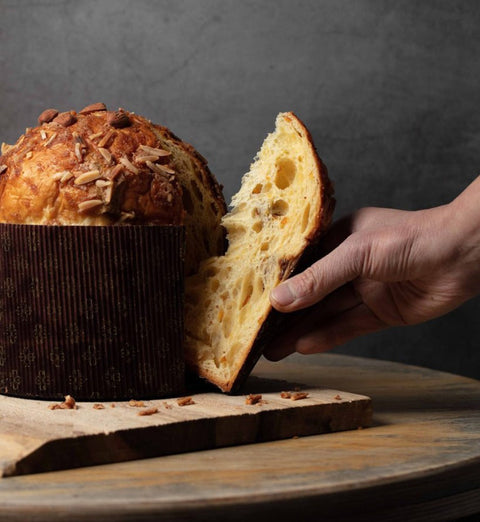
Panettone is at its best when served warm, never straight from the refrigerator: chefs recommend never keeping it cold and warming it slightly before slicing, which awakens the butter and vanilla aromas. Before cutting, remove the stiff paper surrounding it: slicing it with the paper would damage the crumb and break its airy structure.
The professional technique consists of cutting the panettone vertically, from top to bottom, into regular wedges, and then slicing each wedge into thinner pieces. This cutting method preserves the stringy character of the crumb and limits compression. For presentation, Italian etiquette favors a whole panettone placed in the center of the table, cut in front of guests, and arranged in a crown of slices: a simple staging that turns the snack into a shared moment. Unless it is filled, it is eaten by hand, without cutlery.

Pro tip: to warm it up without drying it out, wrap the slices in a slightly damp towel and place them in a low-temperature oven for a few minutes rather than in the microwave.
To learn more about cutting techniques, our page dedicated to cutting and serving panettone details every step, one by one.
Pairings and accompaniments for an afternoon snack: drinks and light preparations
Classic or citrus panettone pairs naturally with filter coffee or a cappuccino, whose bitterness balances the sugar of the candied fruits. For a cozier snack, an Earl Grey black tea highlights the citrus notes, while a thick hot chocolate pairs better with the chocolate version, as suggested by the best Corsican biscuit factories. For a more festive snack, a Moscato d'Asti or a light sparkling wine pairs well without overpowering the crumb.
A few accompaniments can elevate each slice without distorting it:
- A lightly spiced mascarpone cream, recommended by chefs to top warm slices.
- Apricot jam or butter mixed with honey, for a simple fruity touch.
- Plain yogurt or sweetened ricotta, which provides contrast without adding heaviness.
- Cream cheese drizzled with honey, for a more savory and surprising version.
Transforming stale panettone: quick recipes for an afternoon snack
A panettone that is beginning to dry out is never lost: several preparations can bring it back to life in a few minutes.
- "Panettone perdu," or Italian-style French toast, consists of dipping thick slices into a mixture of eggs, milk, sugar, and spices before pan-frying them in butter; the technique is detailed in this recipe and is served with chestnut cream or fresh fruit.
- Panettone toast can be prepared simply in a pan or toaster: a few minutes are enough to obtain a crispy crust while keeping a soft center.
- Panettone pudding uses the same base as French toast but is baked in a terrine, for a meltier texture, ideal as a shared afternoon dessert.
Our complete recipe for panettone perdu details the proportions and variations, and our anti-waste guide offers five solutions to fix dry panettone.
Storage and when to buy your panettone for an afternoon snack
Panettone should be stored at room temperature, wrapped in its original paper or an airtight bag: the refrigerator dries out the crumb and ruins its stringy texture. A panettone fermented with natural sourdough retains its qualities longer than an industrial version thanks to its long fermentation process, which naturally slows down staling.
A few benchmarks before buying or consuming:
- A dry or crumbly crumb, or a very noticeable acidic odor, are signs of a panettone that is past its prime.
- Check the ingredient list: a quality panettone mentions natural sourdough or "lievito madre" rather than additives.
- The production date, more than the expiration date, gives a real idea of the product's freshness.
Sourdough panettone explained by Maison Christophe Louie
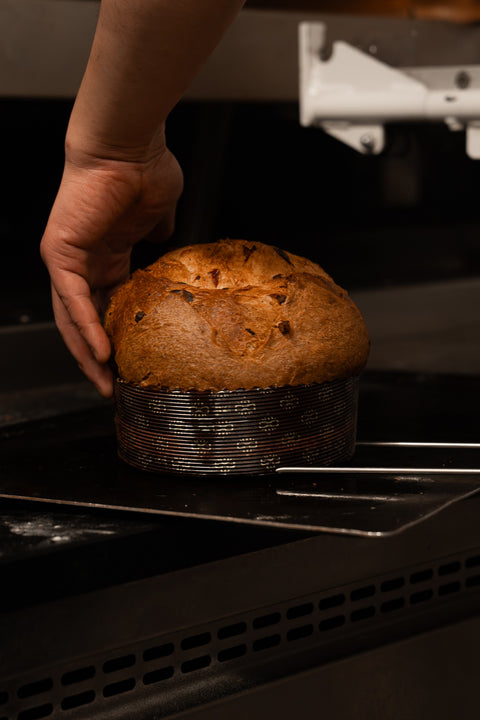
Panettone relies on a two-dough process spread over 72 hours, driven by a living sourdough, the "lievito madre," maintained and refreshed before each batch. This long fermentation develops a stringy crumb and complex aromas—buttery notes and measured acidity—far from the uniformity of a rapid fermentation. Research on sourdoughs and lactic acid bacteria confirms that these microorganisms directly shape the flavor profile of artisanal panettone.
A living sourdough and long fermentation give panettone a stringy texture and natural prolonged shelf life, without relying on an accelerated industrial process.
This prolonged shelf life makes it possible to offer panettone all year round, not just as a year-end pastry.
Why we offer panettone for afternoon snacks all year round
Long fermentation gives panettone a natural shelf life that far exceeds that of industrial versions, justifying the choice to bring it out of the holiday calendar. Panettone is made with Italian flours selected for their technical quality and local French ingredients, with production that limits unsold goods thanks to this long shelf life. The flavors are available at the boutique in Paris and on their website.
— Christophe
Where to order a sourdough panettone for your next afternoon snack
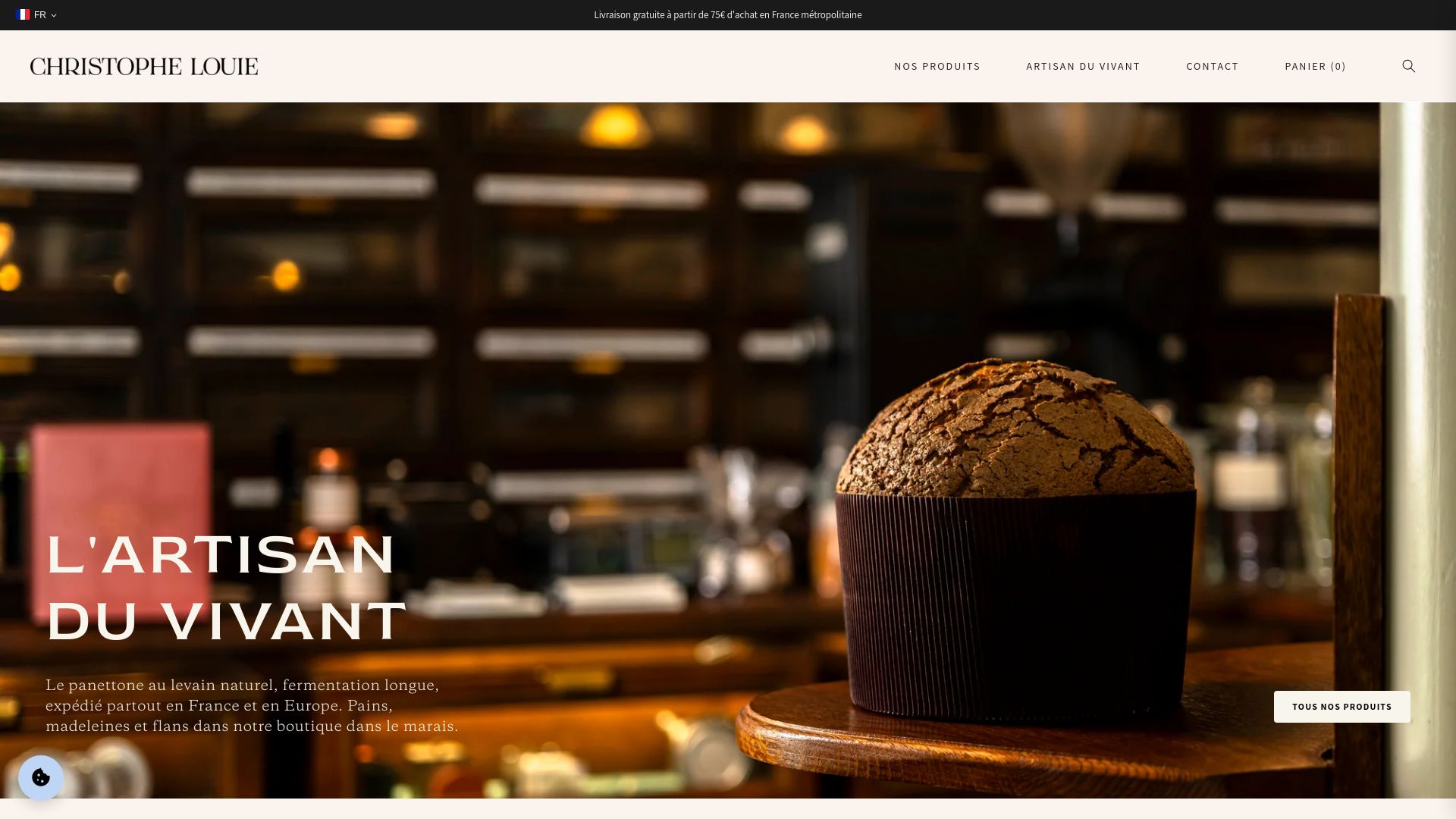
Our range of natural sourdough panettones, fermented for 72 hours, includes the classic candied fruit, chocolate, and more original versions like orange blossom. Each panettone is handcrafted, using a living sourdough that we maintain ourselves, for a stringy crumb that naturally keeps for several weeks.
| What you will find | Details |
|---|---|
| Process | Natural sourdough, two-dough fermentation over 72 hours |
| Ingredients | Selected Italian flours, other French raw materials |
| Availability | Purchase at the boutique in Paris, national delivery, and Click & Collect |
Discover all of our creations on the Panettones page and put together the perfect afternoon snack, for yourself or as a gift.
Frequently asked questions
Which panettone is considered the best?
There is no universally superior panettone: it all depends on the profile you are looking for—fruity and light for a children's snack, chocolate or natural sourdough for a richer one. An artisanal panettone fermented for a long time generally stands out with a stringier crumb and more complex aromas than an industrial version.
What does panettone taste like?
Panettone develops dominant aromas of butter, vanilla, honey, and citrus, carried by a characteristic stringy texture. Its slight acidity, especially pronounced in natural sourdough versions, balances the sweetness of the candied fruit or chocolate.
How is panettone eaten?
Panettone is served warm and cut vertically into wedges, with the paper removed beforehand, to preserve its structure. It is generally eaten by hand, accompanied by coffee, tea, or a spiced mascarpone cream.
What are the different types of panettone?
Main varieties include classic with candied fruit and raisins, chocolate, citrus, and pistachio, to which more modern, sometimes savory creations are added. The most significant difference remains between rapid yeast fermentation and long natural sourdough fermentation, which changes texture and shelf life.
Is panettone suitable for a balanced snack?
Panettone remains a pastry to be consumed in moderation as part of a balanced snack, which should ideally prioritize bread, fruit, and dairy. A slice accompanied by fresh fruit or plain yogurt allows it to be enjoyed occasionally without unbalancing the snack.
Sources
- Come si serve il panettone? Risponde l’esperta di galateo | La Cucina Italiana
- Come servire il panettone da chef: i consigli di Carlo Cracco | FineDiningLovers
- Panettone façon pain doré | Ricardo Cuisine
- Agrofood