How to recognize an authentic artisanal panettone
A true artisanal panettone can first be recognized by its stringy crumb and its natural aromas of butter, vanilla, and citrus—signs of a live sourdough starter and a long fermentation process. The traditional method—natural sourdough, two-stage mixing, and cooling upside down—guarantees this texture. The label and price then confirm this sensory diagnosis.
In brief:
- Verify that natural sourdough is clearly listed on the label, and avoid preservatives, emulsifiers, and artificial flavorings, which are often associated with accelerated fermentation.
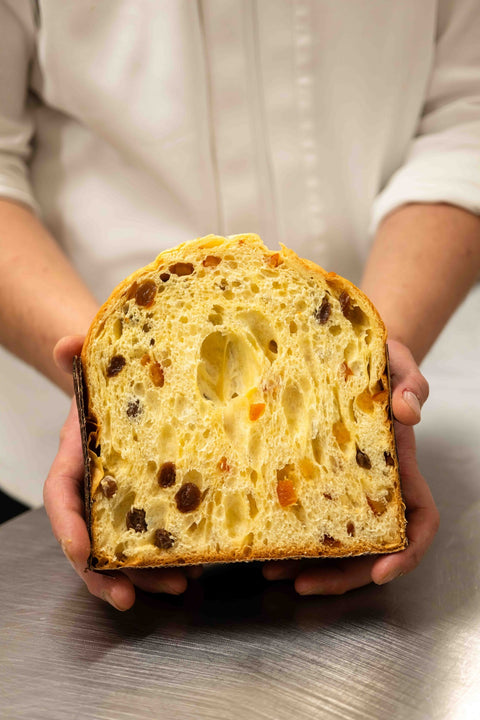
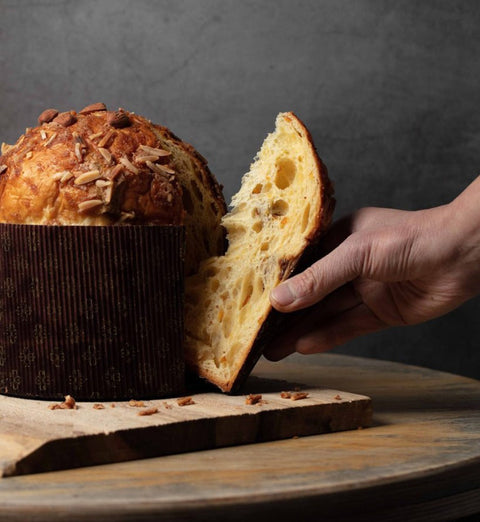
- When sliced, look for a crumb with irregular air pockets, well-distributed fruit, and a high dome, then check that the dough pulls apart in strings.
- Ask for the production date and fermentation time: a high price sometimes reflects several days of work, but does not guarantee authenticity.
- After opening, store the panettone in an airtight bag at room temperature and away from humidity; a bread knife prevents crushing the crumb.
Table of contents
- Origins and identity of panettone: understanding the roots to better judge authenticity
- Expected ingredients in an artisanal panettone and their role
- Artisanal process: long fermentation, shaping, baking, and inverted cooling
- Sensory checklist: visual, olfactory, and tactile tests to do immediately
- Artisanal vs. industrial: technical and labeling signs to avoid mistakes
- How to buy and what to ask: in-store, at a gourmet grocer, or online
- Storage and tasting: preserving quality and enjoying it to the fullest
- Expert view: Christophe Louie’s tip and process evidence
- Why choose artisanal today
- Finding an artisanal panettone that meets these criteria
- Frequently asked questions
- Sources
Origins and identity of panettone: understanding the roots to better judge authenticity
Panettone was born in Milan, where several legends compete for its paternity, including that of a certain Toni, an apprentice pastry chef who allegedly saved a failed Christmas meal by improvising a brioche enriched with candied fruit. Beyond the folklore, this Milanese origin still structures what defines a panettone worthy of the name today.
A technical standard governs traditional artisanal production: the regulation on panettone typical of the Milanese artisanal tradition sets permitted ingredients, prohibits certain additives, and mandates the use of natural sourdough. This text also specifies minimum proportions, particularly for raisins and butter, which give the finished product its characteristic richness.
These rules are not just a matter of cultural tradition: they set verifiable thresholds that help concretely in judging a product.
- Mandatory use of natural sourdough, without resorting to accelerated industrial yeasts.
- Prohibition of preservatives and certain synthetic additives.
- Minimum proportions of butter and candied fruit or raisins.
- Adherence to a slow, multi-stage fermentation process.
Knowing this foundation makes it easier to understand why certain sensory cues, such as the stringy crumb and natural fragrance, are never the result of chance, but the direct consequence of precise specifications.
Expected ingredients in an artisanal panettone and their role
The quality of a panettone is determined first by the choice of raw materials, long before baking. A suitable high-protein flour, rich in gluten, is necessary to withstand hours of fermentation without collapsing: it is what allows the crumb to develop that highly sought-after honeycomb and stringy structure.
Egg yolks and butter, used in generous quantities, give the panettone its golden color and aromatic richness, far from the pallor and neutrality of an industrial brioche with reduced fat content. Natural sourdough, or pasta madre, remains the most decisive ingredient: it shapes the product's complex aroma, its stringy structure, and its ability to naturally keep for several weeks without additives. A detailed traditional recipe clearly shows how these precise ratios influence the final result.
Candied fruit and raisins complete the whole, provided they are of good quality and well-distributed throughout the dough rather than concentrated at the bottom of the mold.
- High-protein flour: essential for sustaining long fermentation without sagging.
- Generous quantities of butter and egg yolks: golden color and richness on the palate.
- Natural sourdough (pasta madre): complex aroma and natural shelf life.
- Quality candied fruit and raisins: uniform hydration of the crumb.
Conversely, the presence of excess soy lecithin, emulsifiers, or preservatives on the ingredients list almost always signals an accelerated industrial process.
Artisanal process: long fermentation, shaping, baking, and inverted cooling
Making an artisanal panettone follows a succession of steps, none of which can be shortened without affecting the final result.
- Refreshing the natural sourdough, repeated several times to fully activate it.
- First dough, mixing flour, sourdough, butter, and sugar, left to ferment for several hours.
- Second dough, enriched with egg yolks, butter, and fruit, incorporated after meticulous kneading.
- Pirlatura, the ball-shaping process that structures the crumb before baking.
- Scarpatura, the cross-shaped incision on top that allows for regular development of the dome.
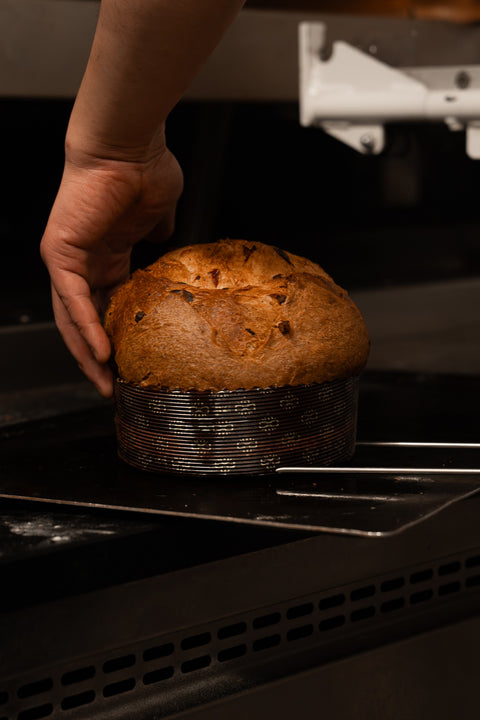
- Baking at a controlled temperature, followed by immediate upside-down cooling. ;
This timeline is not a fixed norm, but reflects the time necessary for the sourdough’s microflora to fully develop its aromas—a phenomenon that scientific work on panettone yeasts has helped better document, notably by identifying the presence of Kazachstania humilis and Fructilactobacillus sanfranciscensis in artisanal sourdoughs.
Suspended, upside-down cooling remains the most critical step for the final texture: it prevents the crumb, still fragile upon exiting the oven, from collapsing under its own weight. A panettone that has lost its characteristic dome has often missed this step.

Pro tip: In the shop, check if the words "natural sourdough" appear clearly and if a recent production date is displayed—two details that rarely betray an industrial process.
Sensory checklist: visual, olfactory, and tactile tests to do immediately
Even before tasting, several cues can be checked in a few seconds. The dome should be high, slightly irregular, and golden—never flat or uniformly browned like an industrially molded product. When sliced, the honeycomb structure should be irregular and elongated, with candied fruit or raisins distributed homogeneously rather than concentrated at the bottom.
The smell is an equally reliable test. An artisanal panettone gives off a natural fragrance of butter, vanilla, and citrus, without any chemical notes or overly strong artificial flavors.
- High, slightly irregular dome, never flat or perfectly smooth.
- Irregularly honeycombed crumb, with fruit well-distributed throughout the dough.
- Natural fragrance of butter and vanilla, with no chemical notes.
- Generally generous size in artisanal production.
The stringiness test remains the most telling sign: when gently pulling a piece of crumb, it should stretch into silky threads rather than crumble. According to the sensory test described by chef Christophe Louie, the slight scent of fermentation, the aromas of butter and vanilla, and the stringy crumb are the three most reliable indicators for an uninitiated buyer. A crumb that breaks clean or a scent that is overly sweet and artificial almost always betrays an accelerated process.
Artisanal vs. industrial: technical and labeling signs to avoid mistakes
The list of ingredients remains the most honest document to distinguish between artisanal and industrial. The presence of excess added soy lecithin, synthetic emulsifiers, preservatives, or artificial flavorings signals a process that sought to shorten or stabilize natural fermentation. Conversely, a short list, dominated by flour, butter, eggs, sugar, and fruit, accompanied by the explicit mention of natural sourdough, generally corresponds to traditional manufacturing.
- Lecithin, emulsifiers, or preservatives on the label: sign of an accelerated industrial process.
- Vague mentions like "natural fermentation" without specifics on the sourdough: interpret with caution.
- Short and readable ingredient list, dominated by high-quality raw materials: a good sign.
- Price significantly higher than in supermarkets: consistent with long production time and quality ingredients.
Comparative analyses conducted by 60 Millions de Consommateurs show significant differences in composition, taste, and texture between panettones sold in supermarkets, which confirms that price alone is never enough to judge quality, even if it remains a consistent indicator of the time and ingredients required for slow manufacturing. A mention like "preservative-free" deserves to be cross-referenced with the full ingredient list rather than taken in isolation, as some formulations capitalize on these claims without actually using a true natural sourdough.
How to buy and what to ask: in-store, at a gourmet grocer, or online
Whether purchasing in-store, at a gourmet grocer, or online, a few simple checks can avoid unpleasant surprises.
- Check the production date indicated on the packaging and the announced shelf life; a natural sourdough product naturally keeps for several weeks.
- Ask if the leavening relies on natural sourdough or pasta madre, and inquire about the approximate fermentation time applied.
- Consult the product sheet online to identify the full list of ingredients and, ideally, a photo of the cross-section showing the crumb structure.
- Beware of packaging that is very opaque or richly illustrated, which reveals neither the crumb nor a clear list of ingredients.
- A practical guide on choosing a panettone details these criteria point by point, useful for comparing several options before a year-end purchase.
Storage and tasting: preserving quality and enjoying it to the fullest
An artisanal natural sourdough panettone naturally keeps for several weeks once properly packaged, thanks to the acidity and activity of the sourdough, which slow the development of mold. Once started, it is best kept in its original packaging or an airtight bag at room temperature, away from humidity.
To regain the full stringy texture, slicing with a bread knife rather than a standard knife prevents crushing the crumb. A brief moment in a warm oven for a few minutes revives the aromas of butter and vanilla.
- Optimal storage in airtight packaging, at room temperature.
- Cutting with a bread knife to preserve the honeycomb structure.
- Slight reheating in the oven to revive aromas.
- A dry crumb or stale scent signals a product that is too old or poorly stored.
Pro tip: Pair a slice with a light coffee or a sweet wine; the natural aromas of a good panettone are better revealed without overly sweet accompaniments.
Expert view: Christophe Louie’s tip and process evidence
Pastry chef Christophe Louie summarizes identifying an artisanal panettone with three simple actions: smell, pull, taste.
The slight scent of fermentation, the aromas of butter and vanilla, and the stringiness test remain the most telling signs of a panettone made with natural sourdough.
In our Parisian workshop, we apply this principle through a long fermentation method over 72 hours, with a live sourdough starter maintained daily and Italian flours selected for their technical strength. All other ingredients—butter, eggs, fruit—come from French producers, following a local sourcing philosophy.
Why choose artisanal today
The slowness of natural sourdough is not a technical detail reserved for purists: it directly shapes the taste, texture, and lifespan of the product, while reducing waste from unsold items. Choosing artisanal also means supporting the transmission of craftsmanship that continues to innovate, between classic sweet variations and more daring savory versions. Ultimately, patience remains the only ingredient that no machine can replace.
— Christophe
Finding an artisanal panettone that meets these criteria
If these criteria make you want to taste a panettone truly crafted with natural sourdough, our Parisian workshop Christophe Louie offers a range of 72-hour sourdough panettones, available in sweet and savory versions, from the classic to more original creations like orange blossom.
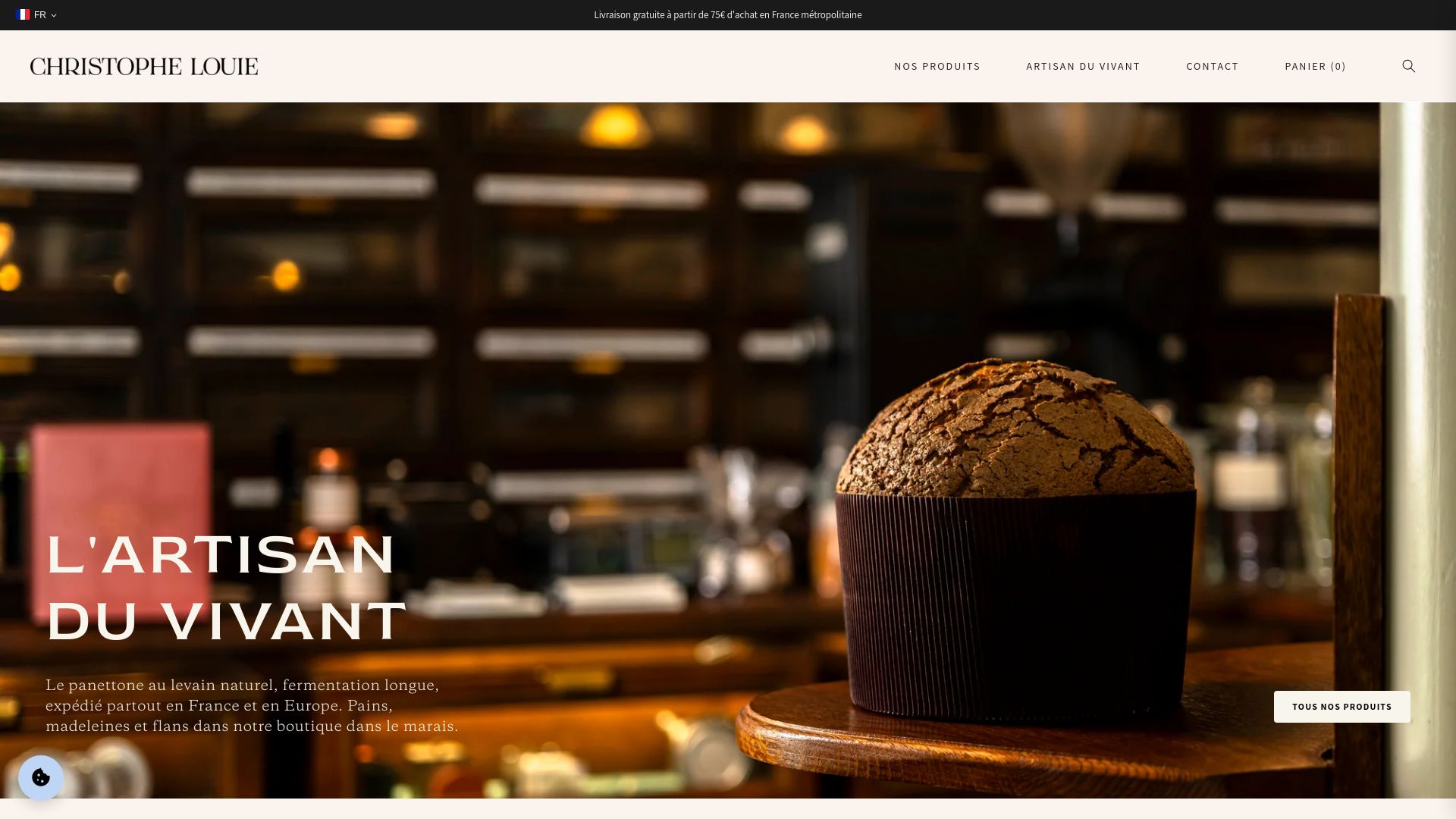
Each panettone follows the same two-dough process, using a live sourdough starter maintained daily and Italian flours chosen for their stability during long fermentation. To refine your choice according to your tastes or the occasion, our practical guide on how to choose a panettone details the available variants and their specific features.
Our panettones can be ordered directly on our online shop or found in our Marais workshop, for tasting on-site or as a gourmet gift to offer.
Frequently asked questions
Which brand should I choose for a quality panettone?
There is no single brand to recommend: quality depends on manufacturing criteria rather than a specific label.
What are the different types of panettone available?
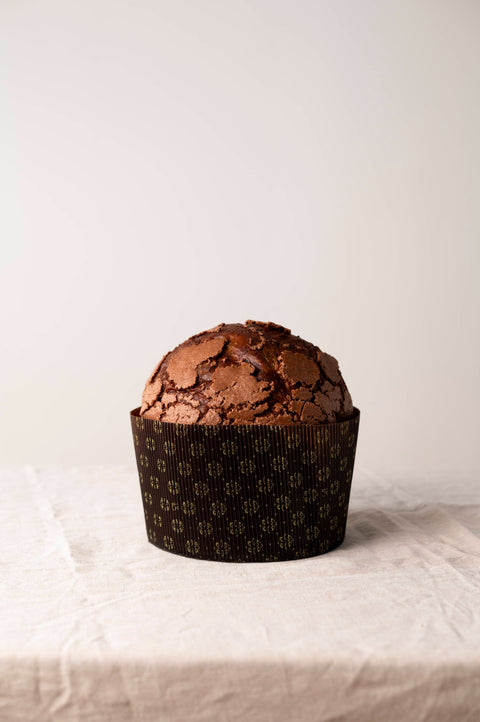
The classic panettone with candied fruits and raisins remains the historic version, but many variations exist, with chocolate, citrus, or even more recent savory versions. Artisans also offer varied formats and flavors while maintaining the same basic natural sourdough process.
Why does artisanal panettone cost more than in supermarkets?
The price primarily reflects the production time, often several days between sourdough refreshments, the two-dough kneading, and fermentation, as well as the quality of the ingredients used: butter, eggs, and strong flours. Comparative analyses of mass-market panettones confirm composition differences that partly explain these price gaps.
What is the difference between panettone and kouglof?
Panettone is an Italian brioche made with natural sourdough, enriched with candied fruits and raisins, and baked in a tall dome shape. The kouglof, originating from Alsace and Central Europe, is presented in a molded crown shape and generally uses yeast rather than a live sourdough starter, with a less stringy texture.
Sources
- REGULATIONS FOR THE PRODUCTION OF “AUTHENTIC PANETTONE OF MILANESE HANDMADE TRADITION”
- Yeasts and Lactic Acid Bacteria for Panettone Production: An Assessment of Candidate Strains
- Here is the detail that proves your panettone is authentic and of high quality according to this chef