How to achieve a stringy texture in homemade panettone
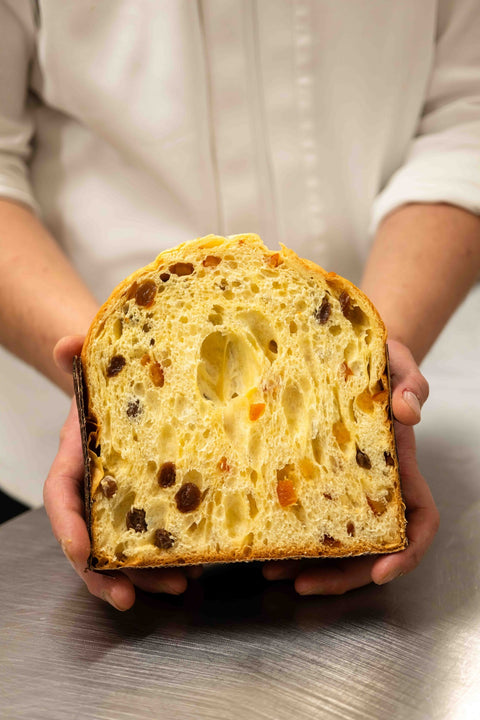
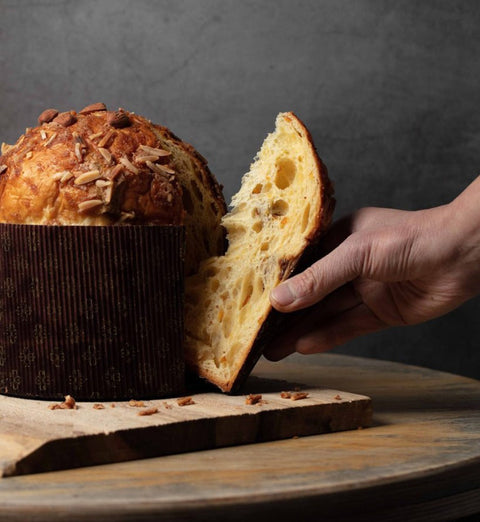
A stringy, fibrous crumb is achieved first through a vigorous lievito madre (sourdough starter), then through generous hydration, strict temperature control, gentle shaping, and hanging it upside down to cool once the panettone is out of the oven. It is the combination of these five factors, rather than a single ingredient, that creates this crumb that stretches into filaments. The 72-hour professional process relies precisely on this logic.
In brief:
- A stringy, fibrous crumb depends on a vigorous starter, high hydration, precise temperature control, gentle shaping, and cooling upside down.
- A poorly maintained or overly acidic starter can compromise the fibrous texture, leading to a dense or compact crumb, especially if its activity is insufficient.
- The choice of preferment, such as biga or sponge, influences the texture and shelf life, but a well-established sourdough starter remains the most effective for a stringy crumb.
- Kneading must be done between 25 and 28 degrees Celsius to preserve the gluten structure and prevent the dough from tearing or losing elasticity.
- After baking, turning the panettone upside down is essential to set the fibrous structure and prevent the hot crumb from collapsing.
Table of contents
- Ingredients and their role in a fibrous crumb
- The starter, lievito madre: how to maintain it for a fibrous crumb
- Biga, sponge, or natural sourdough: which preferment to choose
- Kneading and temperatures: the key to elasticity
- Shaping and pirlatura: preserving the aeration without crushing it
- Baking and cooling upside down: the step that sets the fibrous structure
- Common problems and how to correct them
- Practical evidence: Christophe Louie's 72-hour process
- What we have learned after years of sourdough panettone
- Want a fibrous panettone without a failed bake
- Frequently asked questions
- Sources
Ingredients and their role in a fibrous crumb
The fibrous quality begins with the formula itself. High hydration softens the gluten network and allows the crumb to stretch without breaking, whereas dough that is too dry produces a short and crumbly structure. Butter, which makes up a significant portion of a panettone's weight according to Corman's technical analysis, slows down starch staling and keeps the crumb soft long after baking. Egg yolks act as natural emulsifiers: they bind water and fat, which further softens the structure and enhances the mouthfeel.
The choice of flour is just as important:
- A strong, high-protein flour better supports the enrichment of butter and sugar without collapsing.
- Inclusions like chocolate or candied fruits must be incorporated at the end of kneading so as not to weaken the already-formed gluten network, as shown in a university thesis on chocolate-gluten interactions.
To explore proportions in depth, consult our page on panettone ingredients and our guide on flour strength suitable for homemade panettone.
The starter, lievito madre: how to maintain it for a fibrous crumb
A poorly prepared starter ruins all subsequent efforts. The balance between yeast activity and acidity is the most delicate point: a starter that is too acidic attacks the gluten and produces a short, dense crumb that will never stretch properly.
To bring the lievito madre to its peak before incorporation:
- Perform several successive refreshments, ideally a triple refreshment, spacing each stage by three to four hours.
- Maintain a consistent refreshment temperature between 25 and 30 degrees Celsius, a technical benchmark widely shared in professional practices documented by Martini Professional.
- Check that the starter triples in volume within this timeframe, a sign of a culture vigorous enough to support a dough rich in butter and yolks.
A ready starter has a slightly milky scent, never vinegary, and features a consistent foam on the surface. If activity remains low, extend the refreshments rather than forcing fermentation with heat.
Pro tip: always keep a small reserve of unrefreshed starter in the fridge; it serves as a safety net if the day's refreshment is slow to start.

Our page on stiff sourdough starter for panettone details the complete maintenance and hydration schedule.
Biga, sponge, or natural sourdough: which preferment to choose
Three families of preferments structure panettone dough before the final kneading. Biga is a firm, low-hydration dough; sponge is a more liquid dough with rapid fermentation; and natural sourdough is a live culture maintained over several days.
- Biga primarily develops strength and a slight nutty flavor.
- Sponge accelerates fermentation and adds lightness, at the cost of a shorter shelf life.
- Natural sourdough provides the most complex aroma and the best shelf life but requires the most rigor.
A study published in Foods (MDPI) measured the effect of these three preferments on the elasticity and sensory acceptability of panettone: sponge and biga improved certain textural properties measured in the laboratory. For a first attempt, a sponge remains more accessible than a still-young natural sourdough, but the most pronounced fibrous quality almost always comes from a well-established sourdough starter.
Kneading and temperatures: the key to elasticity
Kneading must build an extensible gluten network without ever tiring it out. The dough is worked in several phases: first the hydration of flours and the starter, then the progressive incorporation of yolks, and finally the butter added in several stages once the gluten is well-developed.
- Knead at a slow speed first until a smooth, coherent dough is obtained.
- Incorporate the yolks one by one, waiting for complete absorption before each addition.
- Add the pomade butter gradually, never exceeding 26 to 28 degrees Celsius at the end of kneading.
Between 25 and 28 degrees Celsius during the critical stages of kneading and bulk fermentation, the gluten remains protected and the aromatic balance is preserved, according to a technical analysis of panettone. Above 27-28 degrees Celsius, the butter melts too quickly and the network relaxes. To validate the structure, stretch a small piece of dough between your fingers: it should form a thin, translucent film without tearing—the classic windowpane test.
Our guide on panettone fermentation temperatures details the precise benchmarks for each step.

Shaping and pirlatura: preserving the aeration without crushing it
Pirlatura involves rolling the dough between your palms to create uniform surface tension, without ever pressing the center where the fermentation bubbles are located. The goal is a regular ball, sufficiently taut to hold its height during the final proofing.
- Always work with slightly moistened or oiled hands, never floured, to avoid sticking without compressing the dough.
- Never shape dough that is too cold: it will tear rather than stretch.
- Avoid cutting or scoring the top too early, before a surface crust has formed naturally.
Pro tip: work in a room at around 24 to 25 degrees Celsius; the dough shapes more easily and holds its tension better.
For the details of the movements, our article on hand-shaping panettone shows the complete technique.
Baking and cooling upside down: the step that sets the fibrous structure
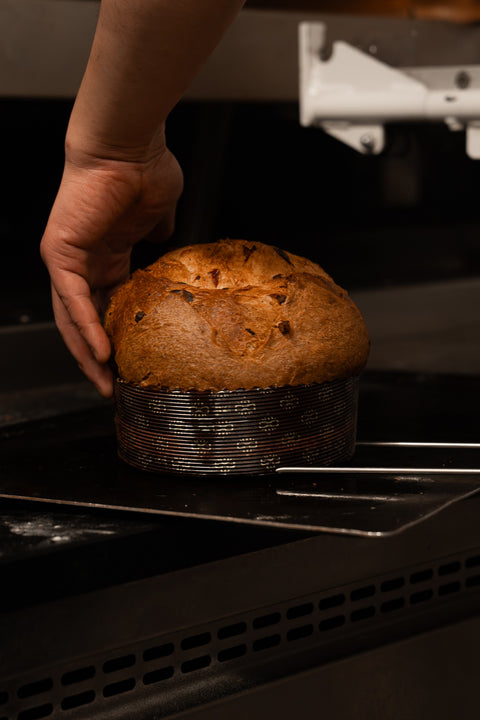
Baking a 1-kilogram panettone is generally done around 170 degrees Celsius for 50 to 60 minutes in a home oven, monitoring the color to avoid burning the dome before the center is cooked.
- Verify doneness with a probe: the internal temperature should reach about 93 degrees Celsius before taking the panettone out of the oven.
- Immediately skewer it with long needles at the base, then hang it upside down.
- Leave it this way for 4 to 12 hours depending on its size, allowing the structure to stabilize completely.
- This inversion prevents the crumb, still hot and fragile, from collapsing under its own weight and sets the open alveoli that create the desired fibrous texture, as noted in a descriptive article on traditional panettone. Skipping this step, even with a perfectly made dough, almost always ruins the result. Our page explains in more detail why we turn our panettones upside down after baking.
Common problems and how to correct them
A crumb that is too compact almost always signals a lack of hydration, insufficient kneading, or flour that is too low in protein: slightly increase the water and verify the windowpane test before moving to the next step.
- A panettone that collapses after baking often results from over-fermentation, an overly acidic starter, or shaping that was too loose and did not hold enough tension.
- A dense crumb despite beautiful aeration on the surface usually comes from a poorly chosen preferment, temperatures that were too high during kneading, or pirlatura that was too firm and forced out the carbon dioxide.
- In all cases, return first to the starter: the majority of failures in achieving a fibrous crumb are explained by insufficient activity or excess acidity.
Practical evidence: Christophe Louie's 72-hour process
At Christophe Louie, we apply a traditional two-dough process spread over 72 hours, where each fermentation step is monitored down to the degree. This rigor, combined with Italian flours selected for their strength and a live starter maintained daily, produces a fibrous crumb and prolonged natural shelf life, without resorting to accelerated processes. Our article on long fermentation for panettone details this full calendar.
What we have learned after years of sourdough panettone
It is better to invest in a well-maintained starter and a reliable thermometer than in rare or exotic ingredients: the fibrous quality is primarily determined by the rigor of the process. For a first attempt, reduce the quantities and aim for a small format, which is easier to monitor from start to finish. The consistency of the crumb is refined with practice, observation after observation, batch after batch.
— Christophe
Want a fibrous panettone without a failed bake
For enthusiasts who prefer to taste rather than repeat the shaping process three times, it is possible to purchase a signature panettone crafted according to a 72-hour sourdough process, with temperature control similar to the one described above.
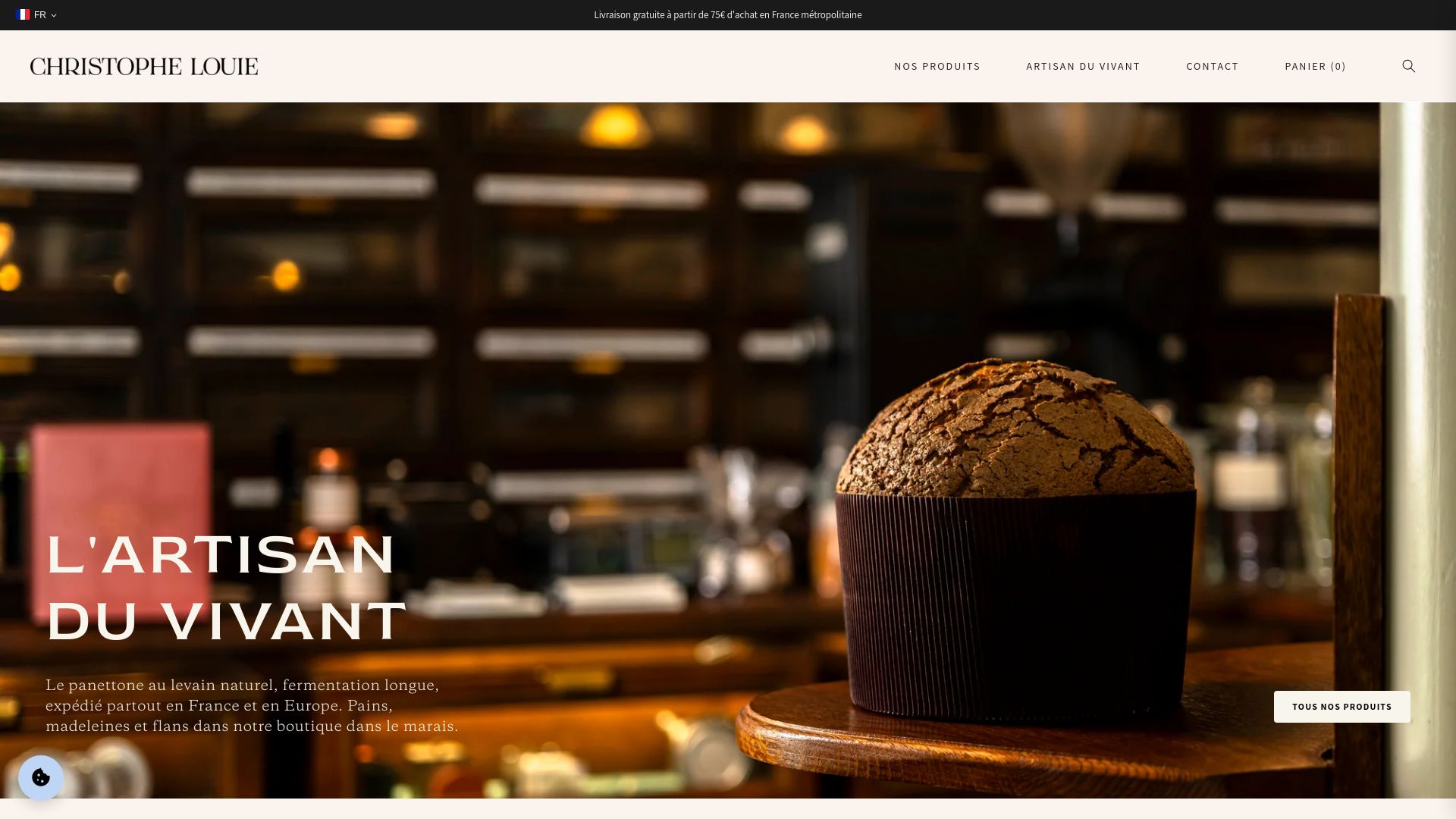
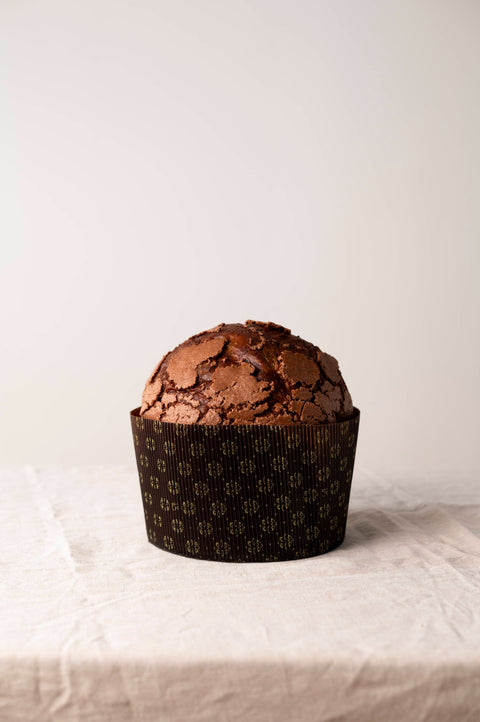
- Our panettones come in several flavors, including the orange blossom panettone, alongside classic, chocolate, or mandarin versions.
- They are available for click and collect at a shop in the Marais, via national delivery, or as gift sets for gourmet occasions.
To discover the entire range and place an order, head to our panettone collection.
Frequently asked questions
What makes a panettone fibrous rather than compact?
The fibrous quality comes from the combination of a vigorous starter, appropriate hydration, and a gluten network preserved by gentle kneading and shaping. Without cooling upside down after baking, even a well-worked dough can collapse and lose this texture.
What temperature should be maintained during panettone kneading?
The dough generally should not exceed 26 to 28 degrees Celsius at the end of kneading to preserve the gluten network. A benchmark of 25 to 28 degrees also applies during bulk fermentation and proofing, according to a technical analysis of the process.
Why must the panettone be hung upside down after baking?
This inversion prevents the still-hot and fragile crumb from collapsing under its own weight. It sets the open crumb structure for several hours, a structural step described in technical guides on panettone.
Which preferment provides the best stringy texture?
Natural sourdough generally offers the most complex aroma and the best shelf life, but sponge and biga can also improve elasticity according to a study published in Foods. The choice depends mainly on the time available and the home baker's experience.
How do I know if my panettone is sufficiently baked?
The most reliable method remains checking the core temperature with a probe, which should be around 93 degrees Celsius before taking the panettone out of the oven. A uniform golden coloration of the crust is a good complementary indicator, but it does not replace the internal measurement.
Sources
- The Panettone road (Corman)
- Influence of Preferments on the Physicochemical and Sensory Quality of Traditional Panettone (MDPI Foods)
- La chimica tra cioccolato e glutine: un’armonia complessa nel panettone (thesis, Unipd)