Panettone French toast: a gourmet and easy recipe
A successful panettone perdu (French toast) has a golden exterior and a tender, stringy interior, ready in under 30 minutes. Count on a reasonable total preparation, soaking, and cooking time suited for 4 people, generally less than 30 minutes. It is the ideal recipe after the holidays to transform leftover panettone into a brunch or dessert worthy of a Parisian café, without wasting a crumb.
Did you know? An artisanal sourdough panettone naturally keeps for up to five weeks — which leaves plenty of time to plan this French toast, even without an anti-waste emergency.
Table of Contents
- What ingredients do you need for 4 people?
- How to prepare your panettone perdu step-by-step?
- What toppings and variations for every occasion?
- How to avoid classic texture and cooking mistakes?
- How to store and recycle leftover panettone?
- Why does sourdough panettone change everything about the recipe?
- Key points
- What panettone perdu really reveals
- Our house sourdough panettone, made for this recipe
- Sources and useful reading
What ingredients do you need for 4 people?
The proportions below yield a rich but balanced custard. Whole milk and heavy cream whipped together prevent the airy crumb of the panettone from being crushed by a too-heavy mixture.
Basic ingredients:
- 4 slices of panettone thick enough (at least 2 cm) to keep them from crumbling when soaked, or about 180 to 200 g in total for 4 people.
- 3 whole eggs
- 120 ml whole milk
- 80 ml heavy cream
- 1 tablespoon sugar
- 1 teaspoon vanilla extract
- Zest of one orange (optional, but recommended)
- 1 tablespoon Amaretto or cognac (optional)
- 20 g butter for cooking
Recommended toppings: mascarpone, chestnut cream, fresh or poached fruits, maple syrup, chocolate shavings.
| Substitution | Suggested alternative |
|---|---|
| Whole milk | Unsweetened plant-based milk (oat, almond) |
| Heavy cream | Light cream or mascarpone thinned with milk |
| White sugar | Coconut sugar or agave syrup |
| Butter | Coconut oil or plant-based margarine |
| Amaretto | Reduced orange juice or almond extract |
Pro tip: If you are using a candied fruit panettone, slightly reduce the sugar in the custard: the fruits already provide significant sweetness.
How to prepare your panettone perdu step-by-step?
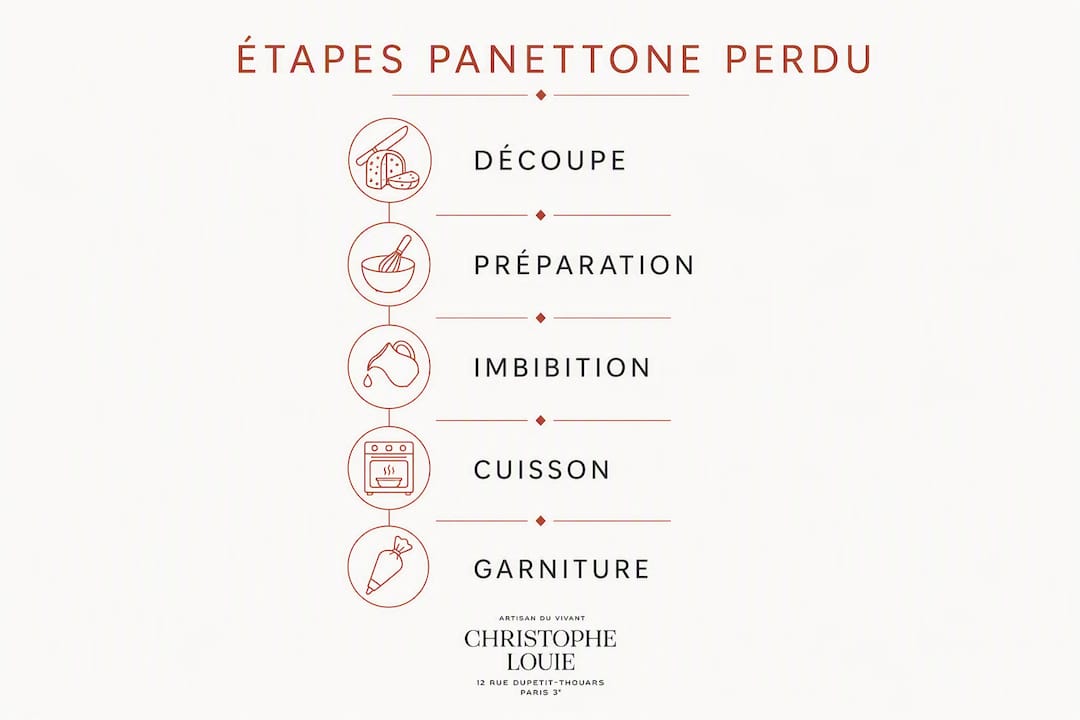
Slicing and preparing the slices
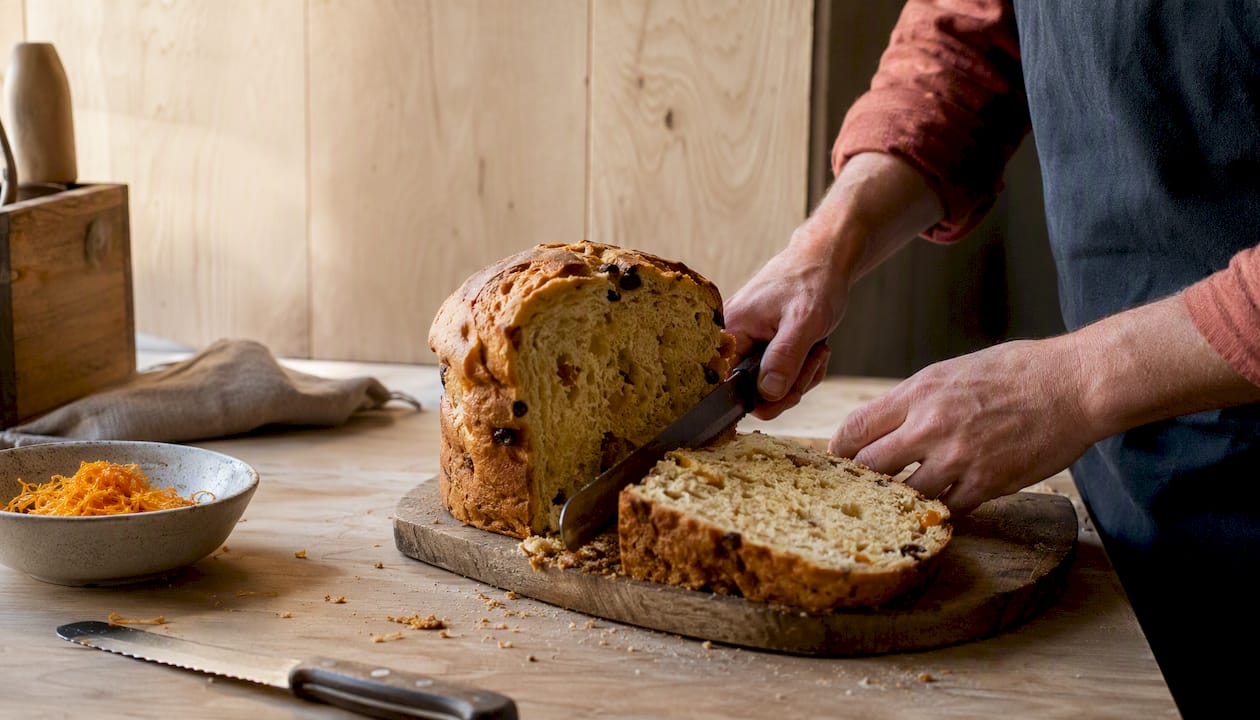
Slice the panettone at least 2 cm thick. Below that, the highly aerated crumb crumbles when soaked. If your panettone is very fresh (bought the same day), place the slices under the oven broiler at 180°C for 2 to 3 minutes before soaking: this light toasting firms up the surface and improves absorption without softening the inside.
Custard preparation and soaking
Whisk the eggs, milk, cream, sugar, vanilla, and orange zest in a shallow dish until you get a perfectly smooth mixture. A grainy custard (poorly incorporated eggs) results in an uneven texture when cooked. Dip each slice for a few tens of seconds per side depending on the freshness of the panettone, just enough to soak without saturating. The slice should be soaked but not soggy.
Cooking
| Step | Duration | Temperature / Setting |
|---|---|---|
| Pan preheating | short duration | Medium heat |
| Butter melting | until lightly foamy | Medium heat |
| 1st side cooking | several minutes | Medium-low heat |
| Flipping and 2nd side | several minutes | Medium-low heat |
| Oven finishing (if needed) | a few minutes | low temperature |
Melt the butter over medium heat until it foams slightly, then place the slices in. Do not turn the heat up too high: the exterior browns quickly due to the panettone's natural sugar, while the interior needs time to heat through. If the slices color too quickly, transfer the pan (if oven-safe) or the slices to a baking sheet at 90–100°C to finish cooking gently.
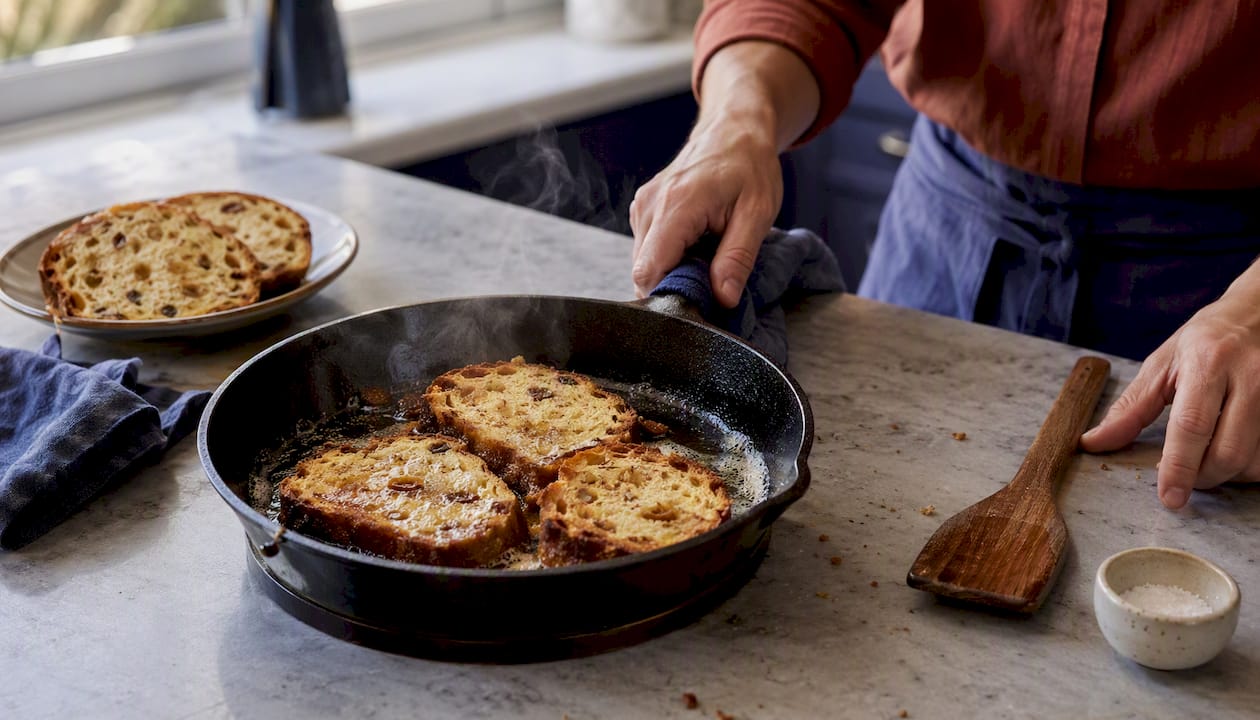
Pro tip: To flip without breaking, slide a wide, flat spatula under the entire surface of the slice before flipping it with a firm and quick motion. Hesitating halfway is a guarantee of breaking the slice into two pieces.
What toppings and variations for every occasion?
Panettone-style French toast is a blank canvas: its aromas of butter, citrus, and sourdough pair with almost everything. Here are the combinations that work best depending on the moment.
Classic toppings:
- Mascarpone lightly sweetened with honey: a moderate amount per portion, set at room temperature so it melts gently on the hot slice.
- Chestnut cream: a generous spoonful is enough, possibly thinned with a drizzle of cream to lighten it. Very popular in French recipes, it provides an earthy sweetness that contrasts with the acidity of the sourdough.
- Brown sugar syrup or maple syrup, for an American-style brunch version.
- Dark chocolate shavings melted on the hot slice, with a few grains of fleur de sel.
Seasonal variations:
- Summer: strawberries or peaches pan-roasted with a little vanilla sugar, served warm on the slice with a scoop of vanilla ice cream. The hot-cold contrast works particularly well with toasted panettone.
- Autumn/winter: pears poached in spiced red wine, or apple-calvados compote. For pairings with artisanal spirits, suggestions from the Gin de Chimay blog on alcohol-dessert pairings can inspire original homemade syrups.
- Gourmet dessert: a stack of two slices with a quenelle of mascarpone in between, red fruit coulis, caramelized nuts, and a mint leaf. Served in a warm soup plate, it is a restaurant-quality dessert.
How to avoid classic texture and cooking mistakes?
Why panettone is more fragile than brioche
The crumb of panettone, especially sourdough, is very aerated and rich in butter and sugar. This high fat content makes the slices more supple but also more fragile than a classic brioche, and the sugar accelerates surface caramelization. Result: heat that is too high burns the exterior before the interior is cooked.
Quick fixes:
- Broken slice: gently reshape it in the pan by pressing the pieces against each other for 30 seconds. The cooked custard acts as glue.
- Surface too browned, interior still raw: turn the heat down immediately and cover the pan for 2 minutes, or finish in the oven at 90°C for 5 minutes.
- Soggy and mushy slice: the soaking time was too long. For next time, 20 seconds per side is enough with fresh panettone.
How to store and recycle leftover panettone?
Storage durations and methods
| Method | Duration | Packaging method |
|---|---|---|
| Room temperature | Up to 5 weeks (artisanal sourdough panettone) | Plastic wrap + airtight bag |
| Refrigerator | 3–4 days (already sliced) | Plastic wrap, avoid air |
| Freezer | 2–3 months | Slices separated by parchment paper |
To reheat already cooked panettone perdu: pan over low heat for 2 minutes per side (best result), or oven at 100°C for 8 minutes. The microwave works as a last resort, with a glass of water next to it to create steam and prevent drying out.
Anti-waste ideas for leftover panettone:
- Oven-baked pudding: arrange slices in a buttered dish, pour custard over them, let rest for 20 minutes, then bake at 160°C for 35 minutes.
- Express trifle: crumble panettone in layers with whipped cream and red fruits in verrines.
- Crumble: crumble dry leftovers, mix with butter and brown sugar, sprinkle over fruit, and bake for 20 minutes.
- Gourmet skewers: cubes of pan-grilled panettone, dipped in a dark chocolate fondue.
Why does sourdough panettone change everything about the recipe?
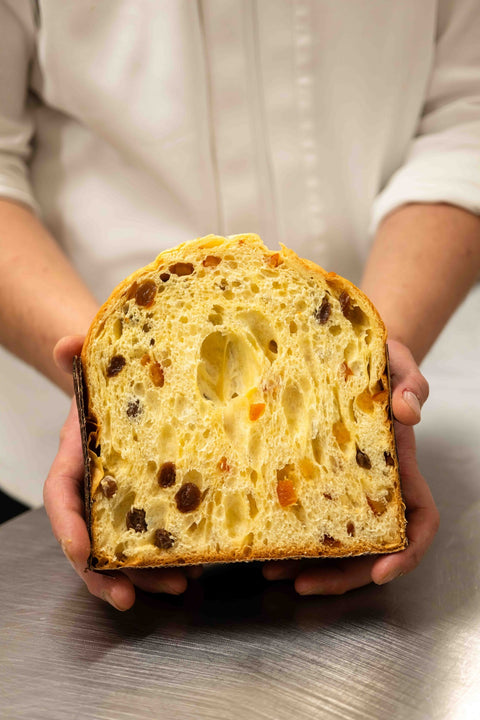
An industrial panettone, made with baking powder and emulsifiers, absorbs custard unevenly: the compact crumb resists on the surface then becomes waterlogged too quickly. A natural sourdough panettone, developed over 72 hours with a living lievito madre, has a more open and regular cell structure. It absorbs custard gradually, without collapsing, and releases complex aromas (lactic notes, slight acidity, brown butter) that integrate into the custard rather than disappearing under the toppings.
To choose the right panettone for this recipe, favor a version with candied fruits or orange blossom: their citrus notes amplify the custard's orange zest.
Key points
Successful panettone perdu relies on three precise actions: thick slices, smooth custard, controlled heat.
| Point | Details |
|---|---|
| Slice thickness | Cut at least 2 cm thick to prevent crumbling during soaking. |
| Balanced custard | Mix whole milk and cream for a rich texture without crushing the crumb. |
| Heat control | Cook over medium-low heat and finish in the oven at 90–100°C if the inside is still raw. |
| Recommended toppings | Mascarpone, chestnut cream, or poached fruits to balance the richness of the dish. |
| Christophe Louie sourdough panettone | The cell structure of the classico panettone absorbs custard evenly for a tender result. |
What panettone perdu really reveals
Panettone perdu is often presented as a "day-after-holiday" recipe, a way not to waste. That's true, but it's reductive. What interests me about this preparation is that it reveals the quality of the starting panettone better than any direct tasting. When you soak a slice in hot custard, the crumb does not lie: an industrial panettone becomes mushy, a sourdough panettone remains tender and holds heat. It is a truth test.
What most recipes don't say is that panettone perdu isn't a "salvage" recipe. At our house, we sometimes prepare it with panettone that is still fresh, on purpose, for a Sunday brunch. The initial light toasting of the slices, the Amaretto-scented custard, the mascarpone placed at the last second: it's a full-fledged dish, not a "bottom of the drawer" solution. Next time you serve it at the table, don't mention that it was a leftover. No one will guess.
Our house sourdough panettone, made for this recipe
Panettone perdu deserves a panettone that lives up to it. At Christophe Louie, the orange blossom panettone is particularly suited to this recipe: its citrus notes naturally extend the custard's orange zest, and its 72-hour sourdough crumb holds up perfectly to soaking without falling apart.
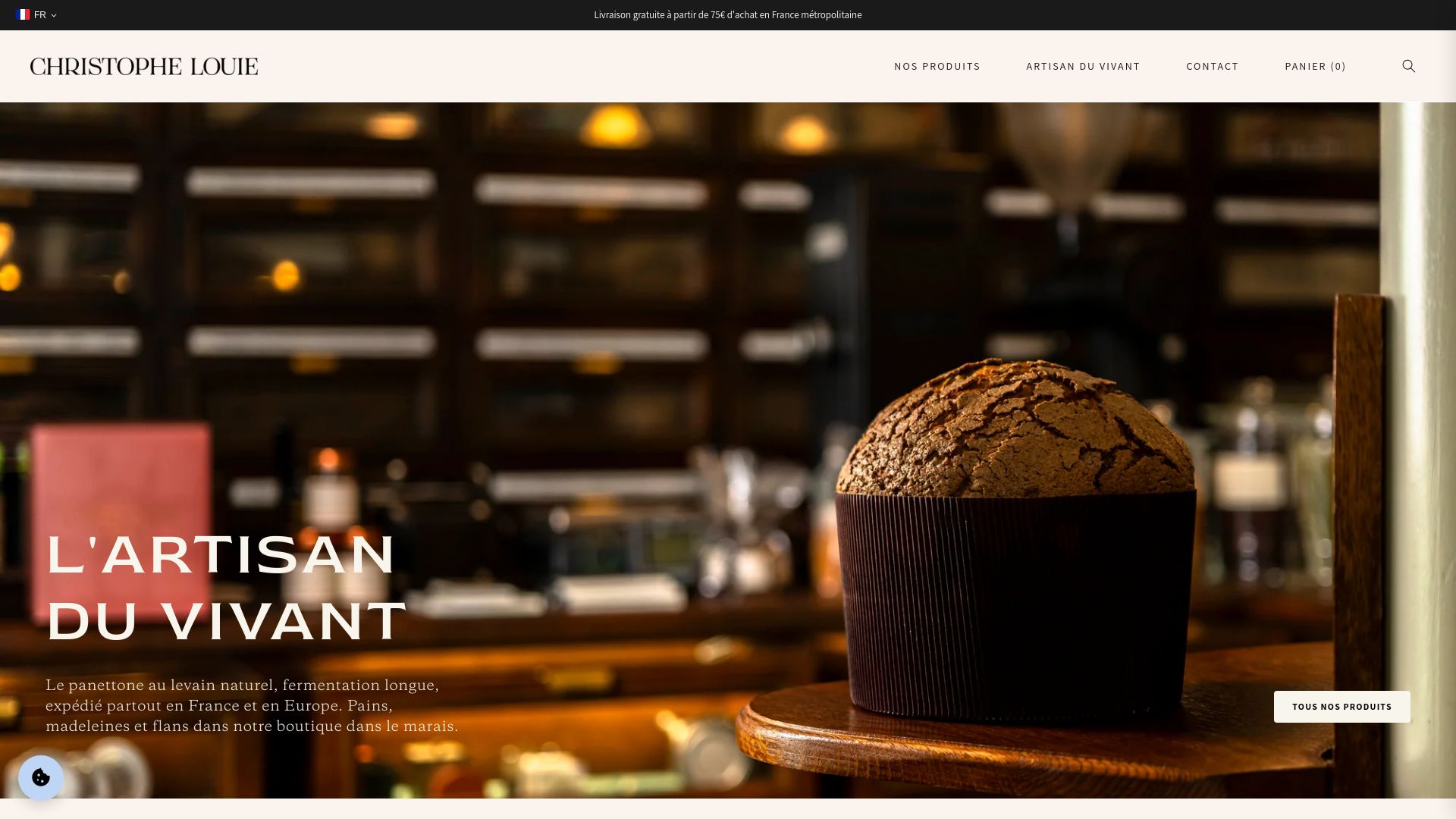
The house offers home delivery throughout France and click & collect at 12 rue Dupetit-Thouars, in the Marais (Paris 3rd). To explore all available flavors, the complete collection of panettones is accessible online all year round. Order directly on christophelouie.com and receive your panettone in 24 to 48 hours.
Sources and useful reading
- Recette panettone façon pain perdu — La Cuisine de ma Mère: benchmark French recipe with detailed proportions.
- Panettone French Toast — Food Network Kitchen: classic American version, useful for cooking timings.
- Panettone French Toast — Giada De Laurentiis / Food Network: pro technique for the custard and oven finishing.
- Pain perdu de panettone — GialloZafferano: technical tips on slice thickness and cooking stability.
- Panettone perdu — Saveurs: gourmet version with aromatics (zest, sweet alcohol).
- Panettone perdu — L’Express: pre-toasting tip for very fresh panettone.
- Panettone French Toast — Jamie Oliver: a seasonal approach with flexible toppings.
- How to enjoy panettone? — Christophe Louie: tasting tips and pairings to go further.