Natural sourdough in pastry: the secret to a successful panettone and brioche
Natural sourdough is a living culture of yeast and lactic acid bacteria which, when well-controlled, gives pastries an aromatic palette and shelf life that yeast alone cannot offer. This result requires rigor: regular feedings (refreshments), adjusted hydration, and a respected fermentation schedule. At the workshop, this principle is applied over 72 hours for a panettone, proving that these microbial mechanisms produce concrete results in artisan baking.
In short:
- A homemade sourdough is generally usable by the seventh day if it doubles in volume in less than six hours after a feeding.
- After the first week, a sourdough intended for occasional use can be kept in the refrigerator to slow down fermentation, with a weekly feeding.
- For panettone, choose a stiff sourdough and a 72-hour fermentation; brioche requires a more hydrated sourdough and a shorter bulk fermentation.
- In France, the "sourdough" (au levain) label remains permitted if the added commercial yeast does not exceed 0.2% of the flour weight.
- If your sourdough stagnates, use rye or T80 flour for three to four feedings; if there is no progress after 72 hours, start a new culture.
Table of Contents
- What is natural sourdough? Microbiology and role in fermented dough
- Practical recipe: making your own homemade sourdough, stiff or liquid
- Maintenance and feedings: keeping a sourdough alive between pastries
- Adapting sourdough for pastry: panettone, brioches, and viennoiseries
- Benefits, limitations, and regulations of the "sourdough" term
- Frequent errors and quick sourdough troubleshooting
- Workshop example: the 72-hour method of the Christophe Louie house
- Artisan's perspective: why choose sourdough in pastry
- Discover and buy: panettones, brioches, and sourdough breads from Christophe Louie
- Frequently Asked Questions
- Sources
What is natural sourdough? Microbiology and role in fermented dough
Natural sourdough is the result of the encounter between flour, water, and wild flora that colonizes this mixture over the course of feedings. This flora combines lactic acid bacteria and yeast that coexist in an acidic balance unique to each sourdough. Among the species frequently identified in bakery sourdoughs are Fructilactobacillus sanfranciscensis and Kazachstania humilis, which contribute to both the acidification of the dough and the aromatic richness of the finished product.
This flora fulfills several functions at once:
- It acidifies the dough, which slows the development of mold and extends shelf life.
- It generates complex aromatic compounds, absent from fermentation using yeast alone.
- It modifies the structure of the gluten, resulting in a more supple crumb and better consistency.
The microbial diversity of a sourdough directly influences the aromas and shelf life of the product, unlike industrial yeast, which acts primarily through rapid CO2 production without providing this complexity.
Practical recipe: making your own homemade sourdough, stiff or liquid
Starting a sourdough requires few raw materials, but does require patience. The equipment remains simple: a glass jar, a scale, quality flour, and non-chlorinated water if possible.
- Day 1: mix 50 grams of rye or T80 flour with 50 grams of lukewarm water in a wide jar.
- Days 2 to 4: feed daily with the same amounts of flour and water, removing part of the previous mixture to prevent accumulation.
- Days 5 to 7: observe the appearance of bubbles and a slight acidic odor, signs that fermentation is establishing itself.
- From Day 7 onwards: switch to two daily feedings if the sourdough doubles in volume in less than six hours, which indicates sufficient activity for baking. -->
The ideal ambient temperature is around 22 to 25 degrees Celsius. A sourdough that stagnates beyond a week often benefits from a change of flour, switching to whole wheat or rye flour, which is richer in nutrients for the flora.
Maintenance and feedings: keeping a sourdough alive between pastries
A sourdough used in daily baking is fed once or twice a day at room temperature. For occasional use, the refrigerator slows down fermentation and allows you to space out feedings to once a week.
- A healthy sourdough doubles or triples in volume a few hours after a feeding, with visible bubbles on the surface.
- An acidic and fruity odor signals a good balance; an acetone or solvent odor indicates prolonged starvation.
- For a panettone or brioche recipe, plan to keep at least 100 to 150 grams of active sourdough in reserve, beyond the amount used in the dough.
Pro tip: more vigorous kneading during feeding incorporates oxygen and revives a sourdough that was rising slowly on previous days.
Adapting sourdough for pastry: panettone, brioches, and viennoiseries

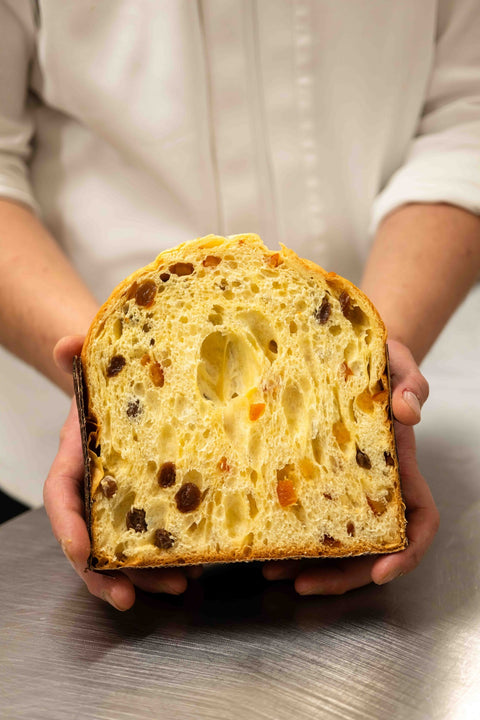
Traditional panettone requires a stiff sourdough with moderate hydration, because this consistency promotes slower, more structured fermentation, which is necessary for the structure of the stringy crumb. The professional two-dough method relies on an initial kneading followed by bulk fermentation, then a second enriched dough that develops the final aroma throughout the entire schedule.
For sourdough brioche, the hydration is higher, with a shorter bulk fermentation than for panettone, because the dough, enriched with butter and eggs, requires less time to develop its structure. Our article on slow proofing for brioche details these timing adjustments.
| Preparation | Sourdough Hydration | Bulk Fermentation Time |
|---|---|---|
| Panettone (stiff sourdough) | moderate hydration | long fermentation |
| Sourdough Brioche | higher hydration | shorter fermentation |
| Standard sourdough bread | variable hydration | variable fermentation |
Strains like Kazachstania humilis and Fructilactobacillus sanfranciscensis, identified as central in the artisan production of panettone, explain part of this aromatic complexity unique to well-maintained stiff sourdoughs.
Benefits, limitations, and regulations of the "sourdough" term
Sourdough provides a real gain in shelf life and aromatic depth, but it requires an investment in time that industrial yeast does not demand. Reviews on the subject report positive effects on the sensory level and on certain nutritional markers, such as the glycemic index or the availability of certain minerals.
- Long fermentation reduces the staling rate of the finished product.
- It improves the availability of minerals like magnesium or zinc, which are otherwise trapped by phytic acid.
- It modulates the glycemic index of certain products through the partial breakdown of starch during proofing.
In France, the term "sourdough" (au levain) is subject to precise rules: commercial yeast can be added up to 0.2% of the flour weight in the final phase without losing this designation. Beyond that, the product can no longer claim this name.
Frequent errors and quick sourdough troubleshooting
A sourdough that overflows from the jar simply signals activity that is too vigorous for its container: switch to a larger container and feed it more often. A sourdough that is inactive after several days of regular feedings often suffers from flour that is low in nutrients or an ambient temperature that is too low.
- Stagnating sourdough: switch to rye or T80 flour for three to four consecutive feedings.
- Persistent unpleasant odor: increase feedings to twice a day for 48 hours before deeming the sourdough lost.
- No improvement after 72 hours of this protocol: starting from a new culture is often faster than an unsuccessful revival. -->
Pro tip: always keep a small reserve of sourdough in the refrigerator before testing an aggressive feeding, in case the operation goes wrong.
Workshop example: the 72-hour method of the Christophe Louie house
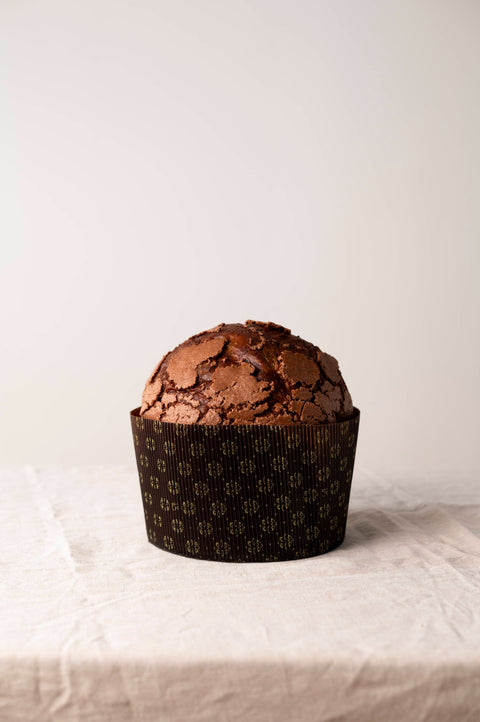
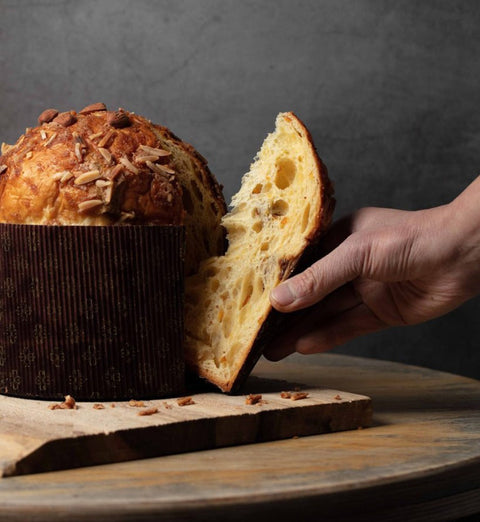
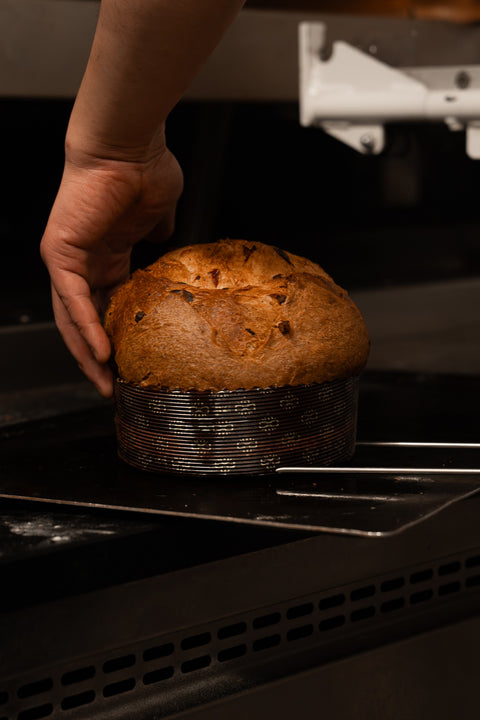
The natural sourdough panettone follows a two-dough process spread over 72 hours, with a living sourdough maintained daily and shaped by hand before baking. This long calendar, associated with precise temperature control, results in a characteristic stringy texture and prolonged natural shelf life, without resorting to accelerated processes. Certain flours are chosen for their technical qualities, while the other ingredients are sourced locally.
A living sourdough, a long fermentation, and manual shaping: these three steps, repeated with rigor over 72 hours, build the stringy texture and natural preservation of our panettone.
This approach also makes it possible to deseasonalize the product, since the extended shelf life eliminates the issue of unsold goods usually associated with certain seasonal products, drawing inspiration from the use of natural honey in aromatic drinks which provides both flavor and preservation.
Artisan's perspective: why choose sourdough in pastry
Sourdough requires time, but it rewards this patience with a taste that no shortcut can replicate. Three priorities for success: respect the fermentation calendar rather than shortening it, choose a flour adapted to the strain you want to promote, and taste your sourdough regularly to learn how to recognize its own health signals.
— Christophe
Discover and buy: panettones, brioches, and sourdough breads from Christophe Louie
Reproducing a stable stiff sourdough at home, maintained over several weeks for a panettone with a stringy texture, requires a learning process that few amateur pastry chefs see through to the end. Our panettone collection applies this two-dough method over 72 hours, with a living sourdough maintained in our workshop.
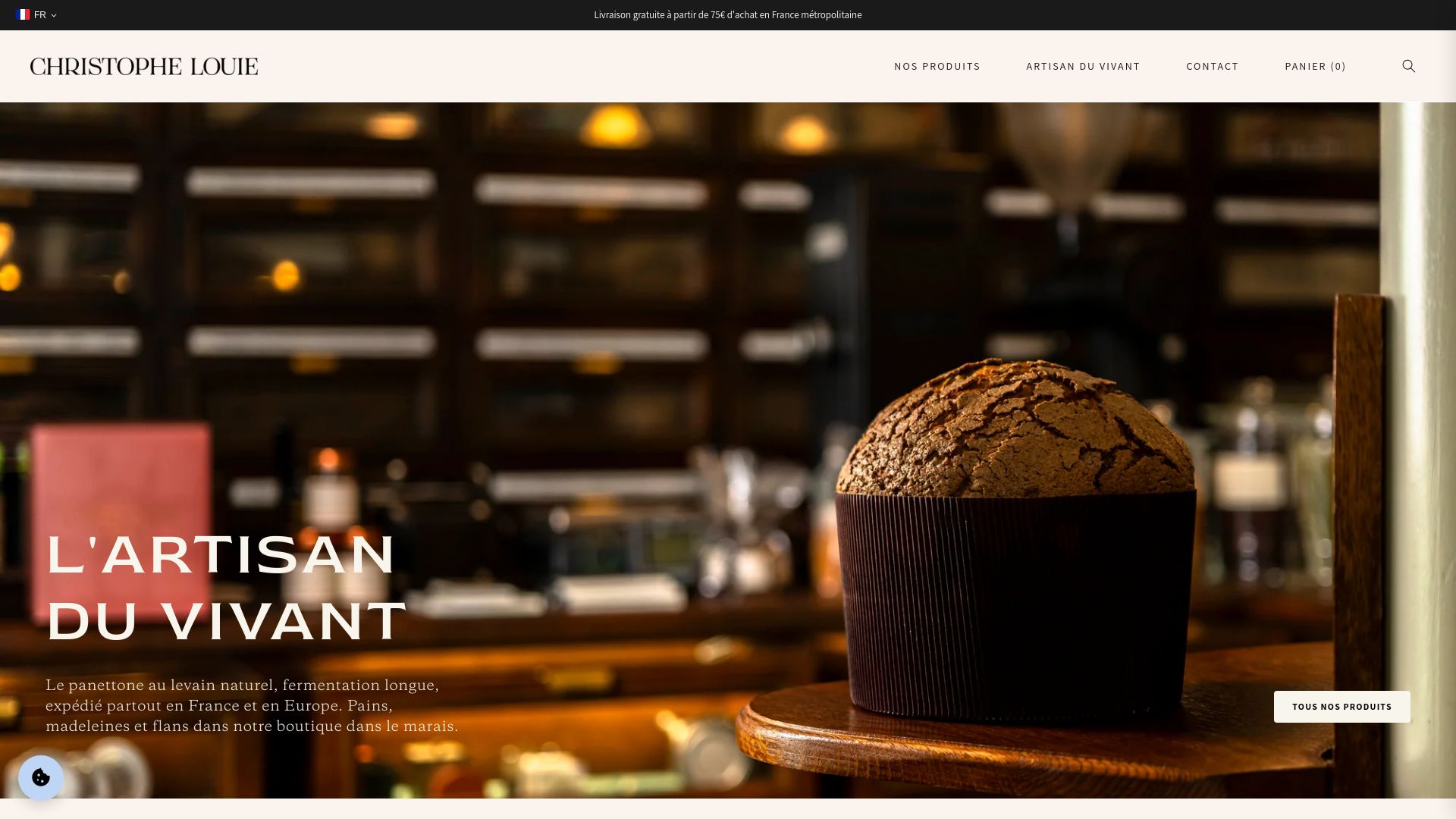
Our sourdough breads follow the same logic of long fermentation, available for purchase online or via click & collect for those who wish to directly compare the result of a well-controlled sourdough.
Frequently Asked Questions
What is the difference between natural sourdough and baker's yeast?
Natural sourdough combines lactic acid bacteria and wild yeast, which acidify the dough and produce complex aromas, while baker's yeast acts primarily through rapid CO2 production without that complexity. Sourdough also requires a longer proofing time.
How long does it take to create a homemade sourdough?
A sourdough generally becomes usable from the seventh day after its creation, provided it is fed daily with flour and water in equal proportions. A sourdough that doubles in volume in less than six hours after feeding is ready for a first pastry project.
Why does sourdough panettone require a stiff sourdough?
Our two-dough process relies on this consistency to maintain a 72-hour schedule.
Can you use the same sourdough for bread and brioche?
Yes, but the hydration must be adjusted: a more liquid sourdough is suitable for standard bread, while a sourdough brioche often requires a shorter bulk fermentation due to the enrichment of butter and eggs. Our sourdough brioche recipe details these proportions.
What are the signs of a healthy sourdough?
An active sourdough doubles or triples in volume a few hours after a feeding, with visible bubbles and an acidic and fruity odor. A solvent odor or total lack of activity after several days, on the contrary, signals a weakened sourdough that needs to be revived.
Sources
- Microbial diversity of sourdoughs (PMC7374928)
- Yeasts and lactic acid bacteria for panettone production (MDPI, 2021)