French Bakery Traditions: Bread, Pastry and Sourdough
French baking rests on three separate trades, each with its own shop, its own skills and its own rules: the boulangerie for bread, the pâtisserie for pastry and cakes, and viennoiserie for the buttery, yeasted breakfast pastries in between. Add a daily bread ritual recognized by UNESCO and a sourdough revival led by a small group of artisans, and you have most of what makes a French bakery what it is. This guide walks through each tradition, explains the vocabulary you will meet at the counter, and shows how a Paris sourdough house like ours fits into the story.
TL;DR
- A true boulangerie must bake its bread on the premises. A pâtisserie is the pastry trade, and viennoiserie sits between the two.
- The traditional baguette, with its hand-shaping and long fermentation, was added to UNESCO’s intangible heritage list in 2022.
- Sourdough was largely replaced by baker’s yeast in the twentieth century and came back thanks to artisan bakers who rejected industrial shortcuts.
- French pastries follow occasions: weddings, coffee after a meal, the end-of-year holidays. Each has its own classic.
- In Paris, the best way to understand all this is to taste it: bread, brioche and, in season, a slow-fermented panettone.
Table of Contents
- Boulangerie, pâtisserie, viennoiserie: three trades, three shop windows
- The baguette and the daily ritual
- Sourdough: lost to industry, won back by artisans
- Pastries follow the calendar and the occasion
- Our perspective
- How to taste French bakery traditions in Paris
- Bring a piece of the tradition home
- Reading a French bakery like a local
- FAQ
- Sources
Boulangerie, pâtisserie, viennoiserie: three trades, three shop windows
Tourists often walk into a French bakery and see everything at once: loaves, croissants, tarts, éclairs. Behind the counter, though, the vocabulary is precise, and knowing it changes how you read a street full of shops.
Boulangerie: bread first
In France, a business must bake its bread on its own premises to hold the formal title of boulangerie. That rule is the line between a craft bakery and a shop that simply reheats or resells bread made elsewhere. A boulangerie may also sell pâtisserie and viennoiserie, but its core identity remains traditional bread.
When you see a loaf pulled from the oven at the back of the shop, with flour still on the baker’s forearms, you are looking at the tradition in its simplest form.
Pâtisserie: the pastry craft
The Académie française defines pâtisserie as the making and selling of baked preparations built from a dough, an appareil (a prepared mixture) or a filling. By extension, the word also names the cakes themselves and the shop that sells them. So “a pâtisserie” can be a trade, a single cake or an address, depending on the sentence.
The pâtisserie is the refined end of the spectrum: precise, layered, often built from several components assembled by hand. Le Cordon Bleu describes it as a specialized craft distinct from the boulangerie, which focuses mainly on bread.
Viennoiserie: the bridge
Le Robert defines viennoiserie as a fine bakery product that is not bread, with the croissant and the brioche as its standard examples. The name points to Vienna: these are breakfast pastries in the Viennese style, and they act as a bridge between pâtisserie and French bread. They are typically made with white flour and active yeast, and some use enriched puff pastry.
That bridge role matters for sourdough bakers. A brioche is bread dough enriched with butter and eggs, so a baker who masters fermentation can apply the same skills to both worlds.
A quick reference
| Trade | What it makes | What defines it |
|---|---|---|
| Boulangerie | Baguettes, country loaves, rye and sourdough breads | Bread baked on the premises |
| Pâtisserie | Éclairs, tarts, layered cakes, entremets | Pastry craft built from doughs, mixtures and fillings |
| Viennoiserie | Croissants, brioche, pains au chocolat | Enriched, yeasted dough between bread and pastry |
The baguette and the daily ritual
No French bakery tradition is more visible than the baguette. In 2022, UNESCO’s Intergovernmental Committee inscribed the know-how and culture of the baguette on the list of intangible cultural heritage. The decision describes a loaf made from flour, water, salt, and leaven and/or yeast.
What UNESCO recognizes is a process as much as a product. The same decision lists the steps: weighing the ingredients, kneading, a first fermentation, dividing the dough, a rest, manual shaping, a second fermentation, scoring with shallow cuts, then baking. None of those steps is spectacular alone. The craft is in the timing between them, which the baker reads from the dough rather than the clock.

More than a loaf
The French Ministry of Culture treats the baguette as a social element that fosters community and convivial rituals in everyday life. In practice, that means the neighborhood bakery is a place of routine: the same shop, the same greeting, bread carried home under the arm.
For a visitor, the ritual is easy to join. Walk in, say bonjour first, order one item at a time, and ask what came out of the oven most recently. Bakers are usually happy to point you to the loaf that is still warm.
Sourdough: lost to industry, won back by artisans
Most people assume French bread has always been made the same way. The reality is more interesting, and it is where the sourdough story begins.
What makes sourdough different
A sourdough dough is not simply a slower yeast dough. Researchers at the Vrije Universiteit Brussel explain that in sourdough, lactic acid bacteria fermentation contributes to the acidification and leavening of the dough alongside yeast. That dual fermentation is why sourdough bread tastes more complex, with a gentle acidity that baker’s yeast alone does not produce.

The industrial detour
In the middle of the twentieth century, industrialization led to the widespread replacement of sourdough with baker’s yeast in French breadmaking. Le Cordon Bleu describes the same period: after World War II and through the 1980s, France promoted large-scale production, refined flour and improvers, while fresh yeast and the direct method gradually phased out leaven-based fermentation.
The result was faster, cheaper, more regular bread, and often less flavorful bread. It is the reason many French people of a certain age remember the baguette as softer and blander than it once was.
The artisan comeback
The same source notes that a small group of artisan bakers challenged this industrial heritage, and that effort is behind the modern renaissance of French boulangerie. Sourdough has since regained importance, as the Brussels researchers also observe.
That comeback is the tradition we work in. A living starter needs feeding, patience and temperature control. If you want to understand it from the inside, our guide to the Italian-style living starter, the lievito madre explains how it is kept and why it matters.
Pastries follow the calendar and the occasion
French pastry is rarely random. Many classics belong to a moment: a wedding, the end of a meal, a holiday table.
Celebrations
The croquembouche is the clearest example. It is a pyramid of choux pastry puffs wrapped in spun-sugar caramel, and it is traditionally served at weddings, christenings and First Holy Communion events. It is a centerpiece, meant to be seen before it is eaten.

After the meal
Campus France, the national agency promoting French higher education, mentions the café gourmand: coffee served with a few mini-pastries at the end of a meal. It is a modern habit that lets you taste several desserts in small portions, and it shows how the pastry tradition has adapted to restaurant life.
The everyday classics
If you want a first tasting list, these are the pastries most often described as classics, with the definitions from French Today’s pastry guide:
- Éclair: choux pastry filled with flavored custard cream.
- Mille-feuille: layers of puff pastry with pastry cream.
- Paris-Brest: puff pastry with praline buttercream, covered with powdered sugar.
- Madeleine: a small shell-shaped sponge cake, listed among the best-known French pastries in the same guide.
Notice how many of these are built on a few base doughs: choux, puff pastry, sponge. French pastry is a system of foundations and variations, which is why a pastry chef trained in one house can move to another and still recognize the grammar.
Our perspective
We make our living in the space where those traditions meet. Our house is built around naturally leavened panettone, but the way we think about it is thoroughly French: a bread-maker’s discipline applied to an enriched dough.
The core of our approach is time. Our panettone follows a traditional two-dough process spread over 72 hours, with a living starter, careful control of temperatures and shaping by hand. We believe this is the only way to get the stringy, feathery crumb and the layered aroma we want, and it is also why our panettone keeps naturally for up to five weeks, without accelerated industrial methods.
We source our ingredients with the same logic as a good boulangerie. Our flours come from Italy because of their technical qualities, and everything else comes from France. That mix of Italian technique and French produce is, to us, what modern French baking looks like: curious, rooted and exacting.
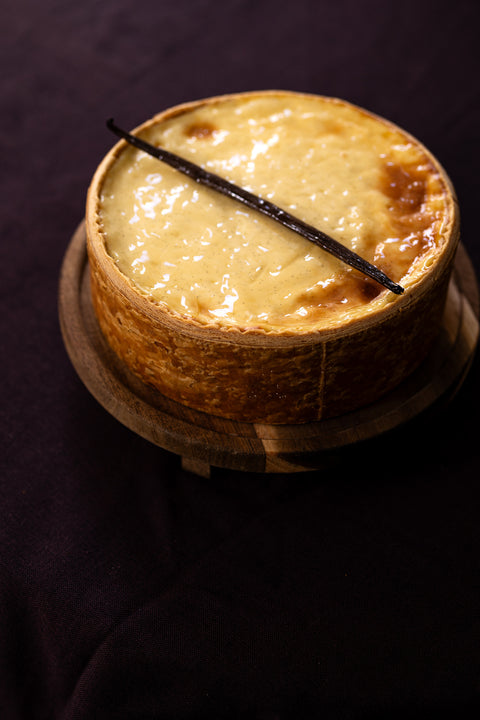
We do not treat panettone as a once-a-year novelty. Around it we bake sourdough brioche, breads, madeleines, cakes and flans, because a sourdough house should be a place you visit in March as readily as in December.
Christophe
How to taste French bakery traditions in Paris
Reading about bakery culture helps, but a morning of tasting teaches more. Here is a simple route to follow, whatever neighborhood you are in.
- Start with bread. Choose a shop where you can see the oven or smell fresh bread from the street. Buy a baguette or a country loaf and eat the heel on the spot.
- Move to viennoiserie. Order a plain croissant or a brioche rather than a filled one. The simpler the pastry, the more honest the test of the baker’s butter, fermentation and baking.
- Finish with a pâtisserie. Pick one classic, such as an éclair or a mille-feuille, and compare the pastry and cream rather than the decoration.
- Ask a question. Which flour? How long does the dough rest? Good bakers enjoy being asked.
A few things to look for at the counter:
- A short list of ingredients, and staff who can name them.
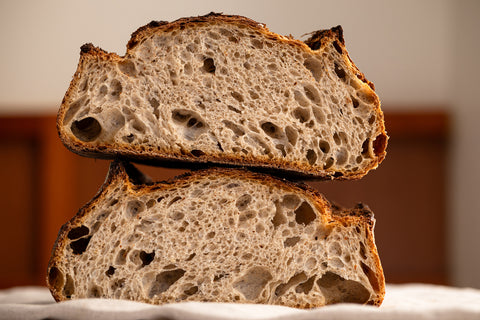
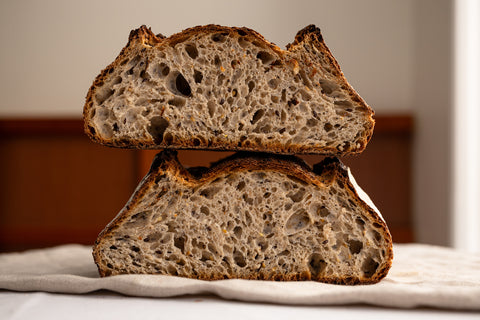
- Bread with an irregular crumb and a deeply colored crust, rather than a uniform, pale loaf.
- A small, focused range instead of an endless display.
If you are planning a tasting walk, our notes on where to buy pastries in Paris and on what to look for in a good pastry shop can help you choose. For a closer look at our own approach, see our page on the sourdough bakery and pastry shop in Paris.
Brioche: where bread and pastry meet
Brioche is the easiest way to feel the bridge between boulangerie and pâtisserie. A good one should pull apart in soft strands and smell of butter and slow fermentation. We explain the method in our article on sourdough brioche, and if you like a touch of sweetness, our pink praline brioche is a good example of a classic flavor in a sourdough dough.
Bring a piece of the tradition home
If you would rather taste than read, our sourdough range is available in our Marais boutique at 12 rue Dupetit-Thouars, 75003 Paris, and online across France. Our panettone is made with a living starter over 72 hours, in sweet and savory versions. Browse the full panettone collection, or try Le Petit Louie à la praline rose, our sourdough brioche, if you want something for the table this weekend.

For a country loaf, our pain de campagne made from heritage wheat varieties is a good place to start. Our breads, madeleines and flans are all on our online shop, and prices are shown on each product page.
Reading a French bakery like a local
A few habits make the difference between visiting a bakery and understanding it.
Learn the vocabulary
The three words above, boulangerie, pâtisserie and viennoiserie, cover most of what you will see. Add tradition on a baguette label, which signals a certain type of loaf, and levain, which means sourdough starter. If a sign says levain, the baker is telling you that fermentation is part of the story.
Go early, and go often
Bread is at its best within hours of baking. The French habit of buying a little at a time, rather than stocking up, follows from that. If you are staying in Paris, treat the bakery as part of your daily routine and you will notice how different the same loaf tastes at 8 a.m. and at 6 p.m.
Taste for texture, not decoration
Social media rewards looks. Tradition rewards texture: the snap of a crust, the elasticity of a crumb, the way a custard sets. When you taste, close your eyes for a moment and ask what the dough is doing.
Respect the season
Pastries follow the calendar, and so do many of our own products. Panettone is the clearest case: it is a winter favorite, but made with a long natural fermentation it keeps well, and you can enjoy it beyond the holiday weeks. For the current range and availability, check our product pages.
FAQ
What is the difference between a boulangerie and a pâtisserie?
A boulangerie is defined by bread baked on its own premises, and its main trade stays traditional breads. A pâtisserie is the pastry craft: cakes, tarts and refined desserts, as well as the shop that sells them. Many French shops combine both, but the two skills are distinct.
What does viennoiserie mean?
Viennoiserie describes fine baked goods that are not bread, such as croissants and brioche. The word refers to the Viennese style of breakfast pastry. They are usually made with enriched, yeasted dough and sit between pâtisserie and bread.
Is traditional French bread made with sourdough?
Not always. A traditional baguette is made from flour, water, salt, and leaven and/or yeast, according to UNESCO’s description. Sourdough was largely displaced by baker’s yeast in the twentieth century, and many artisan bakers have brought it back since.
What are the most famous French pastries?
The classics include the éclair, mille-feuille, Paris-Brest, madeleine, religieuse and tarte Tatin. For celebrations, the croquembouche is the traditional centerpiece. Start with one or two simple ones and compare how different bakers make them.
Where can I try sourdough baking in Paris?
Look for shops that mention a natural starter, levain, and keep a short, focused range. You are welcome at our boutique in the Marais, and our premium bakery page explains what we make and how.
Sources
- Decision of the Intergovernmental Committee: 17.COM 7.B.8, UNESCO
- Les savoir-faire artisanaux et la culture de la baguette de pain, French Ministry of Culture
- What are pâtisserie, boulangerie and viennoiserie?, Le Cordon Bleu
- A closer look at Le Cordon Bleu Advanced Studies in Taste, Le Cordon Bleu
- Wheat sourdough breadmaking, Vrije Universiteit Brussel
- Viennoiserie, Le Robert
- Pâtisserie, Dictionnaire de l’Académie française
- French Pastries Explained, French Today
- 45+ Best Famous French Pastries and Desserts, Spatula Desserts