Premium panettone packaging: which format to choose for a high-end presentation
For a customizable premium panettone, opt for printed premium cardboard boxes for retail display, collector tins for high-end gifting, and rigid magnetic boxes for corporate orders. The deciding factor between these three families remains the end use: boutique visibility, reusability for the recipient, or the premium presentation effect of a corporate gift. In any case, the panettone must remain protected by an airtight food-grade bag before being boxed.
In brief:
- Printed metal tins often require runs of 5,000 to 25,000 units, compared to a few hundred to a few thousand for cardboard.
- The heat-sealed bag protects the panettone from moisture and oxidation during storage and transport; the box remains secondary.
- Before mass production, request a physical sample with a color proof and allow two to three weeks after approval.
- Demand technical data sheets for inks and materials, as well as FSC or PEFC certification; vague eco-friendly claims are not enough.
- According to Packaging Scotland, steel for reusable tins had an 84% recycling rate in Europe in 2024.
Table of contents
- Supplier shortlist and recommended formats: technical comparison table
- Prioritized checklist: decisive criteria for choosing premium panettone packaging
- Premium formats and finishes explained: technical cardboard vs. tins
- Sustainability and compliance: remaining premium while adhering to AGEC and CITEO
- Practical application: choosing packaging for an artisanal premium bakery
- Sustainable luxury and customer perception: the balance to strike
- Ordering a premium panettone from Christophe Louie
- Frequently asked questions
- Sources
Supplier shortlist and recommended formats: technical comparison table
The French market for premium panettone packaging includes several specialized suppliers, each with a different approach to manufacturing, volume, and finishes. Before comparing their technical features, here is what distinguishes each player identified in this segment:
- Packinbox offers a wide range of ready-to-customize gift boxes, designed for seasonal collections and retail.
- Ebro Color manufactures its boxes directly to custom specifications, offering factory-direct contact suitable for industrial volume orders.
- Pack.ly focuses on the flexibility of its designs (handles, windows, tray openings) and on-demand printing for small batches.
- Emballage Girard sells ready-to-stock windowed and kraft boxes, suitable for boutique sales and displays.
- Masaş specializes in printed tins, with extensive technical documentation on internal food-grade lacquer and offset printing options.
| Supplier | Best for | Material | Available finishes | Indicative MOQ |
|---|---|---|---|---|
| Packinbox | Seasonal collections and retail | Premium cardboard | Gilding, window, rigid box | Varies by format |
| Ebro Color | Custom industrial volumes | Technical cardboard | Full customization | High (direct manufacturing) |
| Pack.ly | Small and medium runs | Printed cardboard | Handle, window, tray | Low to medium |
| Emballage Girard | Boutique sales and displays | Kraft/windowed cardboard | Window, raw kraft | Sold in batches |
| Masaş | Reusable collector tins | Metal (tinplate) | Offset, internal food-grade lacquer | High for offset tins |
According to the Masaş technical guide, minimum order quantities for offset-printed tins can climb between 5,000 and 25,000 units depending on the format, whereas offset-printed cardboard or SBS board allows for runs of a few hundred to a few thousand copies, depending on the workshop. This gap weighs heavily in the trade-off between the prestige of metal and the flexibility of cardboard for small artisanal production.
Prioritized checklist: decisive criteria for choosing premium panettone packaging
Before briefing a supplier, it is better to go through a simple grid of criteria rather than being swayed by the first visual that appeals to you. Here is the order of priority that works best for a premium panettone:
- Product protection: The heat-sealed bag remains the real barrier against moisture and oxidation; the box is merely secondary packaging.
- Finish compatibility and recyclability: Limit metal surfaces that cannot be separated from cardboard so as not to penalize sorting.
- Commercial visibility: A boutique window sells the product, while an opaque tin sells the promise of an object that will remain with the recipient.
- Sizing and stackability: A box that is poorly calibrated for the weight of the panettone will crush or leave too much room, damaging the dome during transport.
- MOQ and seasonal calendar: Tin manufacturers often require orders to be placed several months before the end-of-year season, unlike cardboard, which offers greater responsiveness.
Pro tip: Always ask for a physical color proof before mass production; the color on screen and the color printed on cardboard almost never match perfectly.
Premium formats and finishes explained: technical cardboard vs. tins
The choice of format dictates both the recipient's experience and the manufacturing cost. The "hat box" and the cube format, sometimes called "kubo," dominate gift boxes thanks to their clean opening and good shelf presence. The panettone carrier box, often equipped with a handle, facilitates transport for customers who leave with their purchase in hand. The windowed box remains the most effective for boutique sales, as it showcases the panettone's crust and dome without opening the packaging. The rigid magnetic box provides a resealable effect that is particularly appreciated for corporate orders. The tin, however, shifts categories: it is an object that the recipient keeps after eating the panettone.
Regarding finishes, several techniques distinguish premium packaging from standard packaging:
- Hot foil stamping marks the logo or a motif in metallic relief, for an immediate signature effect.
- Embossing and debossing play on the texture of the cardboard without adding material, thus having no impact on recyclability.
- Spot UV varnish highlights certain areas of the visual while leaving the rest of the cardboard matte.
- Soft-touch lamination provides a pleasant velvet texture to the touch, but slightly increases costs and complicates recycling if it covers the entire surface.
- Paper or velvet inserts hold the panettone in the box and prevent it from moving during transport.
Sustainability and compliance: remaining premium while adhering to AGEC and CITEO
The AGEC law now imposes concrete obligations on premium packaging: reduction of plastic, extended producer responsibility (EPR), and strict regulation of environmental claims, as detailed in the Maestro Manufacture AGEC guide. Concretely, a serious supplier must be able to document their inks and materials rather than settling for a vague marketing argument.
To stay compliant without sacrificing aesthetics:
- Opt for food-grade SBS-type cardboard combined with bio-based inks rather than a multi-material assembly that is difficult to separate—a recommendation that aligns with the eco-design approaches from ADEME.
- Limit the soft-touch laminated area or combine it with selective hot foil stamping to maintain a good CITEO rating while retaining a premium texture.
- Require FSC or PEFC certifications for the cardboard as well as technical data sheets for the inks used.
Steel from tin boxes reached an 84% recycling rate in Europe in 2024, making it a credible medium for reusable packaging, according to Packaging Scotland. This figure explains why the tin remains a sustainable argument despite its image sometimes being perceived as less ecological than cardboard.
Practical application: choosing packaging for an artisanal premium bakery
For direct sales in our boutique, we prioritize premium cardboard boxes with windows, which showcase the product without opening the packaging. For high-end gifting, a collector tin extends the product's presence with the recipient long after consumption. For corporate orders, a rigid magnetic box structures an offer of several references into a single, resealable box.
Before validating a supplier, we systematically ask for:
- A physical sample with a color proof,
- The technical data sheet for food contact of the cardboard or internal lacquer,
- Proof of FSC or PEFC certification,
- The production lead time and the actual minimum order quantity.
Pro tip: Always keep a margin of two to three weeks between receiving the proof and final production; the end-of-year season quickly saturates printer capacity.
As for the product, our long fermentation with live sourdough and our heat-sealed bag packaging before boxing remain the arguments that justify packaging that measures up to the content.

Sustainable luxury and customer perception: the balance to strike
The real risk is not choosing between luxury and sustainability, but attempting to display both without proof. FSC-certified cardboard with a known CITEO rating is more convincing than a vague ecological claim on the label. The prestige of a premium panettone relies just as much on the supplier's documentary rigor as it does on the gilding on the box.
— Christophe
Ordering a premium panettone from Christophe Louie
Our long fermentation and live sourdough yield a panettone with extended natural shelf life, which leaves time to organize packaging that lives up to this expertise for your B2B gift boxes or end-of-year gourmet presents.
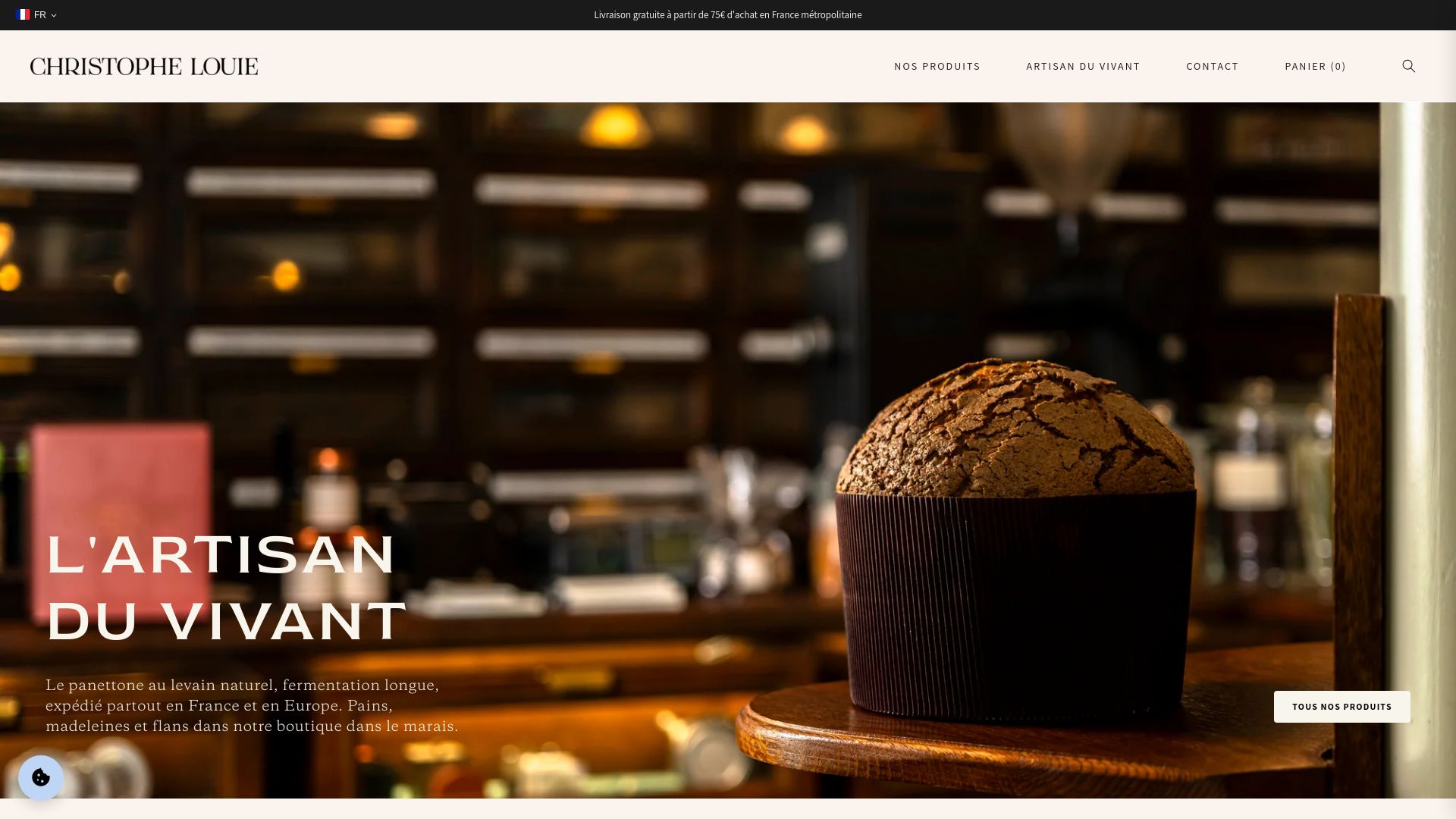
For a corporate order, gift box, or signature collaboration, our Panettone collection remains the natural starting point, and we also accommodate custom box requests via our boutique. We deliver to boutiques and e-commerce across a wide area and offer Click & Collect for urgent orders. For an exceptional gift that relies on the gourmet reputation of a territory, the selection of best Corsican biscuit makers by PerfectHost well illustrates the same demand for regional authenticity that we apply to our sourdough.
- Consult our Panettone collection for B2C and B2B orders.
- Contact us for a personalized quote on a corporate gift box or signature collaboration.
- Find our sourdough breads and viennoiseries to complete a gourmet gift box all year round.
Frequently asked questions
What is the best brand of artisanal panettone?
The answer depends on the style you are looking for: industrial Italian panettone focuses on volume and price, while an artisanal house like ours focuses on live sourdough and long fermentation. The best choice is the one that fits the purpose, whether for daily enjoyment or an exceptional gift.
Why is artisanal panettone more expensive?
The price reflects the production time, the quality of the raw materials, and the manual shaping, much more so than just the packaging. Long fermentation with live sourdough requires more labor than an accelerated industrial process, which justifies the price difference.
What is the best packaging for a premium panettone?
There is no single best packaging, but three families adapted to three uses: the windowed cardboard box for boutique sales, the collector tin for sustainable gifting, and the rigid magnetic box for corporate orders. The choice depends mainly on what the recipient will do with the box after eating the panettone.
Is natural sourdough panettone suitable for a balanced diet?
Panettone remains a pastry rich in butter, eggs, and sugar, so it should be consumed as an occasional pleasure rather than a daily food item. However, long fermentation with natural sourdough improves the digestibility and natural preservation of the product compared to an accelerated industrial process.
Sources
- ADEME — Household packaging and graphic paper (summary)
- Packaging Scotland — Steel packaging recycling record
- Masaş — Panettone tin packaging guide
- Maestro Manufacture — AGEC law on premium packaging (2026 guide)