Flan with Coffee: How to Make It, Serve It and Pair It
“Flan with coffee” means two things, and this guide covers both. It can be a coffee-flavored caramel custard, or a flan you eat alongside a cup of espresso. For the first, the method is simple: a deep amber caramel, a strained custard, a gentle water bath and a long chill, ideally the day before. For the second, serve the flan cold, in small slices, next to a short, strong coffee.
TL;DR
- Coffee flan is a caramel custard baked in a water bath at a low temperature (300°F / 150°C in a tested America’s Test Kitchen recipe) until it reaches 180°F (82°C).
- Make it at least one day ahead. Chilling is part of the setting, not waiting time.
- Serve it cold, unmolded on a platter with a raised rim so the caramel stays put.
- Pair it with espresso, a pinch of cinnamon or a few coffee beans, and keep portions small.
- If you would rather not bake, a good vanilla flan from a pastry shop with a coffee on the side makes a very good finish to a meal.
Table of Contents
- What coffee flan actually is
- The method that works every time
- Quick reference: timings from tested recipes
- Should flan be served cold?
- What to serve with flan
- Flan for a dinner party
- When you want the flan without the baking
- Our perspective on flan and coffee
- Bring a Parisian pastry to your table
- Common mistakes and how to fix them
- FAQ
- Sources
What coffee flan actually is
Flan de café is the classic caramel flan with coffee infused into the custard. The caramel lines the mold and becomes the sauce when you invert the dessert. The custard is eggs, milk and sugar, and the coffee gives it a roasted, slightly bitter edge that balances the sweetness of the caramel.
There are two broad families. The first is the Latin style, built on condensed and evaporated milk for a dense, very smooth texture. The second is the lighter European style, made with fresh milk and cream, which is closer to a crème caramel. Both work with coffee. The Latin version holds its shape better on a platter, which matters for a dinner party. The lighter version is softer and more delicate on the spoon.
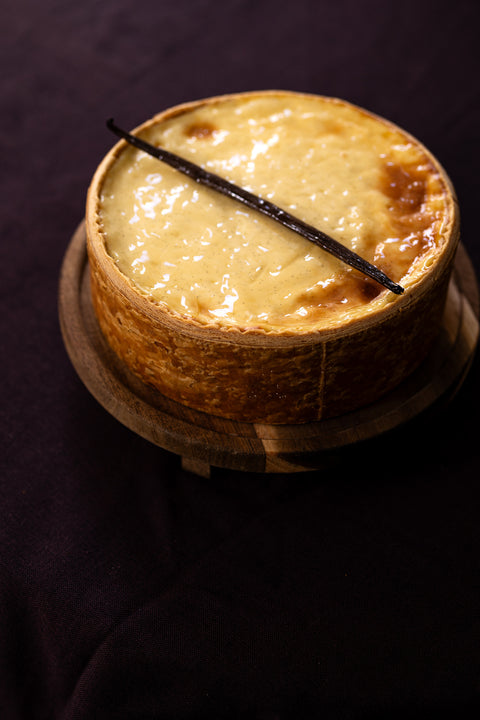
A Parisian flan, the thick, bakery-style custard tart, is a different pastry again: no caramel, no mold, no inversion. We come back to that in the pairing section.
The method that works every time
Recipes disagree on details, but the good ones share the same backbone. This one follows the structure of the tested Coffee Latin Flan from America’s Test Kitchen, with technique notes from other recipes where they add something useful.
Step 1: Cook the caramel until it is properly amber
Cook sugar and a little water until the syrup turns a deep reddish amber, then pour it into the mold at once. A pale caramel tastes only sweet. A deep one brings the bitterness that stands up to coffee. For a sense of proportion, Effing Delicious uses 150 g of sugar with 45 ml of water for its caramel.
Work quickly once the color is right, because caramel keeps cooking in the pan. Tilt the mold to coat the bottom. Be careful: caramel is far hotter than boiling water.
Step 2: Build the custard and the coffee flavor
The America’s Test Kitchen recipe whisks whole eggs and extra yolks with condensed, evaporated and whole milk. The extra yolks give richness and a silky slice.
For the coffee itself, a concentrated source is better than a weak brew. Muy Bueno Blog recommends instant coffee rather than brewed coffee, so the custard stays silky and concentrated instead of being thinned by extra liquid. Espresso powder does the same job. If you use real espresso, use less milk to compensate.
If you heat your milk with the coffee, let it warm and dissolve the coffee, then pour it slowly over the eggs while whisking. Pouring fast scrambles the eggs.
Step 3: Strain, always
Pour the mixture through a fine-mesh sieve into the mold. Straining removes any bits of cooked egg and breaks up the air bubbles that leave pinholes in the finished flan. It takes thirty seconds and is the cheapest way to get a smooth cut.
Step 4: Bake gently in a water bath
Place the mold in a larger pan and pour hot water around it. Cover the mold. The water keeps the temperature even, so the custard sets gradually instead of curdling at the edges.
The tested recipe bakes at 300°F (150°C) for 1¼ to 1½ hours, until the center registers 180°F (82°C) on an instant-read thermometer. Other recipes use slightly different settings. Effing Delicious bakes at 325°F for 55 to 65 minutes and looks for a center that wobbles like soft gelatin. The New York Times recipe bakes for 1 to 1½ hours and calls for a knife that comes out clean. Times depend on the depth of your mold, so trust the thermometer or the wobble more than the clock.

No oven? A Mexican recipe published by Infobae cooks the flan in a bain-marie on the stovetop for 40 to 50 minutes. It keeps the water hot but not at a hard boil, and it tests doneness with a knife or toothpick that comes out clean or with just a few drops of cream.
Step 5: Cool, then chill for a long time
Let the flan cool completely before it goes into the refrigerator. America’s Test Kitchen then chills it overnight or for up to 4 days. The same recipe says to make it at least one day before serving. Effing Delicious puts it well: the chill is part of how the flan sets, so it should feel cold and firm at the edges before you try to release it.
This is why flan is such a good dinner party dessert. The work is done a day or two before, and nothing is left to do while your guests are at the table.
Step 6: Unmold without drama
Run a thin, blunt metal spatula around the rim. Tip the mold gently from side to side: if the flan moves, it is loose. The New York Times recipe adds a useful rescue: if the caramel has hardened, set the mold in a pan of hot water for a few minutes to loosen it. Then invert it onto a serving dish.

America’s Test Kitchen suggests a platter with a raised rim, because the liquid caramel runs out when the flan is released. It also suggests scraping the last caramel from the mold onto the flan with a rubber spatula.
Quick reference: timings from tested recipes
| Recipe style | Oven or stove | Cooking time | Minimum chill |
|---|---|---|---|
| America’s Test Kitchen, Latin style | Oven, 300°F, covered water bath | 1¼ to 1½ hours | Overnight (at least one day ahead) |
| New York Times, flan de café | Oven, hot-water bath | 1 to 1½ hours | Cool fully, then refrigerate |
| Infobae, no oven | Stovetop bain-marie | 40 to 50 minutes | 4 hours |
Should flan be served cold?
Yes. Coffee flan is a chilled dessert. The New York Times recipe states that it should be served chilled, after cooling completely before it goes into the refrigerator. Cold also makes the flan easier to slice cleanly and keeps the caramel glossy rather than runny.
Two practical points:
- Take it out shortly before serving. A few minutes on the counter softens the chill without losing the shape. Do not leave it out for long. Infobae advises against keeping the flan at room temperature for more than 2 hours, because cold storage protects its texture, flavor and food safety.
- Unmold at the last moment, or just before guests sit down. An unmolded flan sitting on a warm table loses its caramel pool and its crisp edges.
Stored in the refrigerator, the Infobae recipe keeps for 3 to 4 days, and the America’s Test Kitchen version holds up to 4 days.
What to serve with flan
The point of a flan is its smooth, rich texture, so the best companions add contrast rather than more sweetness.
- Coffee or espresso. Muy Bueno Blog suggests serving coffee flan as an after-dinner dessert with coffee or espresso, garnished with a light dusting of cinnamon or a few coffee beans.
- Something crisp. A thin almond tuile, a shortbread or a few toasted nuts give a crunch the custard lacks.
- Something acidic. Fresh berries, a few orange segments or a spoonful of unsweetened whipped cream cut through the caramel.
- A square of dark chocolate. In the French dinner tradition, as described in one account of a Paris-style evening, coffee comes in a small cup with a square of dark chocolate or a chocolate truffle, which is believed to bring out the coffee’s aroma.
Avoid piling on caramel sauce, ice cream and cookies together. A flan that is already coffee-flavored needs one or two accents, not five.
Flan for a dinner party
A flan is nearly ideal for entertaining because everything happens early. A workable plan:
- Two days before: make the caramel and custard, bake, cool and refrigerate in the mold.
- The day before: buy your garnish: berries, chocolate, coffee beans. Choose your platter.
- On the day: unmold an hour or so before dinner, return it to the refrigerator on its platter, and take it out when you clear the main course.
Portions. The tested America’s Test Kitchen recipe serves 8 to 10 and is baked in an 8½ by 4½-inch loaf pan. In a French dinner, dessert tends to be light and small so guests do not feel overfull, so thin slices are the right call. For a bigger table, bake two flans rather than one very deep one, which would take longer to set evenly.
Serving the coffee. Offer espresso or a small cup of strong filter coffee with the flan, not instead of it. If your guests would rather skip caffeine in the evening, a small cup of decaf with the same garnishes works equally well.
When you want the flan without the baking
A homemade coffee flan is a two-day project. Plenty of hosts, and plenty of people who simply want something excellent with their afternoon coffee, prefer to buy a flan made by professionals.
We do not make a coffee-flavored flan, but our vanilla Parisian flan, sold by the slice, is a natural partner for a coffee. A creamy vanilla custard next to a bitter espresso is the same contrast you are trying to create with coffee flan, with none of the caramel work. Our chocolate flan is the choice if you want something deeper against a dark roast.
If you are in Paris, our guide on where to eat a flan in the city lists the options, and we also offer flan delivery in Paris for the days you would like it brought to you.
Our perspective on flan and coffee
We are a Parisian house, and in our kitchen we treat coffee and pastry as one conversation. A good dessert is not judged alone: it is judged by what it does to the cup next to it.
Our work is built on slow, patient fermentation, whether in our sourdough panettone, which follows a traditional two-dough process over 72 hours, or in the brioches and breads we bake. That patience is also what we admire in a flan. A coffee flan that was made the day before, chilled properly and unmolded with care is better than one rushed to the table, for the same reason a dough left to take its time is better.
When we pair, we look for contrast. A silky vanilla flan and a short espresso give you sweetness, cream, bitterness and warmth in a few bites. We would rather you serve a small, well-made slice than a large, heavy one. It is the same approach we describe in our four rules for pairing panettone and coffee: balance the sweetness, respect the roast, keep the portion modest.
Choose your ingredients carefully, give the dessert the time it needs, and let the coffee do its part.
Christophe
Bring a Parisian pastry to your table
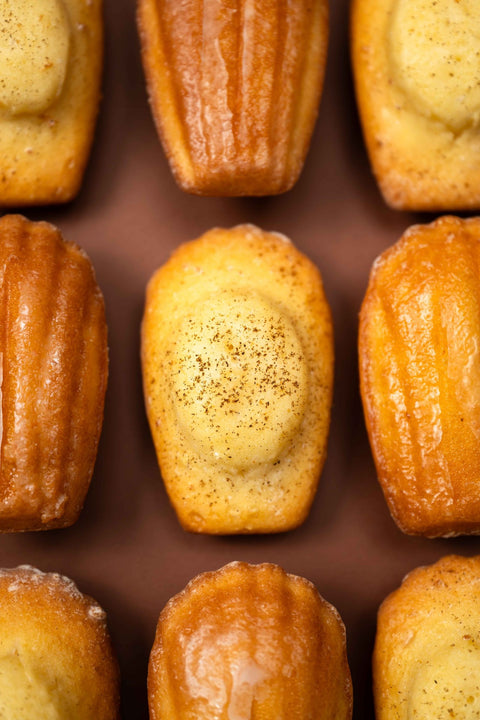
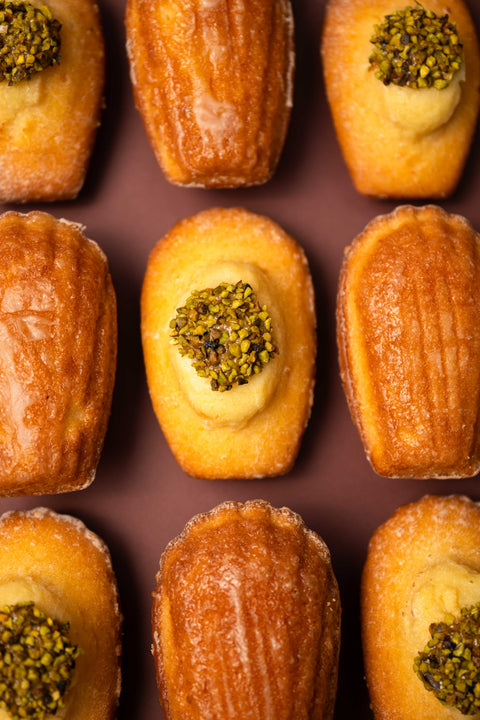
If you would like a dessert ready for your coffee without the two-day preparation, you can find our flans, madeleines, sourdough breads and more in our online shop, or in our boutique at 12 rue Dupetit-Thouars in the Marais, Paris 3rd. Our flan comes by the slice, so you can serve exactly the number of guests you have.

For a more festive table, our sourdough panettones pair beautifully with coffee too, and you can browse our pastries for something small to serve alongside.
Common mistakes and how to fix them
- Holes or bubbles in the flan. The custard was not strained, or the oven was too hot. Strain through a fine sieve and keep the temperature low.
- Scrambled or grainy texture. The hot milk went into the eggs too fast. Pour it in a thin stream while whisking.
- Caramel that will not release. Warm the mold briefly in hot water, as the New York Times recipe suggests, then invert.
- Weak coffee flavor. Use a concentrated coffee such as instant or espresso powder, as Muy Bueno Blog recommends, instead of a thin brewed cup.
- Soft, wet slices. The flan was not chilled long enough. Give it the night.
FAQ
Should flan be served cold?
Yes. Coffee flan is made to be served chilled. The New York Times recipe says to cool it completely, refrigerate it and serve it cold, which also keeps the slices clean and the caramel glossy. Take it out only shortly before serving.
What should you serve with coffee flan?
Serve it with espresso or strong coffee, and garnish with a light dusting of cinnamon or a few coffee beans. Fresh berries, orange segments, a crisp cookie or a square of dark chocolate give contrast without adding more sweetness.
Can I make flan the day before a dinner party?
Yes, and you should. America’s Test Kitchen says its coffee flan should be made at least one day before serving and can be chilled for up to 4 days. Unmold it shortly before dinner and keep it refrigerated until dessert.
How long should coffee flan chill?
The shortest chill in the recipes we reviewed is 4 hours, for the stovetop Infobae version. Overnight is the better rule for a flan that slices cleanly and releases from its mold without tearing.
Is a Parisian flan the same as coffee flan?
No. Coffee flan is a caramel custard that is unmolded and served upside down. A Parisian flan is a thick, baked custard pastry, with no caramel layer. Both go very well with a cup of coffee.
Sources
- Coffee Latin Flan, America’s Test Kitchen
- Flan de Café (Coffee Caramel Custard), The New York Times
- Receta de flan de café sin horno y con pocos ingredientes, Infobae
- Coffee Flan Recipe with Caramel Custard, Effing Delicious
- Mexican Coffee Flan, Muy Bueno Blog
- Review of An Evening with Julia Child, Michelle’s Messy Musings