Panettone size: which formats to choose according to your needs
Panettones are commonly available in mini (approx. 100g), sharing (500g to 750g), and 1 kg formats, which is the benchmark size. A mini serves one person, a 500g is suitable for a small group of four to six guests, and the 1kg can easily be shared among eight to twelve people during a festive meal. The larger the panettone, the more it is often appreciated for its stringy, soft crumb.
In short:
- The 1 kg format remains the benchmark for fully enjoying natural sourdough and achieving a stringy crumb for festive meals.
- Panettone sizes range from 100g for an individual bite to over 2 kg for large groups, with each size serving a specific purpose.
- The panettone mold size must be chosen according to the desired capacity, generally 154mm for 500g and 172mm for 1kg, with a small margin for rising.
- A panettone of 750g or more requires special attention during baking, in particular a cross-shaped incision and cooling upside down to prevent it from collapsing.
- To optimize storage and sharing, it is advisable to adjust the size according to the number of guests, choosing the appropriate quantity to minimize waste.
Table of contents
- What are the most common panettone sizes?
- How to read panettone mold dimensions
- How many people is a given size suitable for?
- How to choose the size before buying or baking
- Baking and handling: steps that change according to size
- Why the 1kg remains the artisan's benchmark
- Find your sourdough panettone, from mini to family size
- Sources
- Frequently Asked Questions
What are the most common panettone sizes?
The artisanal panettone market is structured around six weight tiers, each corresponding to a specific use. The mini size, around 100g, serves as an individual bite or as an accompaniment gift. The individual size or "small sharing" size, between 250g and 300g, is suitable for two or three people for a gourmet breakfast.
Next comes the core trio of the range: 500g, 750g, and 1kg. The 1kg remains the historical benchmark for traditional panettone, as recalled by the encyclopedic entry dedicated to the product, which mentions a typical height of 11 to 13 centimeters for these standard sizes. Beyond this, giant panettones, often over 2 or 3 kg, exist primarily for large tables or fine grocery displays, as shown by selections of panettones and pandoros available online.
| Size | Typical weight | Approximate dimensions | Common usage |
|---|---|---|---|
| Mini | approx. 100g | diameter between 7 and 10 cm | Gift, individual bite |
| Individual | between 250 and 300g | diameter around 10 cm | A few people |
| Sharing | approx. 500g | diameter around 16 cm | Small group |
| Sharing | approx. 750g | diameter around 16 cm, taller | Family table |
| Classic | approx. 1 kg | diameter close to 16 cm, height approx. 11 cm | Common usage |
| Giant | more than 1 kg | diameter greater than 18 cm | Special occasions |
These dimensions vary slightly depending on the mold manufacturer and the type of packaging, whether it is a disposable paper mold or a rigid cardboard gift box intended for year-end gifting.
How to read panettone mold dimensions
A mold technical sheet generally displays three pieces of information: a product code, a capacity in grams, and dimensions in millimeters (diameter then height). The specifications of a specialized mold manufacturer provide precise benchmarks: a mold listed for 500g measures about 154 × 105 mm, while a mold for 1,000g rises to 172 × 125 mm.
| Dough capacity | Approximate diameter | Approximate height |
|---|---|---|
| 500g | 154 mm | 105 mm |
| 750g | 160 mm | 115 mm |
| 1,000g | 172 mm | 125 mm |
A rule of thumb among amateur bakers is to fill the mold to approximately one-third of its total capacity, to leave room for the dough to rise without overflowing during fermentation and baking. For home baking, a paper mold handles this rise better than a rigid mold and avoids any prior greasing.
How many people is a given size suitable for?
Associating weight with the number of guests prevents waste or, conversely, the disappointment of the panettone finishing too quickly. Here are the benchmarks followed by most artisans:
- Mini (≈ 100g): one to two people, ideal as an individual gift or for tasting.
- 250 to 300g: two to three people, perfect for brunch for two.
- 500g: four to six people, the size for a family breakfast.
- 750g: six to eight people, suitable for an intimate festive dessert.
- 1kg: eight to twelve people, the classic for a Christmas or New Year's meal.
- Giant (> 1 kg): to be adjusted according to the exact weight, designed for large tables or company buffets.
The size also influences storage: an opened panettone dries out faster than a whole panettone carefully wrapped, so it is better to aim for the right size rather than too large if you don't intend to slice it right away.
How to choose the size before buying or baking
Before deciding between a 500g and a kilo, four questions are enough to guide the choice.
- How many guests will share the panettone? Count high rather than just right; a panettone keeps for several days once well wrapped.
- Do you need to transport or give it as a gift? The individual and 500g sizes travel better than a fragile giant.
- What is your budget? An artisanal 500g panettone is generally between €20 and €35, compared to €25 to €60 for a 750g to 1kg, depending on the quality of the ingredients.
- Does the label reveal true expertise? Look for mention of butter, egg yolks, and natural sourdough rather than industrial yeast, and a reasonable shelf life without added chemical preservatives.
Pro tip: An artisanal sourdough panettone is often recognized by its short ingredient list. If you read more than ten additives, it is probably not a true natural sourdough panettone.
To refine these criteria, our complete guide on choosing a panettone details every sign of quality.
Baking and handling: steps that change according to size
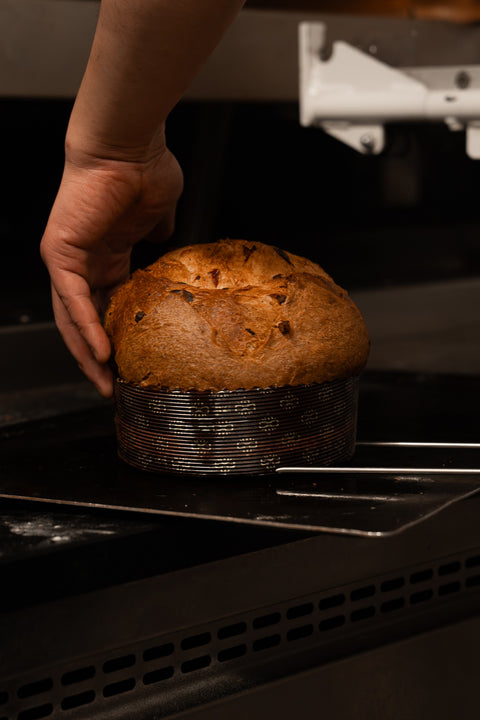
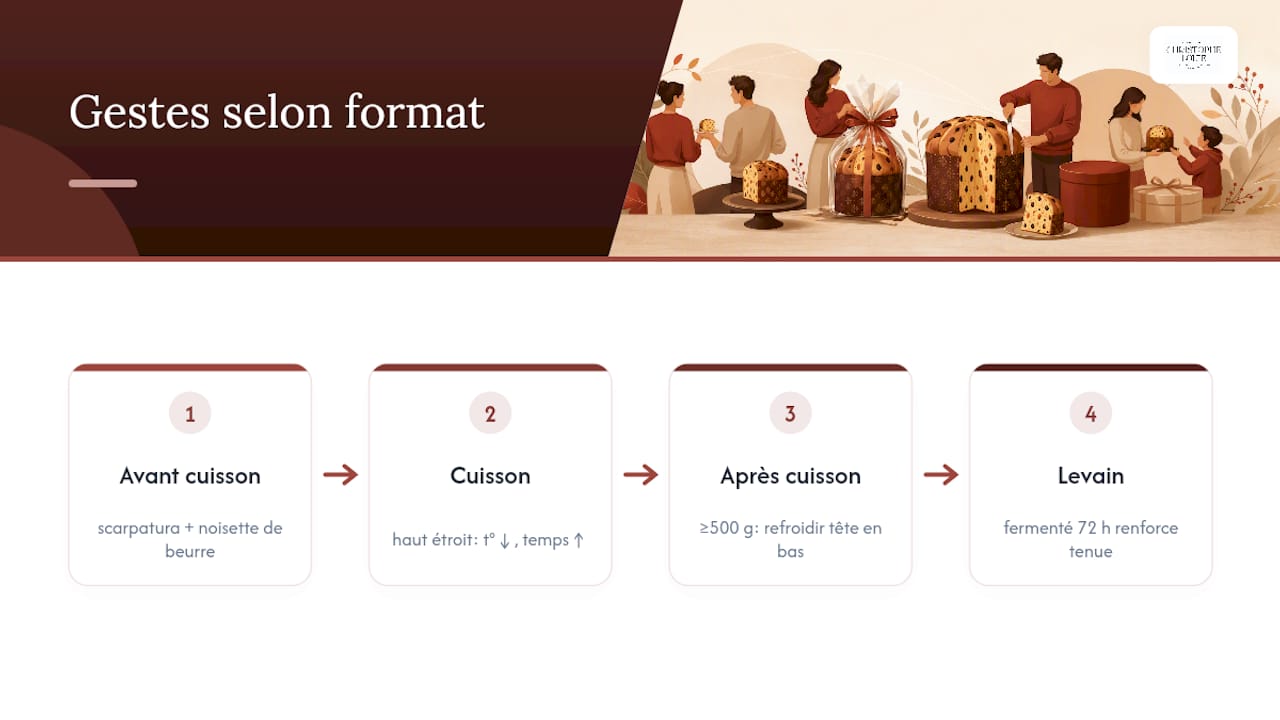
A panettone of 750g or more requires different attention than a mini size. The scarpatura, this cross-shaped incision made on top before baking, allows for an even opening of the dough; placing a small knob of butter in the center helps the crumb expand without tearing anarchically.
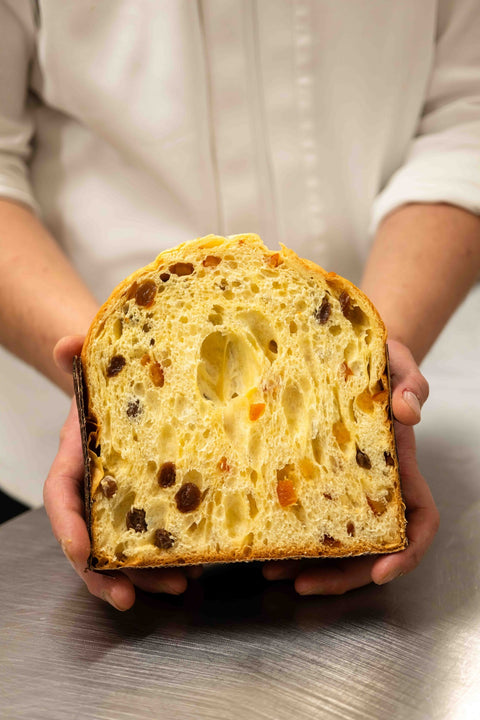
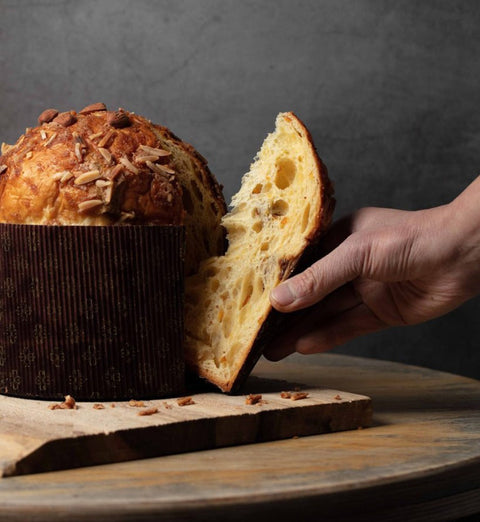
After coming out of the oven, 500g and larger formats must cool hanging upside down for several hours. Without this step, the weight of the still-warm crumb collapses on itself and compacts the texture. The oven settings also vary with the diameter and height of the mold: a tall and narrow panettone requires a lower temperature and a longer time than a wide and low format, to avoid excessive surface browning before the center is cooked. The living sourdough, fermented over 72 hours, strengthens this structure by giving the crumb a stringy texture that resists handling better than dough leavened with fast industrial yeast.
Why the 1kg remains the artisan's benchmark
The kilo is not an arbitrary choice: it is the format where natural sourdough best expresses its aromas, with enough volume to develop a stringy crumb without compromising the baking. Our range goes from mini to giant, designed to cover both individual tasting and sharing at a large table, without ever sacrificing natural preservation. Producing as precisely as possible, sizes included, is part of our approach.
— Christophe
Find your sourdough panettone, from mini to family size
This longevity changes everything: you can order in advance without fearing waste, whether for an individual gift or for sharing with family.
Each piece is shaped according to artisanal expertise, with a rigorous selection of flours and ingredients. Physical points of sale and online ordering options allow you to choose the size adapted to your occasion, with collection or delivery options. Discover our artisanal orange blossom panettone and browse all of our available products to find the right size for your table.
Sources
The mold dimensions cited come from the technical specifications of a specialized mold manufacturer and a product sheet detailing common capacities. The encyclopedic entry on panettone provides historical and organoleptic benchmarks, while the online selections of panettones and pandoros confirm the price ranges observed on the market.
- Baking panettone molds | Round paper high and low panettone baking moulds
- Panettone Molds - Panettone size: 1 kg
- Panettone — Wikipedia
- Panettones and pandoros: wide online selection
Frequently Asked Questions
What is the size of a panettone mold?
A panettone mold varies according to the target capacity: approximately 154 × 105 mm for 500g and 172 × 125 mm for 1kg, the format most widely used by specialized manufacturers.
What is the standard size of a cake mold?
A classic cake mold is often 20 cm in diameter, a size much wider than a panettone mold, which prioritizes height to accommodate the rise of sourdough dough.
How many people is a 26 cm mold suitable for?
A 20 cm round mold, a size more often used for a classic cake than for a panettone, generally provides ten to twelve servings for a festive dessert.
How do you know the size of your mold?
Measure the internal diameter at the base and the height of the walls, then compare these values to the manufacturers' capacity charts: a 172 × 125 mm mold typically corresponds to 1 kg of dough.
Which panettone size to choose for a Christmas dessert?
For a festive group of a variable number of people, the format around 1kg remains a suitable choice, with sufficient height for a stringy crumb and good stability when slicing.