Sourdough Breakfast Bread: What to Choose, How to Serve It
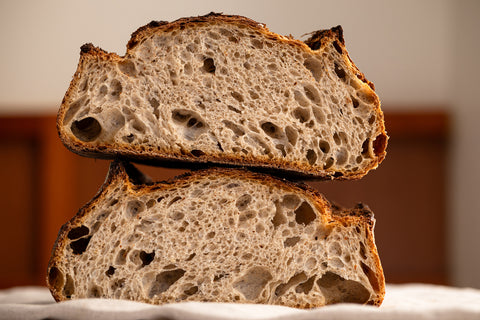
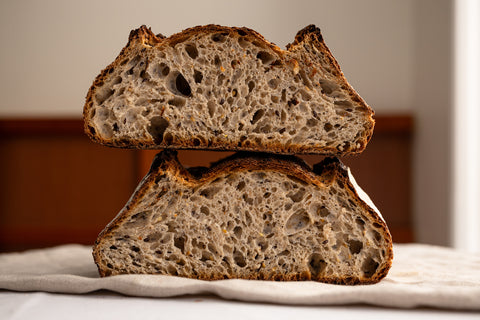
The best sourdough breakfast bread is a real naturally leavened loaf with a sturdy crumb. It slices cleanly, toasts well and keeps for days. Sweet mornings call for a sourdough brioche or a cinnamon-sugar toast. Savory ones call for a country loaf under eggs, avocado or cured ham. Below you will find how to recognize a genuine sourdough, whether it suits an early meal, what to put on it, and how to turn day-old slices into the best French toast of your week.
TL;DR
- In France, a bread sold as “au levain” is regulated, so look for the mention and ask your baker how long the dough ferments.
- For toast, a dense, fiber-rich loaf made with a sourdough starter is the sound choice, especially if you watch your blood sugar.
- Stale bread is an asset: two to three day old slices make the best French toast, and brioche needs only seconds in the custard.
- Sweet or savory, keep the topping simple and let the fermented flavor lead.
- Slice, freeze and toast from frozen if you cannot finish a loaf in time.
Table of Contents
- Is sourdough a good bread for breakfast?
- What goes with sourdough at breakfast
- Make the best French toast with sourdough
- Brioche for breakfast: sweet, rich and surprisingly versatile
- A French sourdough breakfast table
- Keeping sourdough fresh through the week
- Our perspective
- Where to find sourdough breakfast bread in Paris and across France
- FAQ
- Sources
Is sourdough a good bread for breakfast?
Yes, with a few nuances that are worth knowing. The French consumer magazine Que Choisir advises people who want to limit blood-sugar spikes at breakfast to pick a dense, fiber-rich bread fermented with sourdough rather than yeast, and mentions rye in particular.
The science behind this is encouraging but measured. A clinical study found that sourdough bread lowers the blood glucose rise after a meal compared with industrial bread, particularly when it is made with whole wheat flour. A 2022 systematic review adds that results vary widely with the microbes and the fermentation conditions, so not every sourdough behaves the same way. Practically, that means the loaf matters more than the label alone: the flour, the length of fermentation and the baker’s method all count.
Some people also find slowly fermented bread easier to digest. Consumer Reports notes that long sourdough leavening can cut the fructan content of wheat bread by as much as 92 percent, which may help some people with IBS or similar digestive issues. If you have a diagnosed digestive condition or manage diabetes, talk to your doctor or a registered dietitian before changing your breakfast routine.

Choosing a loaf: flour, salt and the “au levain” label
The British Heart Foundation points out that much sourdough is made with white flour, and that a wholemeal version is the better everyday option for fiber. It also reminds readers that bakery bread can be higher in salt than supermarket loaves. Both points are easy to act on: ask your baker which flours go in the loaf, and ask how much salt they use.
In France, the vocabulary is protected. The 1993 decree on bread categories reserves the mention “au levain” for breads that meet its definition. Researchers summarizing the French rules explain that a sourdough loaf contains only flour, water and salt, with at most a very small amount of baker’s yeast added at the final kneading. So a long ingredient list on a so-called sourdough should make you pause.
A quick checklist at the counter:
- Does the label say “au levain” or “pain au levain naturel”?
- Is the ingredient list short: flour, water, salt?
- Is the crumb dense enough to hold a topping, with a thick crust that crisps in the toaster?
- Is the flour wholemeal, stone-ground or from heritage wheat varieties rather than only white?
What goes with sourdough at breakfast
Sourdough has a gentle acidity, a chewy crumb and a toasty crust, which is why it takes both sweet and savory toppings so well. Recipe collections suggest avocado, eggs, cheese or smoked salmon with cream cheese on the savory side, and butter, honey, jam, nut butter or banana on the sweet side. A French pairing guide, for its part, matches country sourdough with charcuterie, ham and cheeses.
Savory mornings
- Eggs, any style. A soft-boiled egg with toasted soldiers is the classic. Poached or fried eggs on a thick slice turn the toast into a meal.
- Avocado and tomato. Mash the avocado with lemon and salt, add ripe tomato, and finish with olive oil.
- Ham and aged cheese. Cured ham, comté or any aged cheese on buttered toast is a very French start to the day.
- Smoked salmon and cream cheese. Toast the bread well so the crust holds up against the topping.
- Grilled cheese. Brie, gouda or cheddar all work in a sourdough sandwich, and a slow pan gives a golden crust.
Sweet mornings
- Good butter and jam. Simple and hard to beat, especially on a lightly toasted slice.
- Honey and ricotta, or nut butter and banana. Quick and filling.
- Cinnamon-sugar toast. Butter the slice, sprinkle on cinnamon sugar, and toast until it caramelizes.
- French toast with berries and maple syrup. More on this just below.
Make the best French toast with sourdough
French toast, or pain perdu, is the reason stale bread exists. One French brunch writer is clear that two to three day old bread is the condition for success: the slices absorb the custard without collapsing in the pan. Sourdough is ideal because its sturdy crumb keeps its structure while it soaks.
A reliable method:
- Cut slices about 2 cm thick from a loaf that is a couple of days old.
- Whisk eggs with milk or cream, a little sugar, cinnamon, a pinch of salt, nutmeg and vanilla. A well-known baking site uses eggs, half-and-half, sugar, cinnamon, salt, nutmeg and vanilla for its version.
- Soak each slice until it is saturated but not falling apart.
- Cook in a pan with butter over medium heat until deep golden on both sides.
- Serve with fruit, maple syrup or a spoonful of jam.
If your bread is very fresh, dry the slices for a while in a low oven first so they drink up the custard instead of turning soggy.
Brioche for breakfast: sweet, rich and surprisingly versatile
Brioche is the other great morning bread, and it is a natural partner to sourdough thinking: a slow, patient dough with butter and eggs. A French pairing guide lists brioche for breakfast and pain perdu, with jam, chestnut cream, chocolate, fruit or cream cheese, and even foie gras for a festive brunch.

Brioche French toast
Brioche is much richer and softer than a country loaf, so the soak is short. The same writer says stale brioche needs only 10 to 15 seconds of soaking per side. Any longer and it will fall apart. Cook it gently in butter, because the sugar in the dough browns fast.
Brioche breakfast and brunch ideas
| Idea | Sweet or savory | How to serve it |
|---|---|---|
| Toasted slices with butter and jam | Sweet | Lightly toast, spread while warm |
| Chestnut cream and fresh fruit | Sweet | Cold cream on warm toast, add pear or clementine |
| Chocolate spread or squares | Sweet | Press chocolate into a warm slice |
| Pain perdu with berries | Sweet | Short soak, butter in the pan |
| Cream cheese and smoked salmon | Savory | Toast first, add chives and lemon |
| Ham and cheese croque | Savory | Grill in a pan or oven until bubbling |
| Soft egg with brioche soldiers | Savory | Lightly toasted fingers for dipping |
Plain brioche on its own, torn warm from the oven, remains the simplest brunch of all.
Sourdough brioche at home
If you bake, sourdough brioche starts with a stiff starter mixed with flour, sugar, salt, eggs and butter. One home baker notes that the bulk fermentation can take up to 12 hours at room temperature, or the dough can rest in the fridge overnight and rise the next morning. That overnight option is a gift for breakfast: you mix in the evening and bake before the table is set.
Provence has its own breakfast-worthy cousin. The pompe à l’huile is a Christmas bread made with olive oil, traditionally without butter or eggs and perfumed with orange blossom water, anise and citrus zest.
A French sourdough breakfast table
Think of a spread rather than a recipe. For a weekend brunch for four, a combination like this works:
- A country sourdough loaf, sliced thick, for toasting.
- A brioche or two, sweet and soft, for the children and for those who like jam.
- Soft-boiled eggs, cured ham and a wedge of aged cheese.
- Good butter, honey, jam and seasonal fruit.
- Coffee or tea, and fresh orange juice.
Buy the bread the day before, so one loaf is fresh for slicing and the other has started to firm up for French toast on day two or three.
Keeping sourdough fresh through the week
Sourdough keeps better than most breads because its acidity slows staling. A few habits help:
- Store the loaf cut side down on a board, or in a cloth bag. Avoid sealed plastic, which softens the crust.
- Slice what you will not eat in two days and freeze it. Toast straight from frozen.
- Revive a slightly dry crust by passing the loaf under a brief splash of water, then into a hot oven for a few minutes.
- Keep the heel and the last slices for French toast, croutons or breadcrumbs.
Our perspective
We make our living from slow fermentation, so we have strong views on what a morning loaf should be.
At Christophe Louie, everything starts with a living starter. Our signature panettone follows a traditional two-dough process spread over 72 hours, and we apply the same patience to our sourdough brioches, our breads and our madeleines. Time does what shortcuts cannot: it builds aroma, develops a texture that pulls apart in long strands, and gives a naturally long shelf life. For our panettone, that is up to five weeks without any industrial accelerators.
For breakfast, we think a good sourdough should earn its place on the table in two ways. First, taste: a loaf with a deep, slightly tangy flavor that needs nothing more than butter. Second, honesty: flour, water, salt and time. We source our flours with care, Italian ones where their technical qualities matter, and every other ingredient in France.
Our favorite morning is a simple one. A slice of sourdough toasted until it crackles, or a sourdough brioche warmed gently, and a pot of coffee. Whatever is left over on day three becomes pain perdu, which is as it should be.
Christophe
Where to find sourdough breakfast bread in Paris and across France
If you would rather taste than bake, our Marais boutique at 12 rue Dupetit-Thouars (75003 Paris) and our online shop deliver across France. For toast, our Heritage Wheat Sourdough Loaf, 1 kg is the one to slice thick. For a sweet start, Le Petit Louie à la praline rose, our sourdough brioche with pink pralines, is made for butter and a warm toaster, or for a very good pain perdu once it has dried a little.

Browse our full range of sourdough breads, madeleines and flans, and if you are planning a festive brunch, our panettones slice beautifully for a holiday breakfast. Prices and availability are listed on each product page.
FAQ
Is it okay to eat sourdough bread for breakfast?
Yes. If you want to limit blood-sugar rises, Que Choisir recommends dense, fiber-rich bread fermented with a sourdough starter over yeast bread. Wholemeal versions add fiber. If you have diabetes or a digestive condition, check with your doctor or dietitian.
What goes well with sourdough bread for breakfast?
Savory options include eggs, avocado, cheese, ham or smoked salmon with cream cheese. On the sweet side, butter, honey, jam, nut butter and banana all work. Sourdough’s tang balances rich toppings particularly well.
Can I make sourdough bread for breakfast without much effort?
Yes, if you plan ahead. A dough can rest overnight in the fridge and finish rising the next morning. Otherwise, buy a loaf from a baker the day before and slice it for toast or French toast.
Is there a downside to eating sourdough bread?
Most sourdough is made with white flour, so it can be lower in fiber, and bakery loaves can be higher in salt, according to the British Heart Foundation. The answer is to choose a wholemeal loaf and ask your baker about the salt. Researchers also say it is still unclear how far sourdough fermentation alone brings health benefits.
How do I make French toast with sourdough or brioche?
Use bread that is two to three days old, soak briefly in an egg-and-milk custard and fry in butter. Sourdough tolerates a longer soak, while brioche needs only 10 to 15 seconds per side.
Sources
- Que Choisir: choosing bread for your health needs
- PubMed: sourdough bread and glycemic response
- PMC: nutritional benefits of sourdoughs, a systematic review
- Consumer Reports: is sourdough bread good for you?
- British Heart Foundation: is sourdough bread healthy?
- Légifrance: décret n° 93-1074 on bread categories
- UNSW: sourdough or sourfaux?
- To Get Recipes: what to eat with sourdough for breakfast
- Aventure Culinaire: bread and food pairing guide
- Rooted at Heart: ways to eat sourdough bread
- Brunch Story: traditional French toast
- King Arthur Baking: sourdough French toast
- Bread and More: sourdough brioche
- Breadtopia: pompe à l’huile