Slow proofing for brioche: the timings that make the difference
A brioche with a slow rise develops aromas that no quick rise can match, and the crumb gains that stringy texture that everyone seeks but doesn't always obtain. The principle is simple: you prepare the dough, start it at room temperature for 30 to 60 minutes, then let it proof for 8 to 12 hours in the refrigerator, around 4°C, before resuming the next morning.
Three parameters determine the final result:
- a strong flour, T45 type, capable of supporting the weight of the butter and the pressure of the fermentation gases;
- kneading carried out until it passes the "windowpane test," that translucent membrane that does not tear;
- a controlled temperature from start to finish, to prevent the butter from melting into the dough.
Once these three points are secured, the rest is just a matter of patience and organization.
Table of contents
- Quantified ingredients and ratios for a stringy brioche
- How to make a successful slow-rise brioche, step by step
- Why kneading and temperature decide everything
- How to secure cold proofing without failing the rise
- What to do if the brioche doesn't behave as expected?
- Baking and storage: keeping it soft for as long as possible
- Key points to remember
- Want a brioche already mastered by an artisan?
- Frequently asked questions about slow-rising brioche
- Sources
Quantified ingredients and ratios for a stringy brioche
A family-sized brioche is built around approximately 750 grams of dough, which corresponds to a strong flour representing
baker's percentage calculations, a benchmark that allows you to adjust the recipe according to the desired size without losing the balance between flour, fat, and liquid.
The butter content is generally between 20 and 25% to obtain a crumb that stretches without becoming greasy. You can adjust certain points according to your tastes:
- replace part of the milk with reconstituted powdered milk to strengthen the structure;
- reduce the fresh yeast to 10g if your kitchen is particularly warm; fermentation will go faster despite the time in the cold;
- mix T45 and T55 in equal parts if you are looking for a crumb that is slightly less airy, closer to brioche bread.
How to make a successful slow-rise brioche, step by step
The method is divided into two main stages, the evening before and the next day, with a rest in the cold in between that does all the aromatic work.
The evening before:
- Dissolve the baker's yeast in lukewarm milk, let rest for 5 minutes.
- Mix flour, sugar, salt (away from the yeast), and eggs in the mixer bowl.
- Add the milk-yeast mixture and knead for 10 to 15 minutes with the mixer, or 15 to 20 minutes by hand, until you obtain a smooth dough that passes the windowpane test.
- Incorporate the pomade butter in three parts, waiting each time for it to be absorbed before adding the next.
- Form a ball, let proof for 30 to 60 minutes at room temperature according to the method taught in CAP pastry training.
- Cover with plastic wrap in contact and place in the refrigerator for 8 to 12 hours.
The next morning:
- Take out the dough, degas it gently without working it too much.
- Shape according to your mold (braided brioche, brioche à tête, or in a loaf pan).
- Let proof for 30 to 90 minutes at room temperature, depending on the warmth of the room.
- Brush with beaten egg and bake.
This two-stage organization—preparation in the evening and baking in the morning—is precisely what distinguishes a slow-fermentation brioche from a rushed one: the rest time in the cold does the work that heat cannot accomplish as finely.
Why kneading and temperature decide everything
Kneading is not a mere formality. It develops the gluten network that will trap the carbon dioxide produced by the yeast, and insufficient kneading remains the most common cause of compact, heavy brioches. The windowpane test remains the gold standard: stretch a small piece of dough between your fingers; it should form a thin, translucent membrane without breaking.
The temperature of the dough matters just as much. It must remain between 24 and 25°C during kneading. Beyond a certain temperature, the butter starts to melt rather than incorporate, and the gluten network weakens.
Pro tip: if your mixer heats the dough above 26°C, stop kneading, place the bowl in the refrigerator for 10 to 15 minutes, then resume. This pause breaks nothing; it saves the texture.
Some habits to adopt systematically:
- add the salt away from the yeast when mixing; direct contact slows down its activity;
- always incorporate pomade butter, never melted or too cold;
- check the ambient temperature of your kitchen before starting the process; it directly influences the duration of the first proof.
How to secure cold proofing without failing the rise
The refrigerator slows down yeast activity without stopping it, which allows the dough to develop its aromas over a long period rather than simply swelling. A temperature around 4°C for about 8 hours is a good starting benchmark, which you can extend up to 12 hours depending on your schedule.
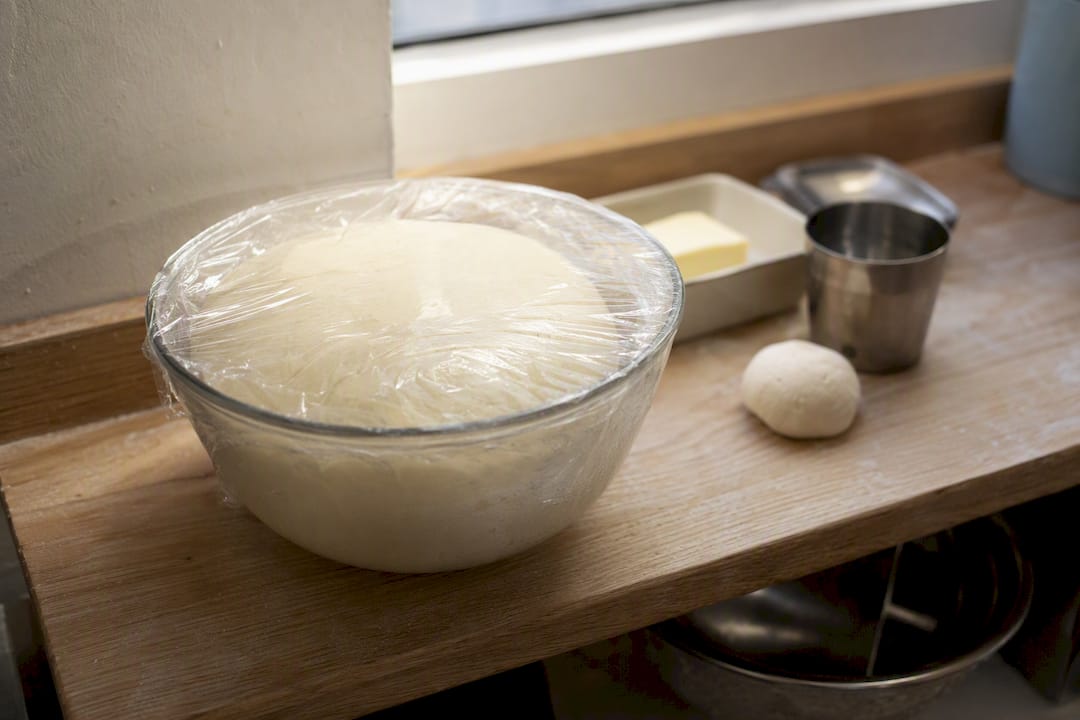
Consider reducing the yeast dose slightly compared to a standard quick rise: the long fermentation continues to work for hours, and an overly generous dose can lead to over-fermentation even before baking.
How do you know if the dough has matured well? A slightly domed surface and a slow reaction to the touch are good signs. A discreet fermented odor is normal; a frankly acidic or alcoholic odor signals that the dough has gone too far.
As for equipment, cover with plastic wrap in contact directly on the dough to prevent a crust from forming on the surface, and choose a container large enough to let the dough double without overflowing.
What to do if the brioche doesn't behave as expected?
Some accidents are easily fixed provided you understand their cause. Here are the most frequent cases.
| Symptom | Probable cause | Correction |
|---|---|---|
| Compact dough, dense crumb | Insufficient kneading or inactive yeast | Test the yeast in lukewarm water, extend kneading until the windowpane test succeeds |
| Acidic odor, soft dough | Over-fermentation during proofing | Shape immediately, shorten the second rise |
| Butter seeping during kneading | Dough too hot | Place the bowl in the refrigerator for 10 to 15 minutes before continuing |
| Dry or cracked crust | Lack of humidity during proofing or baking | Cover with a damp towel during proofing, brush with syrup after baking |
If the dough has visibly not risen enough after proofing, do not systematically restart a prolonged room-temperature rise: shape and monitor the second proof closely rather than randomly adding time.
Baking and storage: keeping it soft for as long as possible
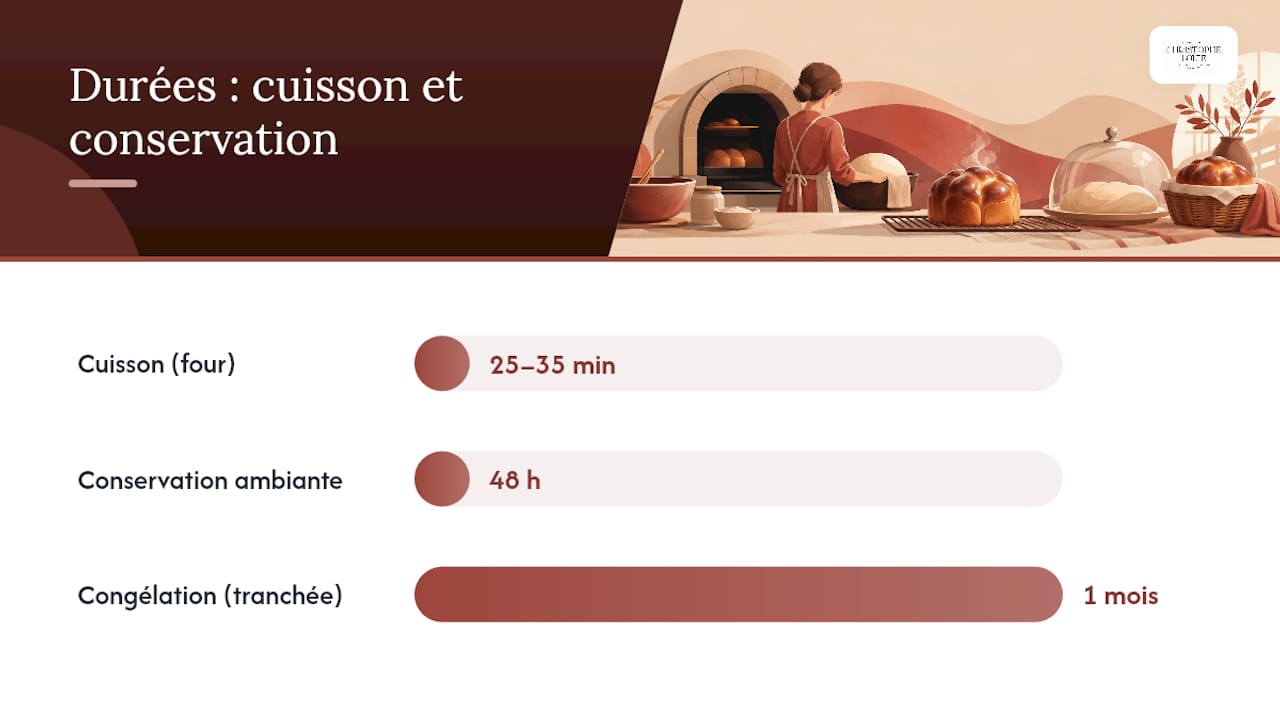
Count on 170 to 180°C for 25 to 35 minutes depending on the size of your brioche. A knife tip inserted into the center should come out clean, or you can aim for an internal temperature of 92 to 94°C with a probe thermometer.
Some habits after taking it out of the oven:
- brush with a light syrup while still hot to retain surface moisture;
- let rest on a rack, never in the mold, to prevent the base from softening;
- store wrapped in plastic wrap at room temperature for a maximum of 48 hours;
- freeze sliced for up to a month, and reheat for a few minutes in the oven rather than in the microwave.
To transport or gift a brioche without damaging it, wait until it is completely cooled before wrapping, a simple detail that prevents condensation inside the package. Our detailed storage guide delves further into this subject if you are preparing several brioches in advance.
Yeast or sourdough: two paths to a successful slow rise
Baker's yeast offers a predictable and quick-to-master fermentation, ideal for a first slow-rise attempt at home. Natural sourdough, on the other hand, provides a controlled acidity and aromatic complexity that yeast alone never achieves, at the cost of more demanding management.
At Christophe Louie, the work with natural sourdough on long fermentations, notably for the sourdough brioche, has shown that a well-maintained live starter transforms the flavor profile of a brioche much more than simply extending the rise time with yeast.
What I learned by observing hundreds of rises
I often repeat the same thing: the dough never follows the exact same rhythm twice. Test 8 hours then 12 hours on two identical brioches, compare the crumb, and you will understand better than through any explanation.
Key points to remember
Slow rising in the refrigerator, between 8 and 12 hours, remains the most reliable lever to transform an acceptable brioche into a memorable one.
| Point | Details |
|---|---|
| Adapted flour | Choose a strong T45 flour to support the butter and the pressure of fermentation gases. |
| Complete kneading | Aim for 10 to 15 minutes in the mixer until the windowpane test succeeds, a sign of well-developed gluten. |
| Controlled temperature | Keep the dough between 24 and 25°C during kneading; cool it if it gets too hot. |
| Cold proofing | Let rest for 8 to 12 hours in the refrigerator to develop aromas and a stringy crumb. |
| Artisanal know-how | Christophe Louie applies the same principles of long fermentation to his sourdough brioches and panettones. |
Want a brioche already mastered by an artisan?
Achieving a slow rise requires patience and a few failures before finding your rhythm. If you prefer to enjoy the result of a perfectly conducted long fermentation directly, Christophe Louie applies these same principles—prolonged proofing, selected flours, manual techniques—to his range of natural sourdough brioches and panettones.
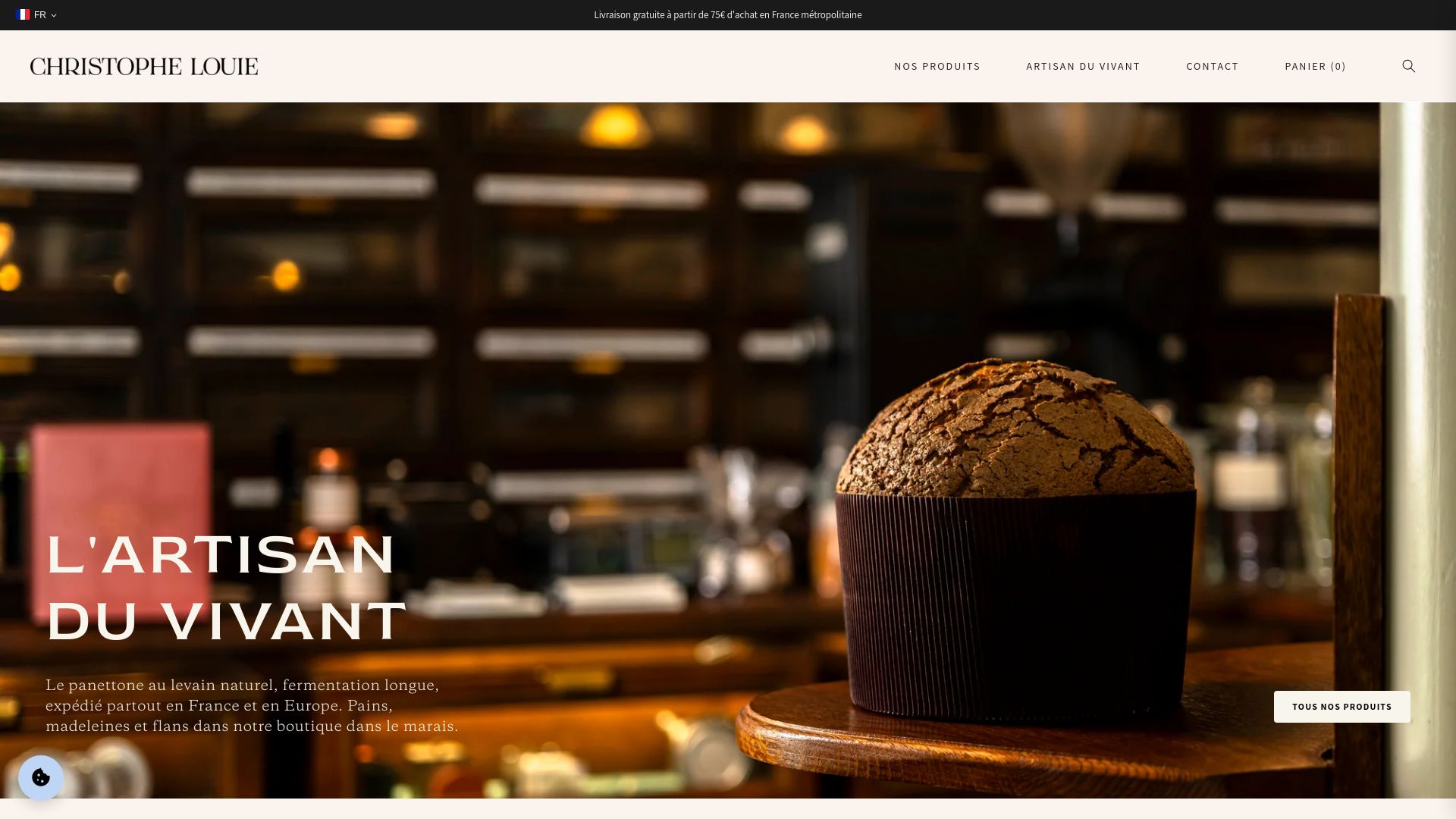
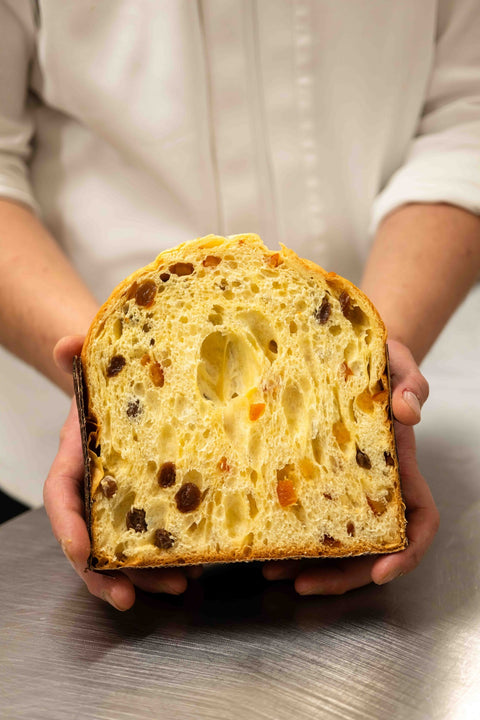
The house works with fermentations that sometimes extend for 72 hours, a time few workshops are willing to commit to, in order to obtain a stringy crumb and a natural shelf-life that far exceeds that of a standard homemade brioche. You can find the entire range of brioches and panettones in the shop in the Marais or for delivery throughout France. If the urge to experiment at home persists despite everything, keep this recipe handy, and treat yourself to a Christophe Louie brioche on days when there isn't enough time for a slow rise.
Frequently asked questions about slow-rising brioche
How long should a brioche proof in the refrigerator? Between 8 and 12 hours are generally enough to develop the aromas without risking over-fermentation, provided the refrigerator is kept at around 4°C.
Can you do a slow rise without a stand mixer? Yes, provided you knead by hand for 15 to 20 minutes until the windowpane test is successful; it takes longer, but the end result does not differ if the gluten is correctly developed.
Why does my brioche remain compact despite the slow rise? The most frequent cause remains insufficient kneading: the gluten network has not had time to form enough to hold the gas produced during fermentation.
Should the yeast be reduced for a long fermentation? Yes, a lighter dose than in a quick rise prevents the dough from going too far during the long hours in the cold.
How long does a homemade brioche keep after baking? Count on 48 hours at room temperature wrapped in plastic, and up to a month in the freezer if you slice it before freezing.
Sources
- Can you let a brioche rise overnight? Practical guide
- Brioche recipe, simple method for a soft crumb
- Slow-fermentation brioche: the ultimate recipe - Du bocal à l’assiette