72-hour sourdough: avoiding allergens in panettone
A traditional panettone almost always contains gluten, eggs, and milk, and often nuts due to candied fruits or almonds on the surface. That is the basis of the Italian recipe. The real question is not "does the panettone contain allergens" but which ones, in what proportion of risk, and what the mention "traces of" means on the label. Head to the ingredients list and the allergen box before any purchase.
In short:
- Even a gluten-free or vegan panettone does not necessarily eliminate all allergens, especially if production is shared or not dedicated.
- The mention "may contain traces" indicates a risk of cross-contamination, which can trigger a reaction even in small quantities, depending on the severity of the allergy.
- Regulations require highlighting the main allergens, such as gluten, eggs, milk, or nuts, in bold or uppercase on the label.
- Residues of gluten or soy may persist in products labeled "gluten-free" or "vegan" if the workshop is not dedicated to these allergens.
- Vigilance should focus on the traceability and certification of workshops, as traditional craftsmanship does not guarantee a total absence of allergenic risks.
Table of contents
- Which allergens are in the classic composition of a panettone?
- Does vegan or gluten-free panettone really eliminate allergens?
- What does "may contain traces" actually mean?
- How to read a panettone label compliant with European regulations?
- What substitutions exist for a panettone adapted to your allergies?
- What sourdough craftsmanship changes (and doesn't change) regarding allergens
- Why caution regarding allergens is worth more than confidence in a label
- Finding a panettone for which you know the exact composition
- Sources
Which allergens are in the classic composition of a panettone?
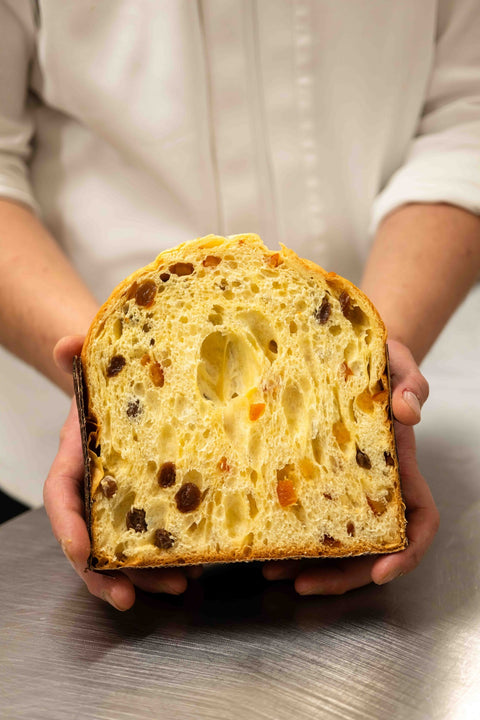
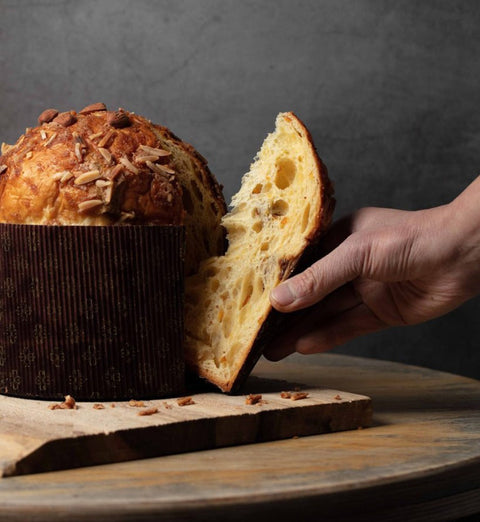
The Italian panettone recipe is based on four families of ingredients, and each corresponds to a specific regulatory allergen. Strong flour (often type Manitoba or 00 flour) provides gluten. Butter and sometimes cream provide milk. Egg yolks, used in large quantities for the characteristic stringy texture of the dough, provide eggs. Candied fruits and almonds that garnish the surface provide tree nuts, when they aren't merely decorative.
These four families appear with striking regularity on product sheets. On OpenFoodFacts, a mass-market all-butter panettone declares eggs, gluten, and milk as main allergens. Another example, the classic panettone, displays exactly the same trio, plus a mention of traces.
Other, less visible ingredients deserve your attention:
- Barley malt, used for fermentation, can contain traces of gluten.
- Emulsifiers (notably soy lecithin) introduce soy, a distinct allergen.
- Honey or glucose syrup are not regulatory allergens, but can mask other sensitive additives.
For a detailed breakdown item by item, Christophe Louie's panettone ingredients page breaks down every component of the traditional recipe.
Does vegan or gluten-free panettone really eliminate allergens?
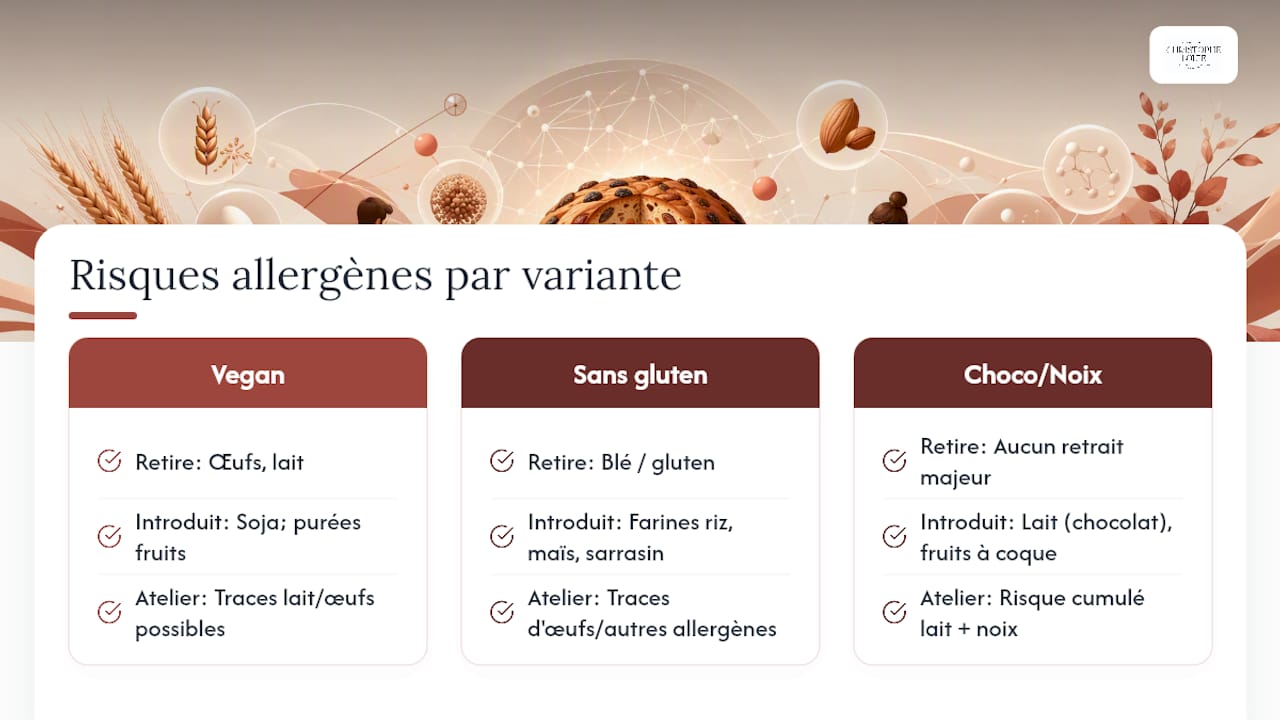
Every variant shifts the risk; it does not eliminate it. This is the point that many readers forget when buying a product labeled "adapted."
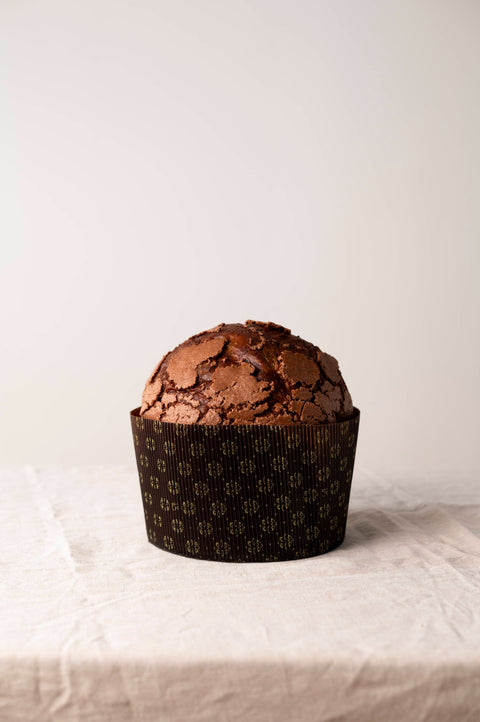
Vegan panettone removes eggs and milk from the recipe, often replacing them with fruit purées or plant proteins. But these substitutes frequently introduce soy, and manufacturing in a shared workshop sometimes leaves traces of milk or eggs despite their absence from the recipe. Gluten-free panettone removes wheat flour, replaced by blends of rice, corn, or buckwheat flours. Gluten disappears from the recipe, but not necessarily from the workshop: an example sold as gluten-free by Calicote continues to declare eggs and other allergens in its table, proof that "gluten-free" does not mean "allergen-free." Chocolate or nut variants, meanwhile, combine the dairy risk (milk chocolate, chips) and the nut risk (almonds, hazelnuts, pistachios), often on top of the base trio.
Pro tip: If you or your loved one has already had a severe reaction, never settle for a "free-from" label without written confirmation. Ask the manufacturer for a statement specifying whether the production line is dedicated or shared with high-risk allergens.
What does "may contain traces" actually mean?
Cross-contamination occurs when an allergen absent from the recipe ends up in the finished product nonetheless, for example, because the same oven or workbench is used to bake nut panettone and plain panettone. A Granducale classic panettone illustrates this case well: the recipe does not contain nuts or soy, but the label signals traces of both.
The phrase "may contain" is not proof of presence; it is a manufacturer's precaution against a risk they cannot exclude 100%.
- Mild to moderate allergy: the mention of traces calls for caution, without necessarily ruling out the product. Monitor for any unusual reaction.
- History of anaphylaxis: consistently avoid any product mentioning traces of the allergen in question, even in presumably minute quantities. Scientific literature on food allergic reactions highlights the variability and potential severity of these reactions, which justifies a large safety margin.
- Persistent doubt: contact the manufacturer directly to ask if the line is dedicated, cleaned between productions, or analytically tested for the allergen in question.
How to read a panettone label compliant with European regulations?
European regulations require highlighting 14 priority allergens in the ingredients list, usually in bold, italics, or uppercase. For panettone, the most relevant are:
- Cereals containing gluten (wheat, barley, oats)
- Eggs
- Milk
- Tree nuts (almonds, hazelnuts, pistachios)
- Soy
- Sulfur dioxide and sulfites (sometimes present in candied fruits)
- Celery, mustard, sesame seeds, peanuts, lupin (rarer but possible depending on recipes)
This information appears in two places on the packaging: in the ingredients list itself, where the allergen is highlighted typographically, and often in a summary box just below, which also lists potential traces. A well-constructed label looks like this: "WHEAT flour, sugar, BUTTER, EGGS, natural sourdough, candied orange peel, salt. May contain traces of tree nuts and soy." If this box is missing or illegible on an online product page, OpenFoodFacts remains a practical resource to find the full composition before ordering.
What substitutions exist for a panettone adapted to your allergies?
Replacing an allergenic ingredient in a leavened dough is never neutral; the long fermentation of the panettone makes the exercise even more technical.
- Animal milk is replaced by plant milks (almond should be avoided in case of nut allergy; rice or oat are safer), but the final texture is often less stringy.
- Butter is replaced by a suitable vegetable margarine, without guaranteeing the same shelf life.
- Eggs are replaced by aquafaba or thickening purées, with limited effect on the rise.
- For gluten-free, flour blends (rice, corn, buckwheat) require binders like xanthan gum to regain some structure.
Pro tip: Always prioritize a product explicitly labeled "gluten-free" or "dairy-free" by certification, and ask for the full technical sheet rather than relying solely on the commercial name. Christophe Louie's article on panettone and gluten details the vigilance points specific to this intolerance.
What sourdough craftsmanship changes (and doesn't change) regarding allergens
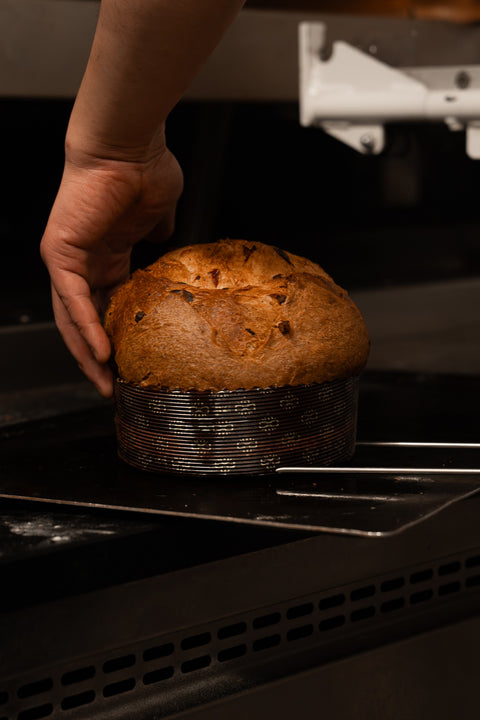
At Christophe Louie, live sourdough and fermentation in two doughs over 72 hours shape the taste and texture, but they do not eliminate any regulatory allergen: gluten, eggs, and milk remain present in the classic recipe. What the artisan method improves is traceability. A workshop that manages its scheduling—for example, baking recipes without nuts before the others and cleaning with steam between batches—concretely reduces the risk of cross-traces.
Before buying, ask a manufacturer three simple questions: are lines dedicated or shared? Is there a documented cleaning plan? Where do sensitive ingredients like nuts come from?
Why caution regarding allergens is worth more than confidence in a label
The most common misconception is that an "artisan" or "premium" panettone would automatically be safer for allergic individuals. That is false, and it is even the opposite on one specific point: the more a house multiplies its recipes and collaborations, the more the risk of cross-contamination between lines increases if the scheduling is not rigorous. Taste quality and allergen safety are two different subjects that should never be confused.
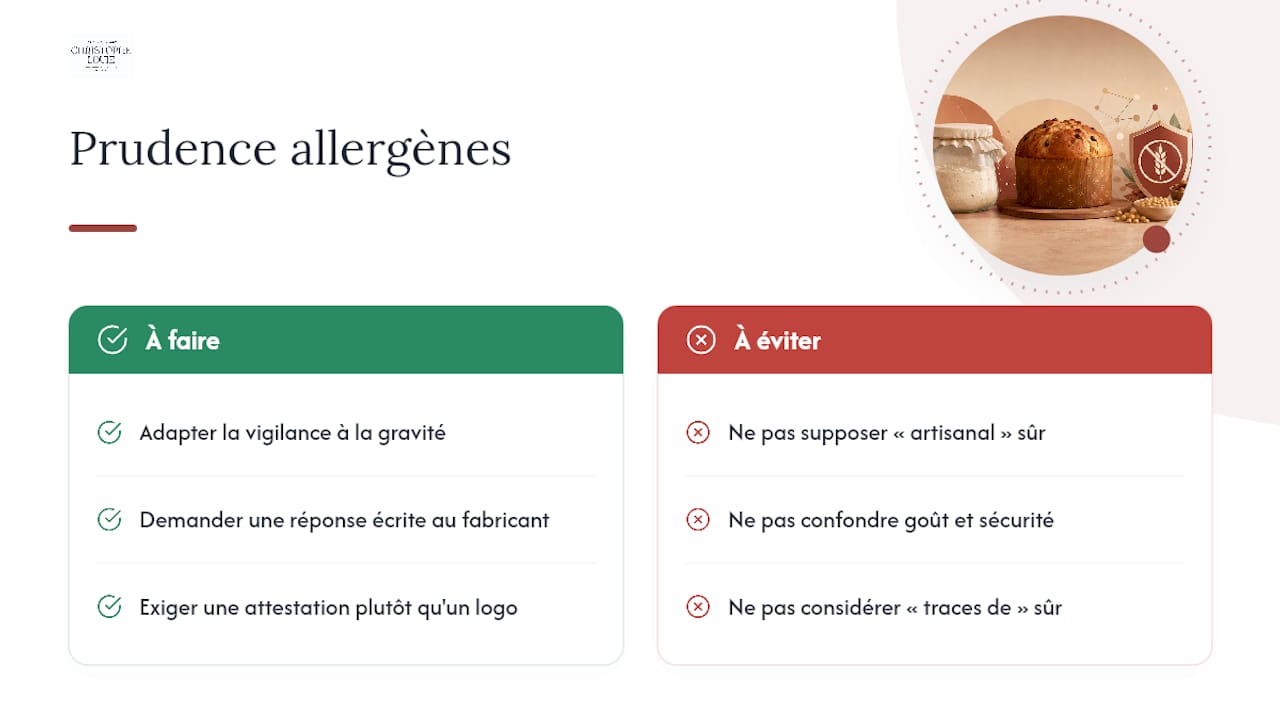
What I take from this issue is that vigilance must remain proportional to the severity of the allergy, not the reputation of the manufacturer. A reader with a simple digestive sensitivity to lactose does not have the same tolerance margins as a reader with a history of anaphylaxis to nuts. The mention "traces of" only makes sense when related to this individual risk level, and that is precisely what most generic guides forget to specify.
What I would recommend first and foremost: stop looking for a universal "safe" label and start asking for written, precise answers from the manufacturer. A certificate is always better than a marketing logo.
— Christophe
Finding a panettone for which you know the exact composition
At Christophe Louie, every online product sheet details the full list of ingredients and declared allergens, in the same spirit of transparency as the festive offerings adapted to allergens for event planners mentioned above. It is the best way to compare a recipe before ordering, rather than guessing from a photo or an evocative name.
Natural sourdough panettone can be ordered in-store, on an e-commerce site, or via click & collect for those who prefer to pick up their order directly. The orange blossom panettone sheet presents its composition in detail, and the how to choose a panettone page helps compare the house's recipes according to your dietary constraints. In case of doubt about a specific allergen or potential trace, contact the bakery directly before confirming your order; the question always deserves a written answer rather than an assumption.
Sources
- PubMed — relevant article on food allergies
- AUCHAN GOURMET all-butter panettone with raisins and candied orange peel 750g — OpenFoodFacts
- Gluten-free panettone with raisins — Calicote