Madeleine vs Financier: How These French Cakes Differ
A madeleine is a light, buttery sponge baked in a shell mold. A financier is a denser, nuttier almond cake, usually baked in a small rectangular mold. The batters look alike on paper, since both are butter, sugar and eggs. The difference comes from which eggs, which flour and how much almond goes in. Those choices decide everything you taste.
This guide explains each cake, compares them side by side, and tells you when to pick one over the other.
TL;DR
- Madeleine: shell-shaped, made with whole eggs and wheat flour, usually no nuts. Light, springy and buttery, with a signature hump.
- Financier: usually rectangular, made with egg whites, almond meal and browned butter. Dense, moist and nutty, with tender-crisp edges.
- Names: the madeleine is tied to Commercy in Lorraine. The financier is said to take its name from gold bars and Paris’s financial district.
- Choosing: madeleines suit tea, citrus and delicate flavors. Financiers suit coffee, richer flavors and anyone who wants an almond-forward bite.
Table of Contents
- What is a madeleine?
- What is a financier?
- Madeleine vs financier: side-by-side comparison
- Why the ingredients change the texture
- Shape and mold: shell vs gold bar
- Origins: Commercy, nuns and the stock exchange
- Common variations
- Which one should you choose?
- Baking tips for each cake
- Our point of view
- Madeleines from our Paris bakery
- FAQ
- Sources
What is a madeleine?
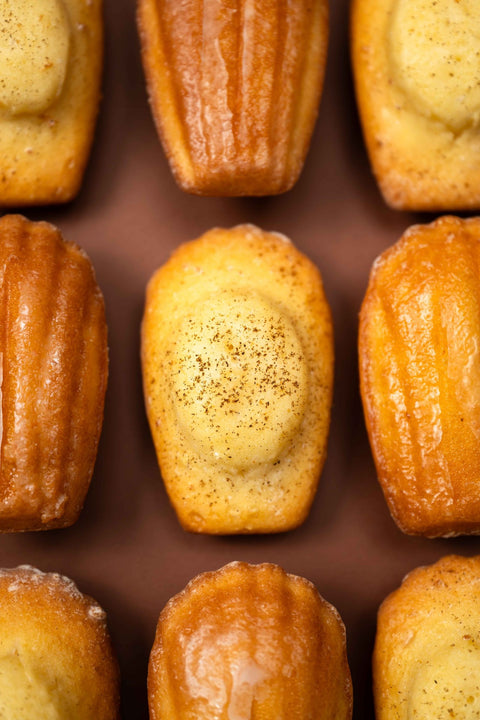
The madeleine is a small shell-shaped sponge cake from Lorraine, as The Cook’s Cook describes it. SBS Food ties it traditionally to the town of Commercy and notes that it is made with whole eggs and usually without nuts.
The texture is the point. Serious Eats characterizes a good madeleine as having a thin, crisp exterior, a light buttery center and the signature hump. That hump comes from the batter meeting a hot oven. One baking blog, Spatula Desserts, says madeleines typically contain baking powder to help it along.
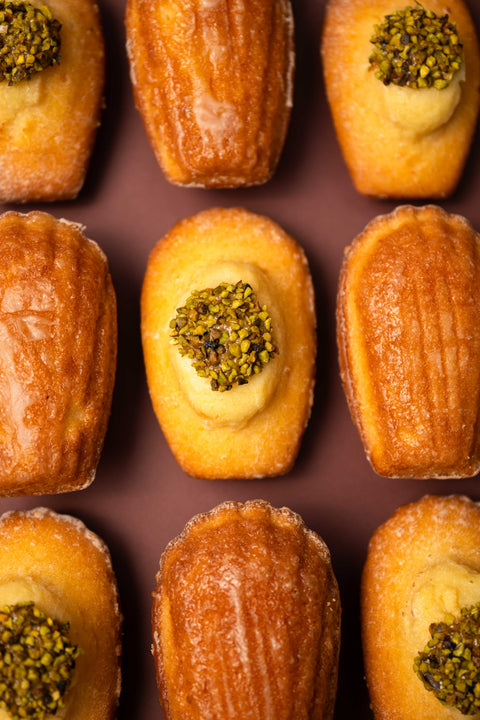
Flavor is usually simple: lemon, honey or vanilla, according to SBS Food. The butter can be browned or just melted. The cake is mild enough to carry other flavors, which is why you see orange blossom, pistachio, praline and many other variations.

What is a financier?
A financier is a small, dense almond cake made with beurre noisette (browned butter). The Cook’s Cook says it is often rectangular and eaten as a snack with coffee. SBS Food gives the standard formula as almond meal, flour, sugar, butter and egg whites, baked in a rectangular mold.
Jill Colonna’s guide to financier cakes lists a traditional version of egg whites, butter, ground almonds, icing sugar and a little plain flour. Note how small the flour share is. The almonds do most of the structural work, and that is why the crumb feels so different from a madeleine’s.
Serious Eats says financiers benefit from browned butter and toasted ground almonds, and describes the texture as tender-crisp. It also points out that resting the batter hydrates the ingredients and helps give a moist, tender result.
Madeleine vs financier: side-by-side comparison
| Madeleine | Financier | |
|---|---|---|
| Shape | Shell, with a hump on the back | Usually a small rectangle, like a gold bar |
| Eggs | Whole eggs | Egg whites |
| Nuts | Usually none | Almond meal (hazelnut or pistachio also possible) |
| Flour | Wheat flour is the main structure | A little flour, with almond doing the heavy lifting |
| Butter | Melted or browned | Browned butter is typical |
| Texture | Light, springy, thin crisp shell | Dense, moist, slightly crisp edges |
| Flavor | Buttery, lemon, honey, vanilla | Toasted almond, caramelized butter |
| Leavening | Often baking powder | Often none |
The facts in this table come from SBS Food, Serious Eats and Spatula Desserts, which agree on the essentials. Colonna sums up the practical distinction well: financiers are richer and moister because of their higher butter and nut content, while madeleines are more wheat-flour-forward and use whole eggs.
Why the ingredients change the texture
The two batters share a logic: butter for richness, sugar for sweetness and eggs for structure. Swap one input and the result moves.
Whole eggs vs egg whites
Whole eggs contain yolk, which adds fat and tenderness, and the whole-egg batter is lightened by whipping and by leavening. The result is an airy, springy crumb. Egg whites alone give a cleaner, chewier structure, and they let the butter and almond flavors come forward without any eggy note.

Wheat flour vs almond meal
Wheat flour builds a classic sponge. Almond meal brings its own natural oils and no gluten, so the crumb stays tender and dense rather than springy. That is where the “nuttier and less spongy” difference people mention comes from.
Browned butter
Browned butter turns up in both cakes, but it is nearly essential to a financier. Cooking the butter until it smells like toasted hazelnuts adds a deep, caramelized flavor. In a madeleine, it is an option rather than a rule, as SBS Food notes.
Shape and mold: shell vs gold bar
The shell mold gives the madeleine its look: ridged on one side, humped on the other. A hot oven and a cold, rested batter encourage the bump.
The financier’s rectangular mold is not a coincidence. SBS Food says the shape resembles a gold bar, linked to the Paris financial district. Spatula Desserts gives the same explanation, associating the cake with the city’s stock exchange.
Shapes are not fixed, though. SBS Food notes financiers can vary in shape, while madeleines can be made in other shapes, or filled with lemon curd. So treat the mold as a strong clue, not a rule. The batter tells you what you really have: egg whites and almonds mean financier, whole eggs and flour mean madeleine.
Origins: Commercy, nuns and the stock exchange
The madeleine
Madeleines are traditionally associated with Commercy in Lorraine, according to SBS Food. They have a long reputation in France as a small cake for tea or a coffee break.
The financier
SBS Food says financiers were popularized in the 19th century by a baker near Paris’s stock market, building on visitandines, which French nuns had made for centuries. Colonna says financiers began as oval almond cakes called Visitandines, associated with the Visitandine nuns in Nancy, Lorraine. She also notes that the history is uncertain, with one tradition pointing to the Middle Ages and another to the seventeenth century.
That is also the answer to why it is called a financier. The rectangular cake looks like a bar of gold, and it was sold near the place where financiers worked. A cake for people in a hurry, easy to eat standing up with a coffee.
It is a nice coincidence that both cakes have roots in Lorraine, which is why they are often mistaken for each other.
Common variations
Madeleine flavors
SBS Food names lemon, honey and vanilla as the classics. Serious Eats presents the madeleine as a versatile base, with room for nuts, cocoa, spices, citrus, herbs, extracts, glazes and fillings. Orange blossom, pistachio, raspberry and chocolate all work well, because the neutral, buttery crumb does not fight with them.
Financier flavors
Spatula Desserts says financiers can use almond, hazelnut or pistachio flour, and can be flavored with citrus zest, cardamom or vanilla, or filled with chocolate or raspberries. Serious Eats adds that they can be served with a glaze or melted chocolate. Because the base is already rich, financiers pair well with tart fruit that cuts through the butter.
Which one should you choose?
This is a matter of taste and occasion, so here is our practical guidance.
- With tea, or for something light: a madeleine. Its delicate crumb and citrus or floral notes match a pot of tea.
- With espresso: a financier. The toasted almond and browned butter stand up to bitter coffee.
- For a gift box: madeleines in several flavors give variety and a softer, more universally liked texture.
- For anyone who loves almonds: a financier is the obvious pick.
- For eating fresh from the oven: a madeleine, because the crisp shell and warm center are at their best minutes after baking.
- When you have egg whites left over: a financier is the traditional place to use them.
- For a hint of nuts without a heavy cake: a madeleine with pistachio or praline, which gives you the nuttiness inside a light sponge.
If you are still hesitating, try both side by side. The contrast is the quickest way to understand the difference.
Baking tips for each cake
The batters are forgiving, but a few habits make a visible difference.
- Rest the batter. Serious Eats notes that resting financier batter hydrates the ingredients and gives a moist, tender result. Chilling a madeleine batter also helps produce the hump.
- Brown the butter with care. Take it off the heat as soon as it smells nutty and turns amber. Burnt butter turns bitter.
- Toast the almonds for a financier, as Serious Eats suggests, to deepen the flavor.
- Do not overfill the molds. Both cakes need room to set their shape.
- Eat them fresh. Both are at their best on the day they are baked, with a crisp edge and a soft interior.
Our point of view
We are a Paris bakery, and sourdough is the core of our work, so we see these two cakes from the baker’s side of the counter.
A madeleine looks modest, but it is unforgiving: the butter, the eggs, the resting time and the oven heat all show. There is nowhere to hide, and that is why we like it. A well-made madeleine tastes of butter and of whatever you flavor it with, nothing else.
That honest simplicity is why we make madeleines in flavors such as orange blossom, lemon, raspberry and pineapple, and why we pair them with pistachio praline. A light crumb is a very good canvas, and it lets one flavor speak clearly.
Our approach is the same across everything we bake: select ingredients with care, respect the time a recipe needs, and shape by hand. We favor a patient process over a fast one, and we think you can taste the difference in a small cake just as in a large one.
Christophe
Madeleines from our Paris bakery
If you want to taste the light, buttery side of this comparison, our madeleines are baked in our Marais workshop at 12 rue Dupetit-Thouars, Paris 3rd, and also shipped across France. We make them in several flavors, including orange blossom and pistachio praline.

For a gift, you can combine them with our sourdough brioches, flans and breads. Browse the full selection on our online shop, or look at our panettone collection if you are choosing something for the holidays.
FAQ
What is the main difference between a madeleine and a financier?
The main difference is the batter. A madeleine uses whole eggs and wheat flour, usually with no nuts, and bakes into a light, springy shell-shaped cake. A financier uses egg whites, almond meal and browned butter, and bakes into a dense, moist, nutty rectangle.
Why is it called a financier?
The rectangular cake resembles a gold bar. According to SBS Food, it was popularized in the 19th century by a baker near Paris’s stock market, and the name ties it to the financial district. Spatula Desserts gives a similar explanation.
Are madeleines and financiers made with the same ingredients?
Mostly, yes: both use butter, sugar, eggs and flour. The key changes are whole eggs in madeleines versus egg whites in financiers, and a small amount of flour in financiers because almond meal replaces most of it. Financiers also rely on browned butter more than madeleines do.
Which one is richer?
Financiers. Colonna notes they are richer and moister because of their higher butter and nut content. Madeleines are lighter, with a more sponge-like crumb.
Can a madeleine contain nuts?
Traditionally it does not, as SBS Food says. Modern versions do add nuts, such as pistachio or praline, and Serious Eats lists nuts among the many options for a madeleine. If you have a nut allergy, always check the ingredient list of any cake you buy.