Sourdough starter: the complete guide to mastering it in France
What is lievito madre and why is it so different?
Lievito madre is a living natural sourdough, composed of a symbiotic community of wild yeasts and lactic acid bacteria that ferment spontaneously in a mixture of flour and water. Unlike industrial baker's yeast, it is not standardized: each sourdough carries the imprint of its environment, the flour used, and the artisan's touch.
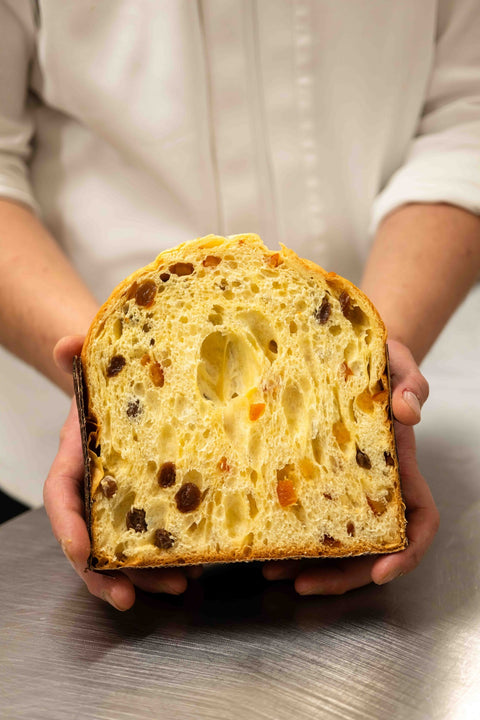
The difference from dry or powdered yeast is fundamental. An industrially dried sourdough can add flavor to bread, but it does not replace the biological vitality of an artisanally maintained lievito madre. Lactic fermentation produces lactic acid, acetic acid, and secondary aromas that give the bread its complexity, its aerated crumb, and its prolonged natural shelf life.
Typical products made with this sourdough:
- Panettone and pandoro (Italian regulations require lievito madre for these two specialties)
- Pizza, focaccia, long-fermentation breads
- Brioches, colomba, sweet leavened doughs
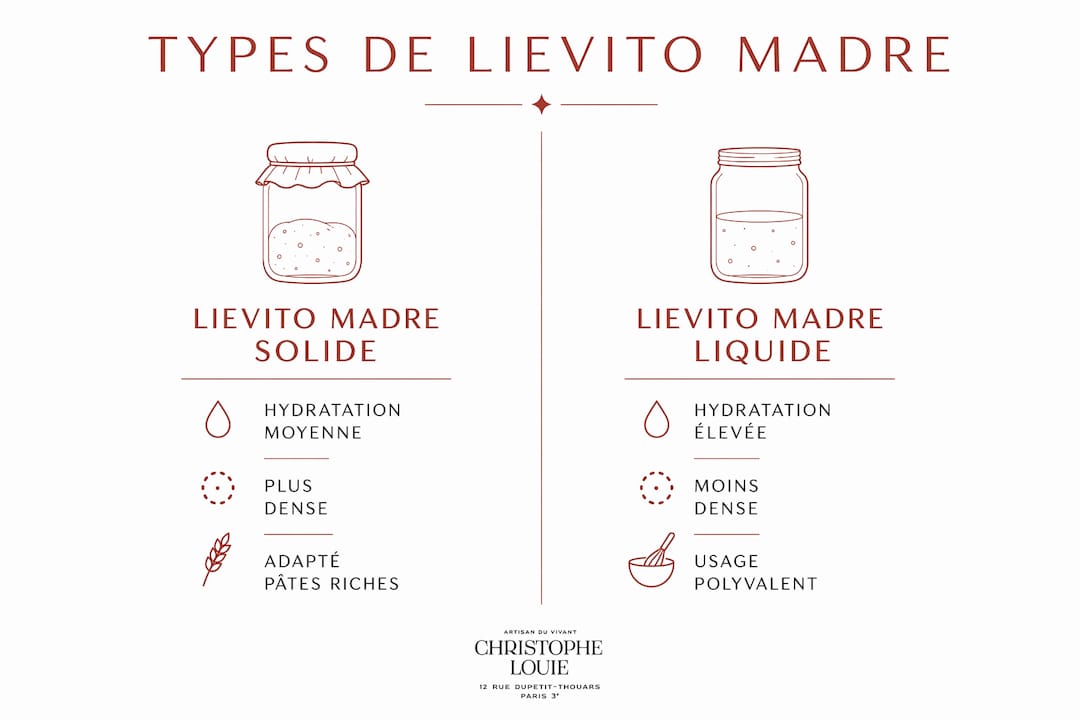
There are two main forms, with very distinct uses:
| Type | Hydration | Preferred Use | Maintenance |
|---|---|---|---|
| Solid lievito madre | Moderate hydration level | Panettone, colomba, large leavened products | Daily refreshings, more stable |
| Li.Co.Li (liquid sourdough) | High hydration level | Bread, pizza, focaccia | Less frequent refreshing, easier |
The solid lievito madre is denser, more temperature-stable, and better suited to doughs rich in butter and eggs. Li.Co.Li, which is more hydrated, develops a more pronounced lactic acidity and is suitable for everyday breads. A good sourdough can be identified by its mildly tangy smell, elastic texture, complete absence of mold, and its ability to triple in volume within 3–4 hours after a refreshing.
Christophe Louie, artisan of lievito madre in Paris
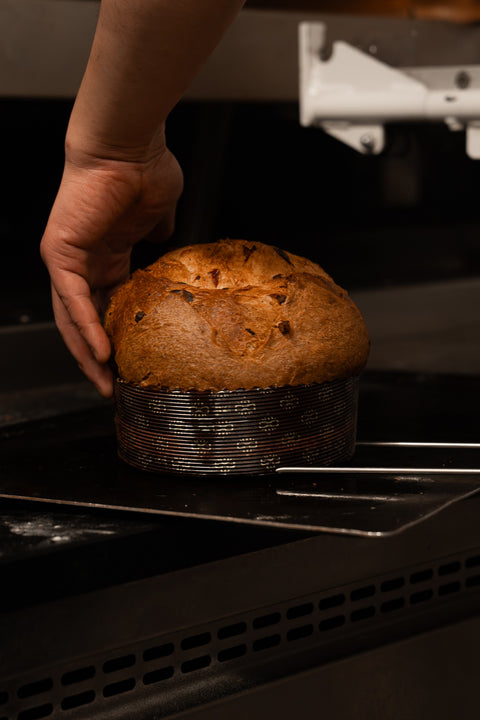
In Paris, Christophe Louie is the French benchmark for natural sourdough panettone. Located in the Marais (12 rue Dupetit-Thouars, 75003), the house was founded by a pastry chef who worked at the Jules Verne and the Grande Épicerie de Paris. His core business: panettone made with two doughs over more than 72 hours of fermentation, using Italian Grassi and Dalla Giovanna flours, and ingredients sourced in France.
| House | Rating | Location | Specialty | Ideal for |
|---|---|---|---|---|
| Christophe Louie | 4.7 ★ (424 reviews) | Paris, Marais (75003) | Sourdough panettone, 72h fermentation | Connoisseurs, premium gifting, B2B |
The range covers much more than classic panettone. You can find savory versions (cacio e pepe, truffle), "Le petit Louie" brioches with pink pralines or matcha, sourdough breads, madeleines (orange blossom, lemon, raspberry), and flans. Collaborations with Petrossian, Café Verlet, or Les Airelles reflect a resolutely premium positioning.
Regarding prices, the panettone, brioches, and madeleines are offered at premium prices suited to an artisanal, high-end offering. Delivery covers all of France and Europe, with a click & collect option in the boutique.
The artisanal sourdough bakery in Paris that Christophe Louie represents caters both to enthusiasts looking for exceptional panettone and to restaurant professionals or delicatessens wishing to stock a differentiating product.
How to successfully use and maintain your lievito madre?
Starting a sourdough from scratch
- Mix 50 g of quality flour (type 0 or Manitoba) with 50 g of lukewarm water. Add a teaspoon of honey or plain yogurt to activate fermentation more quickly.
- Place in a clean jar, cover without sealing tightly, and let rest for 48 hours at 22–25 °C.
- After 48 hours, take 200 g of sourdough from the central part (discard the dry surface), add 200 g of flour and 100 g of water.
- Repeat this refreshing process daily for about 15 days. The sourdough is ready when it triples in volume in 3–4 hours.
Frequency and method of refreshings (rinfreschi)
The frequency depends on your usage. If you bake often, keep the sourdough at room temperature (26–28 °C) and refresh it every day. For weekly usage, store it in the refrigerator in a non-hermetic glass jar and refresh it once a week. After a refreshing, let it ferment for 3–4 hours at room temperature before putting it back in the cold.
If a slightly grayish liquid appears on the surface during cold storage, this is the "acqua di governo": a normal sign that simply indicates the sourdough needs to be fed.
Temperatures and signs of good health
Optimal fermentation occurs at a controlled temperature around 26–30 °C. Below this, the sourdough slows down; above 30 °C, the balance between lactic and acetic acidity degrades. A healthy sourdough has a mildly tangy smell (similar to yogurt), an elastic texture, and consistent growth. A pronounced acetone smell or colored mold signals a serious problem.
Pro tip: Before preparing a panettone or any large leavened product, perform three successive refreshings throughout the day to bring the sourdough to its maximum strength. A sourdough that has not tripled after the final refreshing will compromise the rise of the entire recipe.
To reactivate a sourdough that has been kept in the cold or dried out for several weeks, repeated refreshings over two to three days are necessary before using it in a rich recipe.
How to choose a reliable lievito madre supplier in France?
Finding quality sourdough in France requires a minimum of discernment. Here are the criteria that really matter.
Freshness above all. A living lievito madre degrades quickly if poorly packaged or shipped without thermal precautions. Ask the supplier how they package the sourdough for delivery and what lead time they guarantee between preparation and receipt.
The origin of the flour. Italian strength flours (Manitoba W350 or equivalent) are often essential for large leavened products. An artisan who specifies their sources, like Christophe Louie with Grassi and Dalla Giovanna flours, provides a technical guarantee that generalist retailers cannot offer.
Traceability of the sourdough. A good supplier knows how long their sourdough has been maintained and can describe its flavor profile. A "house" sourdough maintained for years has a stabilized microflora, quite different from a recently created one or one sold without history.
Questions to ask before buying:
- What is the frequency of refreshing practiced on this sourdough?
- At what temperature is it stored and shipped?
- Can one obtain usage advice tailored to the intended recipe?
Guarantees to demand. A serious supplier offers post-purchase support, especially for beginners. Delivery within 24–48 hours with insulated packaging is the minimum for a living product. Be wary of offers without freshness indicators or sourdough sold only as dehydrated powder: they will not yield the results of an active sourdough.
Key points
Lievito madre, maintained regularly and used methodically, produces breads and pastries with aromas and shelf life incomparable to those obtained with industrial yeast.
| Point | Details |
|---|---|
| Nature of sourdough | Lievito madre is a living ecosystem of wild yeasts and lactic bacteria, to be maintained regularly. |
| Two main types | Solid sourdough is suitable for large leavened products (panettone); Li.Co.Li is easier to manage for everyday bread. |
| Technical mastery | Daily refreshings at 26–28 °C and three rinfreschi before a panettone are key steps for success. |
| Long shelf life | Well-maintained sourdough can last for years, or even decades, progressively improving its aromas. |
| Christophe Louie | Parisian artisan specializing in natural sourdough panettone with fermentation of over 72h, available in-store and online. |
What lievito madre really reveals about artisanal quality
We often talk about sourdough as a technique. It is actually a revealer. An artisan who masters their lievito madre also masters their temperatures, their flours, their resting times. They cannot cheat: poorly maintained sourdough shows immediately in the crumb, the smell, and the shelf life.
What strikes me in the work around natural sourdough panettone is that long fermentation is not a marketing gimmick. It is a real technical constraint. Spending 72 hours on two successive doughs, controlling the temperature at every stage, selecting Italian strength flours capable of supporting this load of butter and eggs: all of this mechanically excludes industrial shortcuts. The result can be read in the stringy texture, in the natural shelf life prolonged over several weeks, and in the aromatic complexity that no added flavoring can reproduce.
The microflora of a sourdough varies according to the region, the environment, and the baker's hand. This is why two artisans using the same recipe never get exactly the same result. This variability, which the industry seeks to eliminate, is precisely what gives the product its character. Buying a lievito madre panettone from a Parisian artisan means buying a sensory signature that no one else can replicate exactly.
Christophe Louie's artisanal range, available in France and Europe
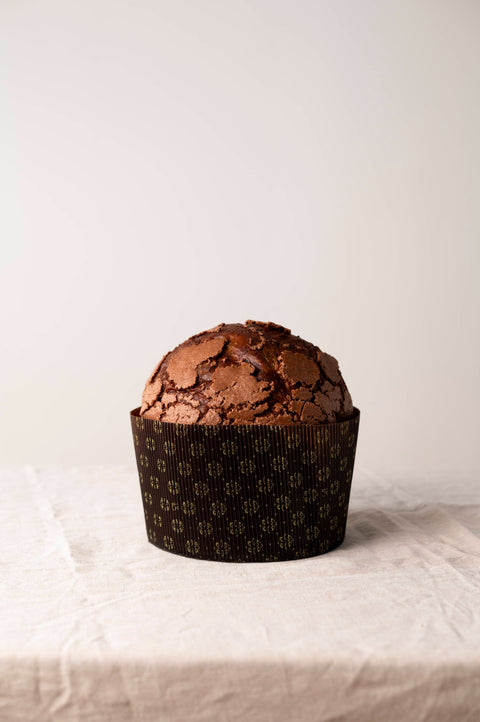
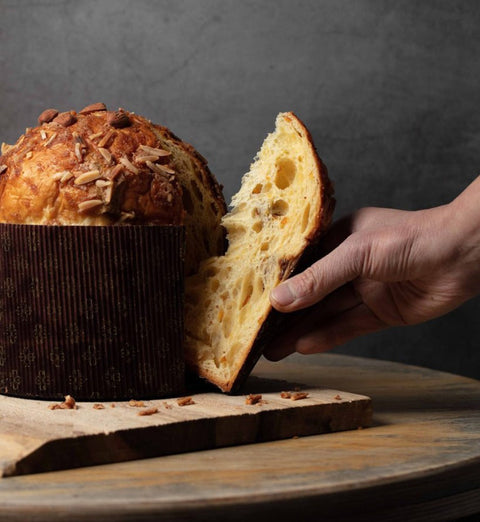
Christophe Louie's sourdough panettone is not a seasonal product. The house offers it year-round, in sweet versions like the orange blossom panettone or the Classico with candied fruits, and in savory versions like cacio e pepe. Sourdough breads, brioches, and madeleines complete a range designed for enthusiasts and professionals alike.
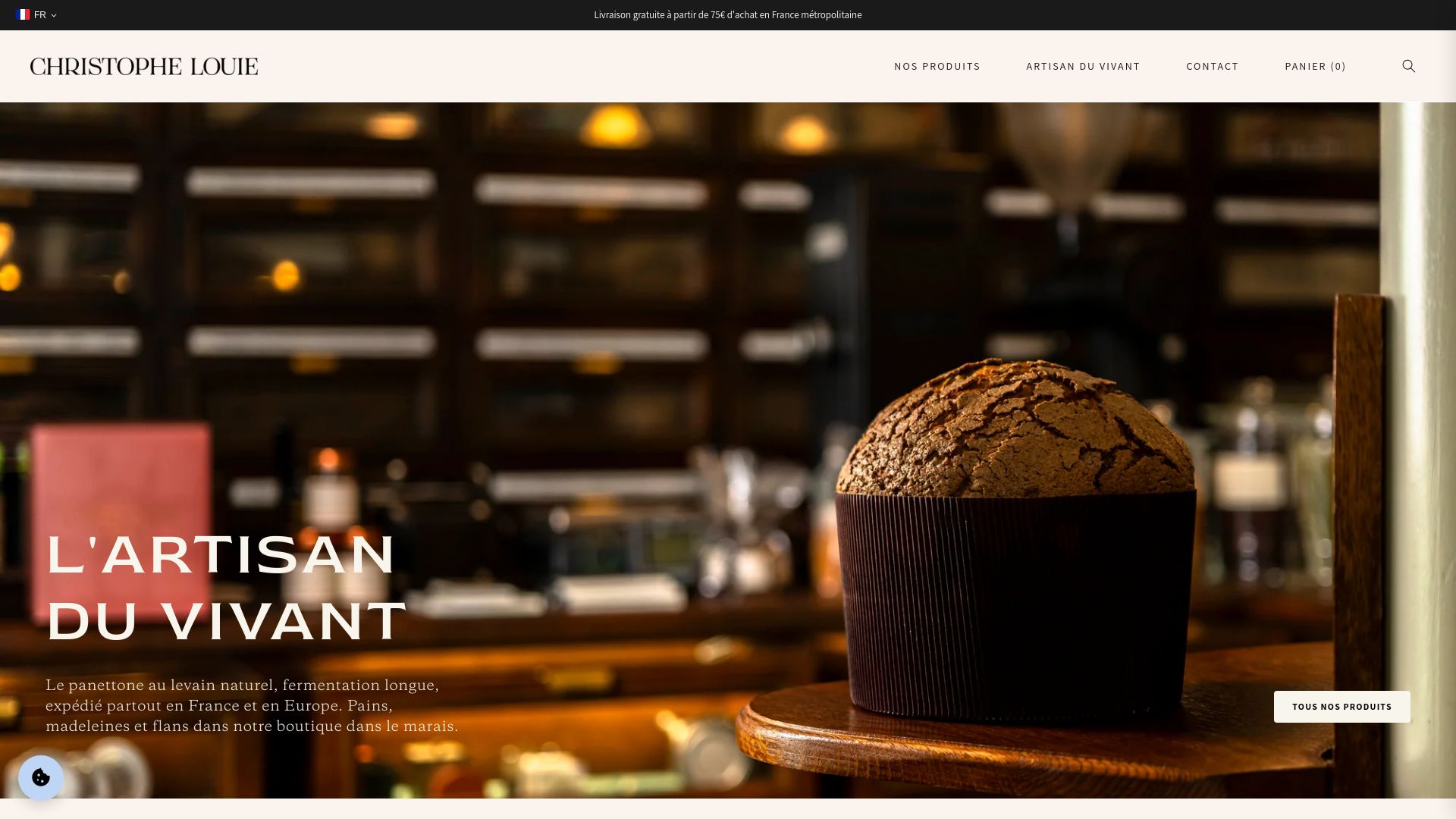
The Marais boutique welcomes click & collect; the online shop delivers everywhere in France and Europe. For professionals (restaurants, hotels, delicatessens), a dedicated B2B channel allows for ordering products with tailored conditions. Every order guarantees a handmade product, with a living sourdough maintained daily and rigorously selected ingredients.