Panettone ingredients: the traditional recipe
To succeed at making a homemade panettone, here are the essential ingredients for a cake of approximately 1 kg:
- Gluten-rich flour (Italian type 00 or Manitoba): a substantial quantity, ideally a 50/50 blend of the two
- Natural sourdough starter (lievito madre): an adequate amount, refreshed several times before use
- High-fat unsalted butter: a large quantity, taken out of the refrigerator 24 hours in advance
- Egg yolks: a significant number of yolks (whites are set aside)
- Caster sugar: an adequate amount
- Acacia honey: a moderate amount
- Raisins, candied orange peel, and candied citron: their combined weight must reach at least 20% of the finished product, in accordance with Italian regulations.
- Natural vanilla: 1 pod, split and scraped
- Fresh citrus zest: 1 organic orange and 1 organic lemon
- Fine salt: a small amount
- Water: a significant amount at room temperature
These proportions comply with the specifications mandated by Italian legislation, which sets minimum thresholds for candied fruit, raisins, and milk fat in the finished product.
What role do the ingredients play in panettone?
Flour is the foundation of everything. For a panettone, ordinary T55 flour is not enough: the dough must withstand long fermentations and a high load of butter and eggs without collapsing. Italian type 00 and Manitoba flours, which are very rich in gluten, are the only ones capable of this role. Combining the two in equal parts results in a dough that is both elastic and strong, capable of tripling in volume without tearing.
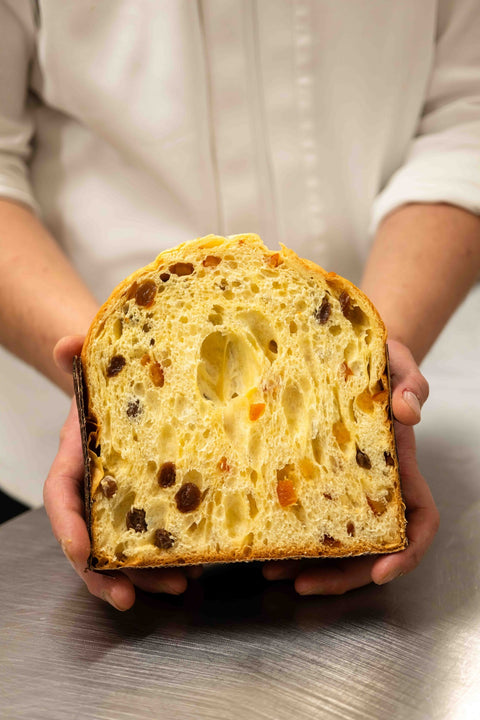
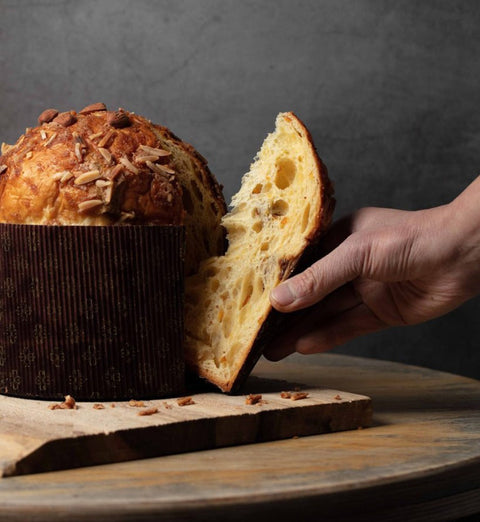
The natural sourdough starter is irreplaceable. Unlike industrial yeast, it develops complex aromas during fermentation and produces a fine, almost stringy, honeycombed crumb. Sourdough panettone also keeps much longer, without additives or vegetable oils.
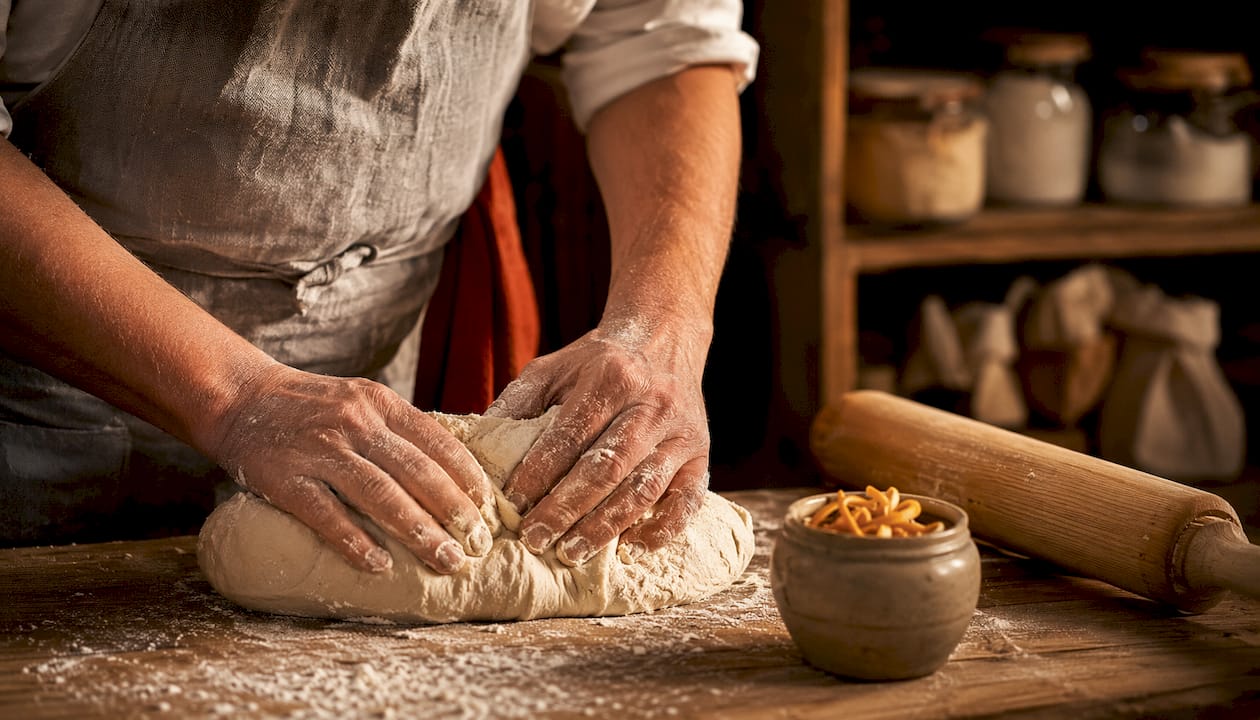
The high-fat content butter provides the characteristic richness of the crumb and its golden yellow color. With less fat, the texture becomes dry, almost like a brioche in the wrong way. The egg yolks reinforce this effect: they color the crumb and give it a moistness not found in a classic brioche.
The sugar and honey work together. The sugar provides structure, while the honey retains moisture and slows down staling. Acacia honey is often preferred because it remains liquid and does not mask the aromas of the citrus.
- Candied fruit and raisins: their weight must reach at least 20% of the finished product. Choose artisan-quality candied fruits, not industrial blends that leach moisture from the dough.
- Vanilla and zest: vanilla bean and fresh zest are preferred over synthetic flavorings to preserve the authentic taste. Freshly grated organic orange zest makes all the difference.
- Salt: only a small amount, but essential to balance the sweetness of the sugar and honey without being directly noticeable.
Pro tip: Take the butter out of the refrigerator at least 24 hours before starting. Butter that is too cold mixes poorly and creates lumps in the dough, which weakens the gluten network during rising.
How is a traditional panettone prepared?
Making a traditional panettone spans two to three days. Here are the main stages:
- Refreshing the sourdough (day 1): the starter is fed two to three times throughout the day, at regular intervals, to make it hyperactive and stable. Without this step, it will not lift a dough so loaded with sugar and fat.
- Preparation of the aromatic mixture (the day before): honey, orange jam, rum, vanilla, and zest are mixed and left in the fridge overnight. The raisins macerate separately in rum or lukewarm water.
- First dough (day 2, evening): flour, sourdough starter, water, sugar, butter, and egg yolks are kneaded for 20 to 40 minutes. The dough then undergoes a long proofing, 12 to 14 hours at a controlled temperature, until it triples in volume.
- Second dough (day 3, morning): the rest of the ingredients, including the aromatic mixture, are incorporated, followed by the drained candied fruits and raisins at the very end of kneading.
- Shaping: the dough is divided into portions, rounded, and placed in specific rigid paper panettone molds.
- Second rise: 6 to 8 hours at a controlled temperature, until the dough slightly exceeds the edge of the mold.
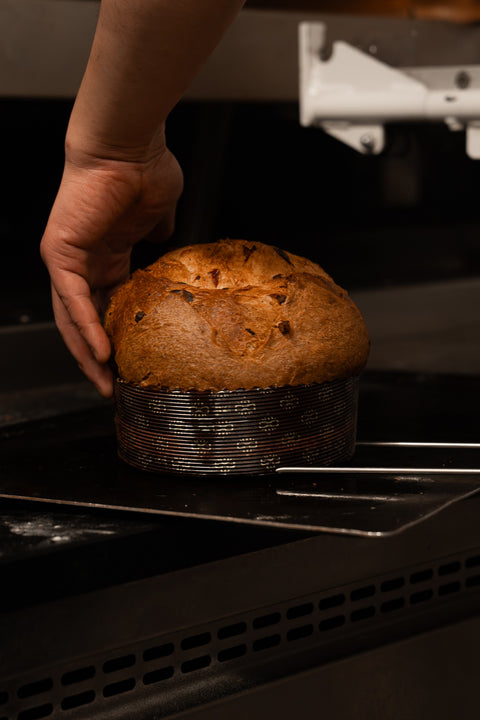
- Scoring and baking: the surface is scored in a cross, a knob of butter is placed in the center, and it is baked at 180°C before lowering to 150°C. Baking time varies depending on size, generally close to an hour.
- Cooling upside down: as soon as it comes out of the oven, the panettone is pierced at the base with two skewers and turned upside down to cool while suspended. This step prevents the crumb from collapsing under its own weight.
What equipment do you need to make a homemade panettone?
Successfully making a panettone at home requires a few precise tools, without which even the best recipe can fail.
- Rigid paper molds: specific panettone molds, tall and cylindrical, are essential. They support the dough during rising and baking and allow for it to be turned upside down after baking.
- Kitchen scale: proportions are tight. A scale precise to the gram prevents imbalances that compromise the texture.
- Stand mixer with a dough hook: kneading takes between 20 and 40 minutes. It is doable by hand, but exhausting; a stand mixer ensures a homogeneous and well-developed dough.
- Cooking thermometer: the proofing temperature (controlled temperature) is critical. A probe thermometer also allows you to check for doneness, ideally around 94–96°C.
- Long skewers or knitting needles: for turning the panettone over when it comes out of the oven and letting it cool while suspended.
- Sharp knife or baker's blade: for the cross-scoring on top before baking.
- Stable-heat oven: temperature variations during baking create irregular cracks or an uneven crumb. A well-calibrated convection oven is a real advantage.
What artisan experience teaches us about ingredients
Long fermentation is not a stylistic choice. At Christophe Louie, natural sourdough panettone relies on a two-dough process spread over 72 hours, with several successive feedings of the sourdough to stabilize its acidity and maximize its ability to lift a very rich dough. Accelerating proofing is the most common mistake: it destroys the honeycombed texture and reduces shelf life.
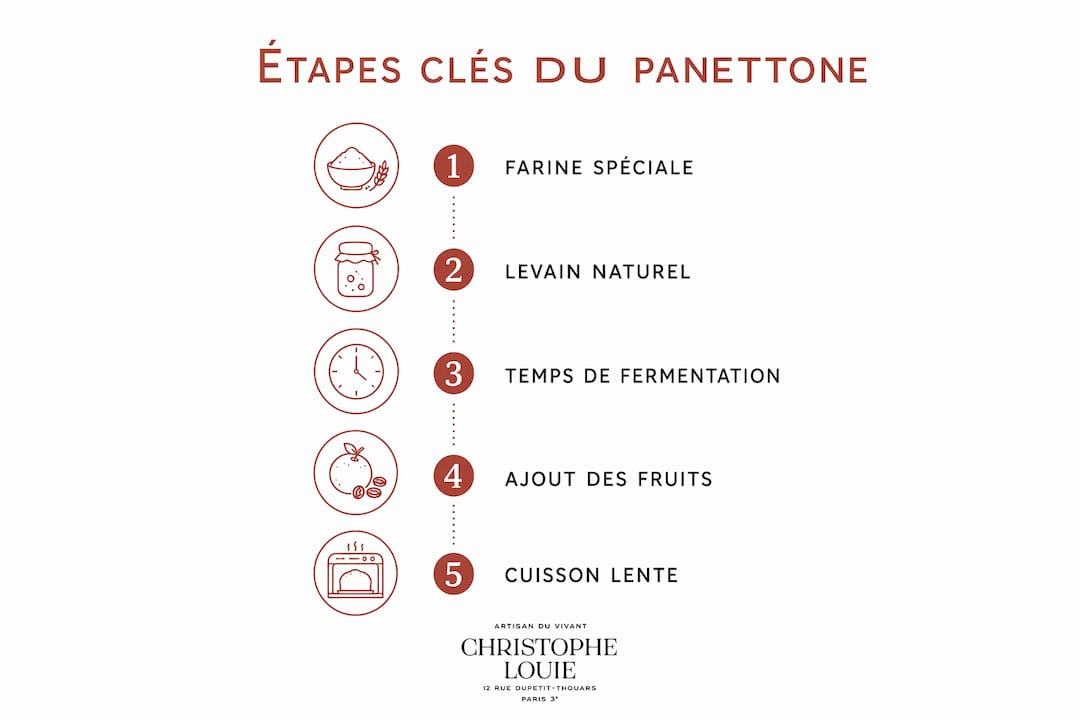
Fermentation must last between 36 and 48 hours minimum, with regular feedings of the starter to avoid any excessive acidity. A well-executed sourdough panettone naturally keeps for several weeks, without preservatives or added vegetable oils.
The choice of flour is just as decisive. Christophe Louie sources from specialized Italian millers such as Grassi and Dalla Giovanna, whose flours have a high baking strength, suited for long fermentations and high fat content. For an amateur, a blend of Italian 00 flour and Manitoba in equal parts remains the best approximation available in France, especially in Italian grocery stores or specialty shops.
Pro tip: Always read the ingredient list of a purchased panettone. If you see vegetable oils, margarine, or “vanilla flavoring” instead of vanilla, the product is not artisanal. A true panettone stands on its own without any of these additives.
An artisanal natural sourdough panettone can keep for up to five weeks thanks to its high fat content and the protective action of the sourdough, without resorting to any chemical additives.
What variants exist according to regions and traditions?
The Milanese recipe is the reference, but it is not the only one. Several Italian regional traditions have developed their own interpretations of panettone ingredients.
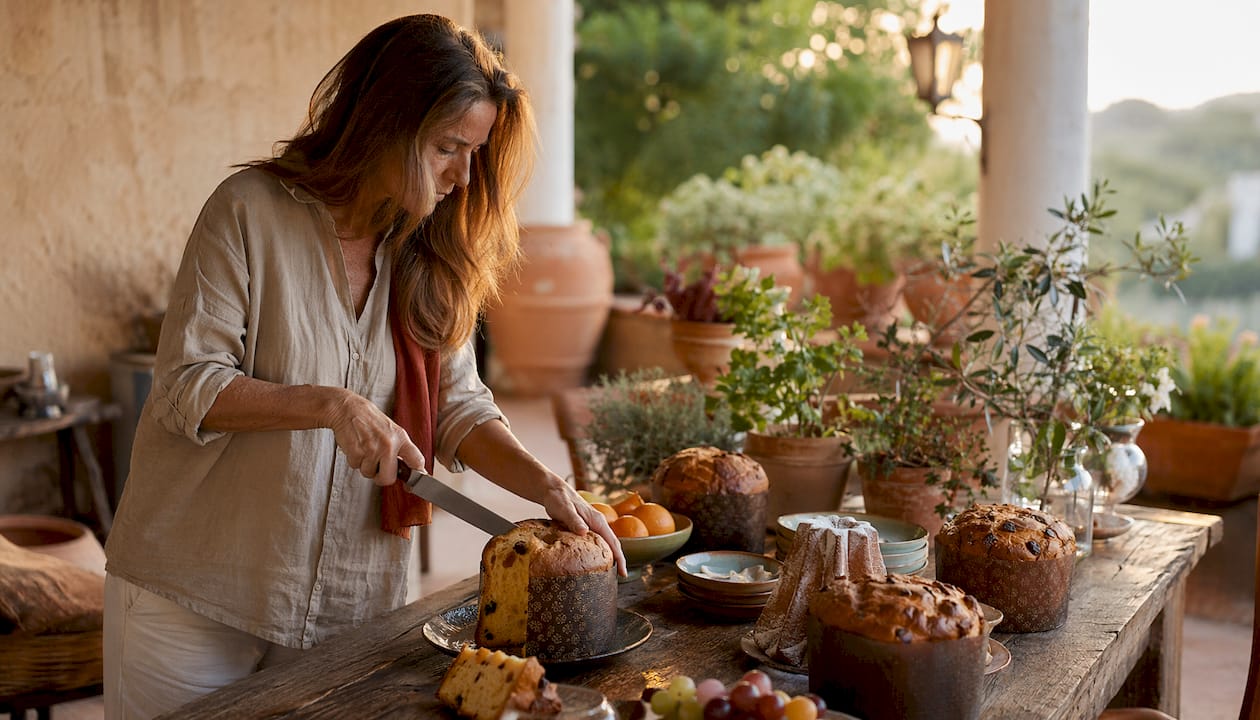
In Verona, pandoro shares the same base of butter and egg-leavened dough, but without candied fruit or raisins. The eight-pointed star shape and the lack of filling make it a radically different product, even if the fermentation technique remains similar.
In Sicily and Southern Italy, some artisans incorporate Bronte pistachios, candied bergamot peel, or dark chocolate instead of raisins. These variants remain a minority but testify to a real regional creativity around the base recipe.
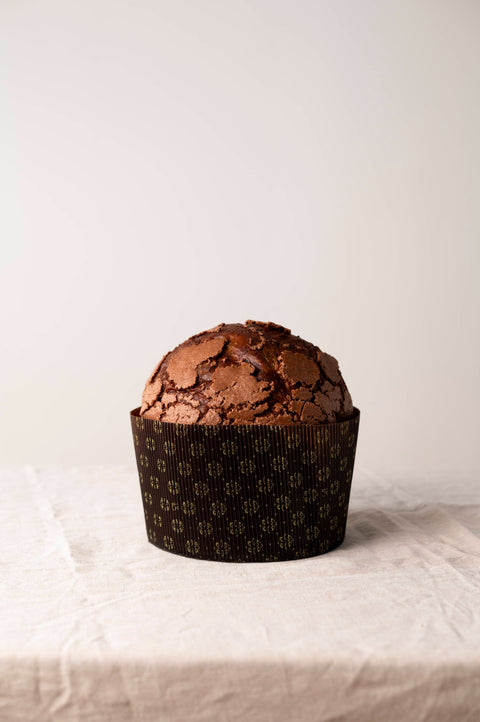
At Christophe Louie, this logic of variation is taken even further: the panettone is available in chocolate, mandarin, truffle, or even cacio e pepe for savory versions, all while keeping natural sourdough and Italian flours as the invariable technical base. The range of artisanal panettones available year-round illustrates how tradition can adapt without betraying itself.
For enthusiasts who wish to explore without embarking on the complete recipe, Christophe Louie's panettone classico with candied fruit remains the reference most faithful to the traditional Milanese composition, with its orange peel, citron, and live sourdough fermented for 72 hours.
Key points
A successful panettone relies on the quality of each ingredient and respect for the fermentation time, with no shortcuts possible.
| Point | Details |
|---|---|
| Suitable flour | A blend of Italian 00 flour and Manitoba in equal parts is essential to hold up to long rises. |
| Natural sourdough | Several successive feedings stabilize acidity and make it possible to lift a very rich dough. |
| Candied fruit and raisins | Their weight must reach at least 20% of the finished product according to Italian regulations. |
| Long fermentation | Proofing must last between 36 and 48 hours minimum to obtain the characteristic honeycombed texture. |
| 82% butter | High-fat butter is essential for flavor and crumb structure. |