French Flan Pâtissier: What It Is and How to Spot a Great One
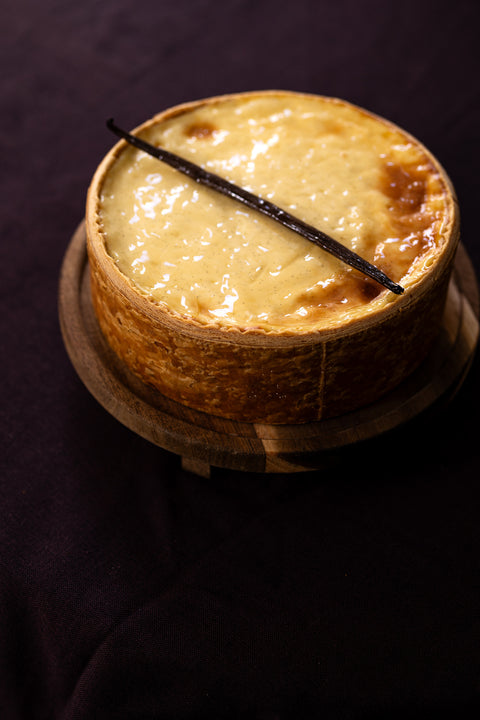
A flan pâtissier is a Parisian bakery classic: a crisp pastry shell filled with a thick, sliceable vanilla custard and baked until the top turns deep golden brown. It is built on a handful of simple ingredients, which is exactly why quality shows so clearly: whole milk, eggs, real vanilla, a well-baked shell and patience. If you want to understand it, or find one worth eating in Paris, this guide gives you the method, the proportions and the signs of an artisan flan. At Christophe Louie, flans sit in the same range as our sourdough breads, madeleines and panettone, and you can see our flans by the slice.
TL;DR
- A flan pâtissier (also called flan parisien) is a baked pastry shell filled with a custard close to a pastry cream, thickened with corn starch and eggs. It is firm enough to slice, yet creamy.
- A good reference proportion for 1 litre of milk is 200 g sugar, 100 g egg yolks and 100 g starch, according to Marmiton’s 2026 guide.
- The two classic failures are undercooked pastry and grainy custard. Both come from technique, not from the recipe.
- An artisan flan is judged on its shell, its custard, its vanilla and its cooling time, not on its size.
- Chocolate is the most popular variation, and it works best with a sablé shell and a cream-enriched filling.
Table of Contents
- What is a French flan pâtissier?
- The shell: choosing the right pastry
- The custard: proportions and technique
- From mixing bowl to oven: the full method
- What makes an artisan flan pâtissier
- Chocolate flan: a gourmet variation
- Eating a flan in Paris
- Our flans and the rest of the range
- FAQ
- Sources
What is a French flan pâtissier?
In France, “flan” covers several desserts, and the word does not mean the same thing everywhere. Many readers abroad picture a caramel-topped custard turned out of a dish, such as the Spanish-style flan or the French crème renversée. The flan pâtissier is a different dessert. It is a bakery pastry, sold by the slice or whole, with a pastry base and a filling that sets firm.
According to Marmiton’s February 2026 guide, a bakery-style flan is a pâte brisée (a plain, buttery shortcrust) filled with a mixture similar to crème pâtissière: whole milk, optional cream, egg yolks, sugar, corn starch and vanilla. Crème pâtissière is the thick pastry cream used in éclairs and fruit tarts. The difference is that the flan version is baked in its shell until it sets and colors.
Three things set it apart from other custard desserts:
- A baked pastry shell. A crème renversée has no pastry. A flan pâtissier lives or dies by its crust.
- Starch as a thickener. Corn starch gives the sliceable, dense texture. A caramel custard relies on eggs alone and stays trembling and soft.
- A browned top. The surface caramelizes in the oven into a dark golden skin, with spots of deeper brown that many Parisians consider the best part.
The name varies by region and by shop: flan pâtissier, flan parisien, or simply “flan” at the boulangerie counter. They all point to the same dessert.
The shell: choosing the right pastry
The pastry is not a detail. It is half of the dessert, and it is where most homemade and mass-produced flans fall short.
Valrhona Collection’s pastry guide from April 2025 compares the usual options:
| Pastry | What it brings |
|---|---|
| Pâte brisée | A simple, traditional, crisp base |
| Puff pastry | A flaky, crisp contrast with the soft filling |
| Pâte sucrée | A sweeter shell |
| Pâte sablée | A buttery, crumbly texture |
For a classic vanilla flan, pâte brisée is the benchmark, with puff pastry as the other common choice in Parisian bakeries. Sweeter pastries suit flavored versions, which is why a chocolate flan often takes a sablé.
Why the shell turns soggy
A wet filling sitting on raw dough is a recipe for a pale, soft base. The same Valrhona guide recommends pre-baking pâte brisée so it stays crisp under the filling. The professional baking institute INBP also flags undercooked pastry as a frequent problem in its July 2021 technique guide. Its advice is to bake the flan until the center is cooked cold in a deck oven (a professional oven with a heated stone floor that cooks the base from below), so the pastry gets enough heat.
At home, the equivalent is simple: bake on a preheated tray or baking stone on the lowest rack, and chill the lined shell first. Marmiton suggests at least 30 minutes of chilling, which relaxes the dough and limits shrinkage.
The custard: proportions and technique
The filling is a pastry cream that goes into the oven. Its texture depends on three levers: the ratio of thickeners, the way the yolks are worked, and the dairy.
A reliable proportion
Marmiton gives a simple rule for 1 litre of milk: 200 g sugar, 100 g egg yolks and 100 g starch. The result is a filling that is well set but still creamy. It is easy to remember, and it scales up or down.
The same guide defines the vanilla, the milk and the optional cream as the flavor base. Use whole milk: the INBP guide recommends whole milk and fresh or pasteurized eggs. It also notes that thick cream gives the flan more character, and that timing changes the result. Cream added after cooking gives a softer flan. Cream cooked with the milk and custard mixture gives a firmer one.
Avoiding a grainy texture
A grainy custard is the second classic fault. INBP’s guide says that whisking the yolks thoroughly with the sugar dissolves the sugar, improves the eggs’ resistance to heat and helps reduce graininess in pastry cream. In practice:
- Whisk yolks and sugar until the mixture is smooth and slightly paler, before adding the starch.
- Pour the hot milk over gradually, whisking constantly.
- Return to the heat and bring to a boil while whisking, so the starch thickens fully and the mixture turns glossy.
- Strain if you see any lumps.
From mixing bowl to oven: the full method
Here is the sequence a pâtissier follows, with the timings from the Marmiton guide. A home oven differs from a deck oven, so treat the figures as a starting point and watch the color.
- Line and chill the shell. Roll the pâte brisée, line a tart ring or tin, and rest it in the fridge for at least 30 minutes. Pre-bake it lightly so it stays crisp.
- Make the pastry cream. Heat the milk with the vanilla. Whisk yolks, sugar and starch, combine, and cook until thick.
- Cool the cream. Marmiton recommends cooling the thickened custard for about one hour before filling, which keeps the shell from softening.
- Fill and bake. Pour into the shell and bake at about 170 °C for 40 to 50 minutes, until the surface is deeply golden with darker patches.
- Cool for hours, not minutes. Let the flan cool at least three hours before cutting. Cutting a warm flan gives a runny slice and a collapsing edge.
Valrhona’s guide adds that chilling the finished flan before serving improves its texture. That is the reason a flan bought from a good pâtissier often tastes better a few hours after baking than straight from the oven.
Making it ahead
Marmiton says a finished flan can be made the day before. It keeps one day at room temperature, or up to two days in the refrigerator. For variations, it suggests extra vanilla, a spoonful of rum or citrus zest in the custard.
What makes an artisan flan pâtissier
Once you know the method, you can judge a flan on sight and on the first bite. Here is what to look for when you buy one.
The shell. It should be golden all the way through, with a crisp underside. A pale, damp or chewy base signals undercooking, the problem INBP identifies as frequent.
The surface. A deep golden to brown top, even and slightly blistered, not a flat pale yellow. The color shows the flan has been baked long enough.
The slice. A clean cut with a firm but creamy interior. It should hold its shape without feeling rubbery or stiff, and it should not leak or look curdled.
The vanilla. The flavor should taste like real vanilla, with a round, dairy-forward finish, rather than a flat, sugary note. In an artisan flan the dairy is whole milk, and sometimes cream.
The cooling. A flan that has rested properly slices cleanly. If the slice slumps, it was cut too soon.
The size. A tall slab is not a quality sign. A well-proportioned flan, with the right balance of shell to filling, is.

The same logic applies across a pâtisserie. At Christophe Louie, we work with a living sourdough starter and a slow process for our panettone, and the same attention to ingredients and timing guides the rest of our range, including the flans. For a broader view of what a Paris pastry shop can offer, see our guide to delicious pastries in Paris.
Chocolate flan: a gourmet variation
Chocolate is the most requested twist on the classic. It changes both the shell and the filling, and it shows how far the format can go.

Valrhona’s chocolate flan recipe is a useful reference for a professional version. It yields four flans and uses a chocolate sablée shell: 230 g butter, 130 g P125 Coeur de Guanaja chocolate, 170 g icing sugar, 55 g almond powder, 4 g salt, 95 g whole eggs and 440 g T55 flour. The filling recipe combines 750 g whole milk, 750 g cream at 35% fat, 61 g corn starch, 160 g caster sugar and 280 g of 80% chocolate.
Two observations help you adapt any chocolate flan:
- The cream matters. The recipe uses as much cream as milk, which gives a richer, more velvety filling than the vanilla classic.
- The chocolate percentage matters. A high-cocoa chocolate gives a deep, slightly bitter flavor that balances the sugar. Use one you would eat on its own.
If you prefer to taste before you bake, our article on artisanal chocolate flan explains what we look for in a gourmet chocolate flan.
Ideas for serving
- Serve a chocolate flan slightly cool, not ice cold, so the cocoa flavor opens up.
- Pair it with a plain espresso or a black tea.
- Add a pinch of flaky salt on the slice, or a few orange zests.
- For a gift or a dinner, a whole flan on a board with a knife makes a simple, generous centerpiece.
Eating a flan in Paris
In Paris, a flan is an everyday pleasure. You see it in boulangerie windows, usually as a tall, brown-topped round, sold by the slice or whole. The tradition is to buy a slice in the afternoon and eat it on the spot or on a walk.
If you are visiting or living in the city, our page on where to eat a flan in Paris is a good starting point. If you are planning a gift or a gathering, take a look at our flan delivery in Paris page.
Our flans and the rest of the range
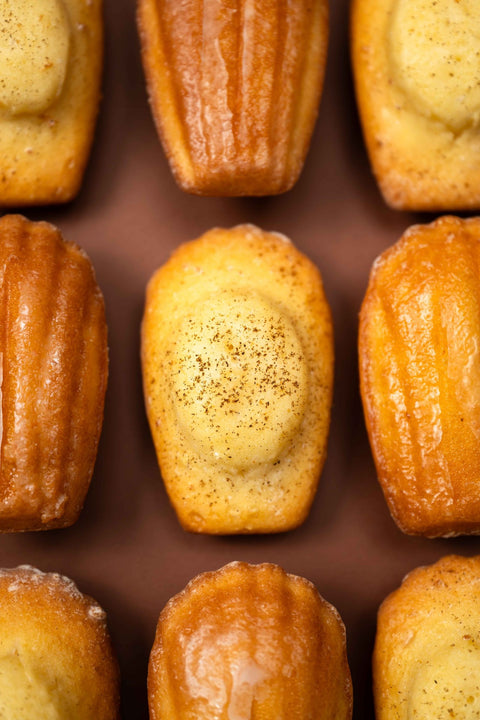
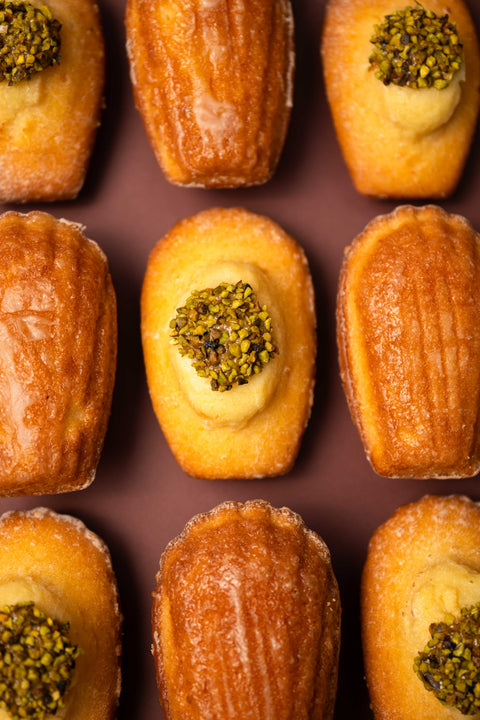
Christophe Louie is an artisan house in the Marais, at 12 rue Dupetit-Thouars in Paris 3e, founded by pastry chef Christophe Louie, who trained at the Jules Verne and at La Grande Épicerie de Paris. Our core craft is sourdough panettone, made over 72 hours with a living starter (lievito madre), and the same house also makes flans (vanilla, chocolate), sourdough brioches, madeleines, cakes and sourdough breads.
For the classic, start with the Madagascar vanilla Parisian flan by the slice. You can find it and the rest of the range, including our pastries, in the boutique in the Marais or on our online shop.

If you are choosing a gift, our flans sit well beside a panettone. Our panettone collection includes sweet and savory editions, and our chocolate panettone is a natural match for a chocolate flan on a festive table.
FAQ
What is the difference between a flan pâtissier and a flan parisien?
They describe the same dessert. Flan pâtissier is the name used in recipes and pastry guides, and flan parisien is the name you see at the bakery counter. Both are a baked pastry shell with a thick, starch-set vanilla custard.
Why is my flan pâtissier runny or grainy?
A runny slice usually means it was cut too soon: let it cool at least three hours, as Marmiton advises. A grainy texture often comes from yolks and sugar that were not whisked well enough, which INBP’s guide links to the heat resistance of the eggs.
Which pastry is best for a flan pâtissier?
Pâte brisée is the traditional choice and gives a crisp base, and puff pastry adds a flaky contrast. Sweeter pâte sucrée or buttery pâte sablée suit flavored versions such as chocolate. Pre-baking the shell helps it stay crisp, according to Valrhona Collection.
How long does a flan keep?
A flan made the day before keeps one day at room temperature or up to two days refrigerated, per Marmiton. Serve it lightly cool for the best texture.
Sources
- Techniques de pâtisserie, INBP (July 2021)
- Connaissez-vous la règle des trois pour réussir le meilleur flan pâtissier ? Marmiton
- Quelle pâte choisir pour un flan pâtissier ? Valrhona Collection
- Flan chocolat, Valrhona