Artisanal Panettone: The guide to choosing the best one at a gourmet deli
For a gourmet panettone in France, choose an artisanal product made with natural sourdough: the long fermentation process gives it a stringy crumb, natural shelf life, and aromatic richness that no industrial panettone can match. This is the criterion that should take precedence over the brand or packaging.
In short:
- An artisanal panettone made with natural sourdough generally stays fresh for 30 to 45 days, without added preservatives or additives.
- The 48 to 72-hour long fermentation guarantees a stringy crumb, better digestibility, and complex aromas.
- To recognize a true artisan product, look for a simple list of ingredients, a crumb that is elastic when sliced, and the scent of natural butter and citrus.
- The difference in process results in an irregular texture, a short natural shelf life, and a higher price than industrial versions.
- Ordering online from a panettone artisan guarantees a quality product, in classic or flavored versions, delivered anywhere in France.
Table of Contents
- Why choosing a sourdough panettone changes everything
- How to recognize an artisanal panettone on the shelf?
- Industrial vs. artisanal panettone: what really changes
- Where to buy an artisanal panettone in Paris and France?
- What budget to expect based on size and occasion?
- How to store and serve a panettone to reveal all its aromas
- The Christophe Louie method behind every panettone
- Deseasonalizing panettone, a choice that benefits the consumer
- Ordering a natural sourdough panettone from Christophe Louie
- Sources
Why choosing a sourdough panettone changes everything
The real divide between an ordinary panettone and a memorable one comes down to one thing: time. An artisanal panettone relies on lievito madre, a living sourdough starter that is fed and refreshed for days before the dough is even started. The complete process then spans 48 to 72 hours, compared to just a few hours for an industrial version accelerated with commercial yeast.
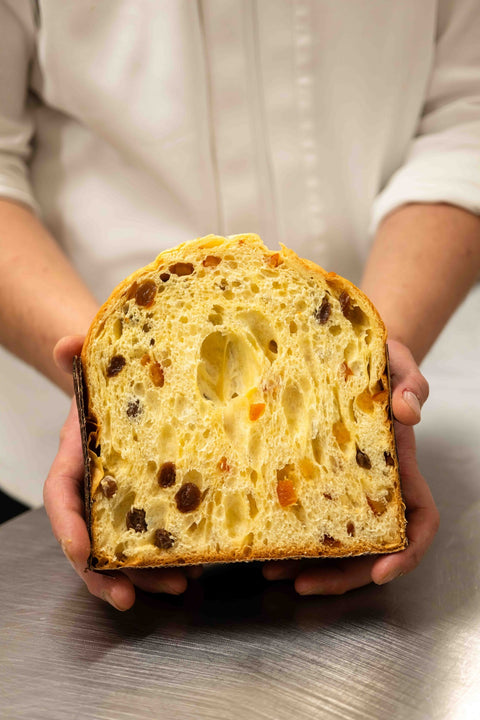
This slowness transforms the texture. The gluten develops gently, the aromas become more complex, and the crumb takes on that honeycomb structure that stretches into long, silky threads when sliced rather than crumbling.
Three concrete consequences of this long fermentation:
- Prolonged natural shelf life, with no added preservatives
- A buttery and fruity aroma that unfolds over several days
- Often better digestibility thanks to the pre-digestion of sugars by the sourdough
Key takeaway: a pure lievito madre panettone generally lasts 30 to 45 days after production, without additives. That alone is the best proof that the fermentation process was carried out to its full extent.
How to recognize an artisanal panettone on the shelf?
Spotting an artisanal panettone doesn't require being an expert. You just need to know where to look, and most importantly, what to avoid.
- Read the ingredient list first and foremost. It should fit within about ten recognizable names: flour, butter, eggs, sugar, natural sourdough, candied fruit, or chocolate chips. Run from mentions of emulsifiers, artificial flavorings, or preservatives, which are classic signs of industrial manufacturing.
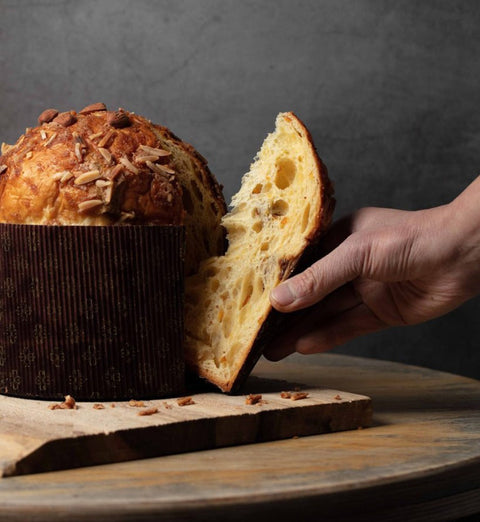
- Observe the crumb when sliced. It should stretch into silky filaments rather than breaking cleanly. This stringiness test remains the most reliable, speaking louder than any label.
- Check the color and smell. An intense yellow crumb reveals a true dose of egg yolks; the smell of natural butter and citrus should dominate, without any chemical notes.
- Ask the seller three questions: what is the baking date, is the panettone made with natural sourdough or yeast, and what is the indicated use-by date.
- For a gift, check the packaging. A box that protects the high shape of the panettone without crushing it, featuring a ribbon or carrying cord, already indicates care taken with the product.
Pro tip: weigh the panettone by hand before buying. An artisanal sourdough panettone feels surprisingly light for its size, a sign of a well-aerated, non-compact crumb.
Industrial vs. artisanal panettone: what really changes
The difference is not just visible in the price. It happens during the process, from the first kneading to taking it out of the oven.
- Fermentation: 8 to 12 hours for an industrial version, compared to 48 to 72 hours for an artisanal one, involving two successive doughs.
- Ingredients: emulsifiers, synthetic flavorings, and preservatives on one side; butter, fresh eggs, flour, and living sourdough on the other.
- Texture: dense and regular crumb for industrial, irregular and stringy for artisanal.
- Shelf life: up to five or six months for industrial thanks to additives, compared to 30 to 45 days naturally for artisanal.
- Price: a logical difference, as the fermentation time ties up production and equipment for much longer.
In Italy, the term panettone even meets specific regulatory criteria (fat content, proportion of egg yolks, high-mold baking), rules that automatically exclude many low-end industrial versions.
Where to buy an artisanal panettone in Paris and France?
Several channels allow you to get your hands on a serious artisanal panettone. In a physical shop, at a specialized artisan, you can ask the pastry chef directly about their process. In a gourmet grocery store, the selection is already narrowed down, but it is better to verify that the shop works with true artisans rather than semi-industrial brands that have been repackaged.
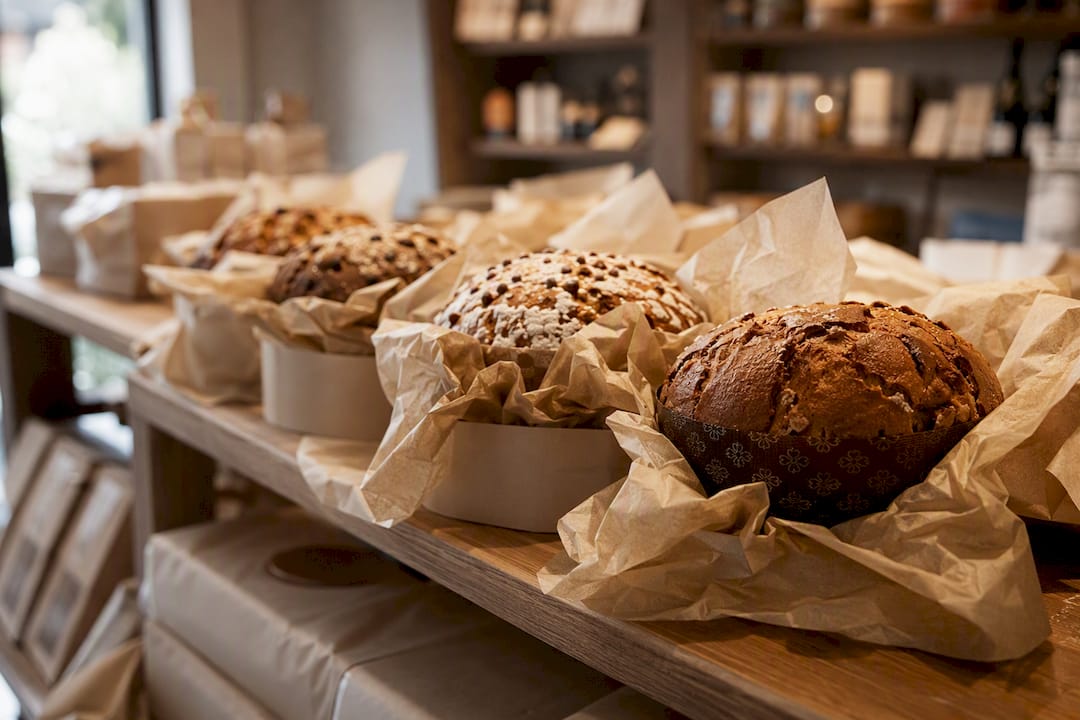
National e-commerce has also changed the game: ordering online allows you to access Parisian houses even in the provinces, with home delivery. For professional use (restaurant, hotel, works council), B2B corporate gifting has become a full-fledged channel for several artisans.
A few benchmarks to validate quality, regardless of the channel:
- Always ask for the baking date, not just the use-by date.
- Check if the house works all year round or only during the holidays; some artisans who produce panettone year-round maintain consistent quality through regular production.
- Beware of an abnormally low price for a so-called "artisanal" panettone: production time has a real cost.
Paris has seen the artisanal offering explode in recent years, to the point where panettone has become an anticipated seasonal product there, supported by several nationally recognized addresses.
What budget to expect based on size and occasion?
An artisanal panettone logically costs more than an industrial version, and the difference reflects production time more than marketing. A panettone at 35 or 40 euros often offers better value for pleasure than an industrial Yule log sold at the same price, simply because the process behind it is incomparable.
In terms of sizes, the mini format around 500 grams is suitable for an individual gift or tasting in a small group. The standard 1-kilo size remains the benchmark for a festive table, yielding about a dozen servings. Gift boxes, often more expensive, focus mainly on packaging and are justified for corporate gifting or a high-end gift.
For a successful gift without breaking the budget, the standard artisanal size remains the safest choice.
How to store and serve a panettone to reveal all its aromas
An artisanal panettone should be stored at room temperature, never in the refrigerator, in its original packaging or a clean cloth, for 30 to 45 days.
- Remove it from its packaging 15 minutes before tasting so it regains all its softness.
- Warm slightly if needed: a few minutes at a low temperature are enough to wake up the butter aromas without drying out the crumb.
- Slice by hand rather than with a knife, gently pulling the slices apart to respect the stringy structure.
- Pair with a sweet Italian wine like Moscato, a bold coffee, or a smoked tea depending on the version chosen.
Pro tip: leftover panettone turns into French toast or improvised tiramisu: the buttery crumb is particularly well-suited to this, much better than a classic brioche.
The Christophe Louie method behind every panettone

At Christophe Louie, the panettone follows a two-dough process spread over 72 hours, with a living sourdough starter maintained daily. The selection of flours comes from Italy, from mills like Grassi and Dalla Giovanna, chosen for their specific bread-making strength for panettone. All other ingredients—butter, eggs, fruit—are sourced in France, following a short-supply-chain logic.
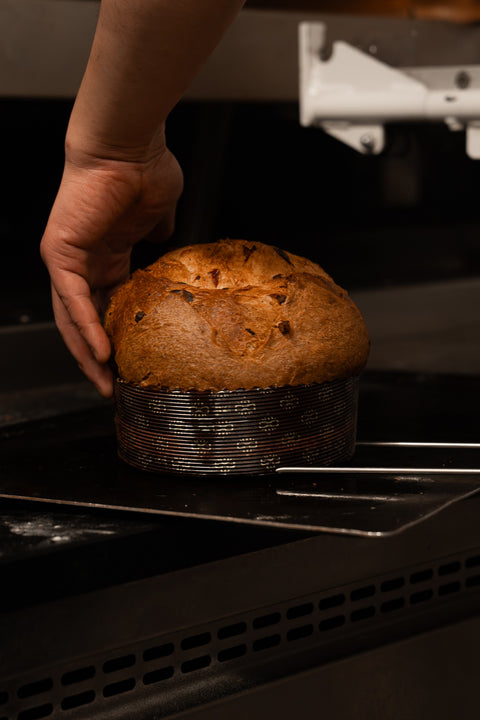
Manual shaping and precise temperature control at each stage produce a stringy crumb and natural shelf life that can reach five weeks. After baking, each panettone is hung upside down, a technical step that prevents the still-warm crumb from collapsing under its own weight.
The living sourdough isn't a marketing gimmick; it's a daily production constraint: you have to feed it, monitor it, and adapt the rising times to the workshop's temperature. It is this invisible work that gives the panettone its stringy texture and shelf stability.
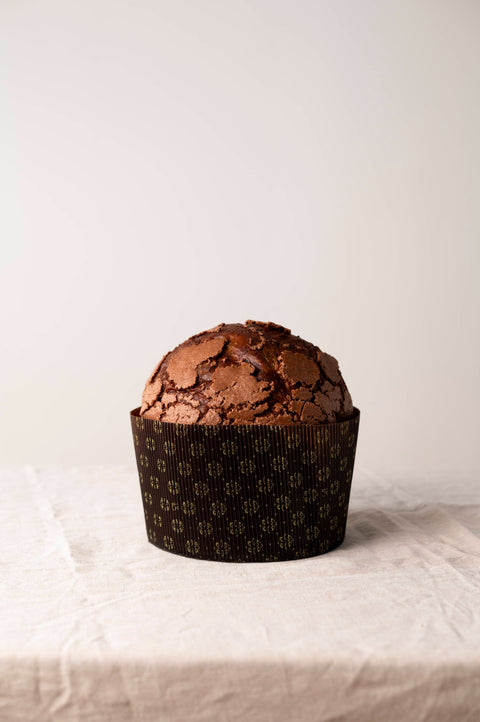
The house applies this expertise to sweet versions (classic, chocolate, mandarin) and savory versions (truffle, cacio e pepe), with collaborations led by houses such as Petrossian or Dammann. The distribution model combines a boutique in the Marais district, national e-commerce, and B2B partnerships with restaurants, hotels, and gourmet grocery stores, in an approach that voluntarily limits unsold stock thanks to the product's long shelf life.
Deseasonalizing panettone, a choice that benefits the consumer
Treating panettone as a pillar of the range all year round, rather than just an image product confined to December, changes the customer's relationship with the product. It allows for more regular production, therefore a technical skill better mastered with each batch, and it also meets a real demand for gifting that doesn't end on December 25th.
The consumer gains simplified access to an exceptional product without waiting for the holidays, and the artisan gains consistency in production, which benefits the final quality directly. Testing a panettone outside of the Christmas period is also judging it for what it really is: a long-fermentation pastry, not a calendar ritual.
— Christophe
Ordering a natural sourdough panettone from Christophe Louie
Christophe Louie is the direct alternative to buying from a gourmet grocery store for those who want an artisanal panettone without having to search for different addresses: the house manufactures it themselves, in 72 hours, in their workshop in the Marais, and delivers everywhere in France.
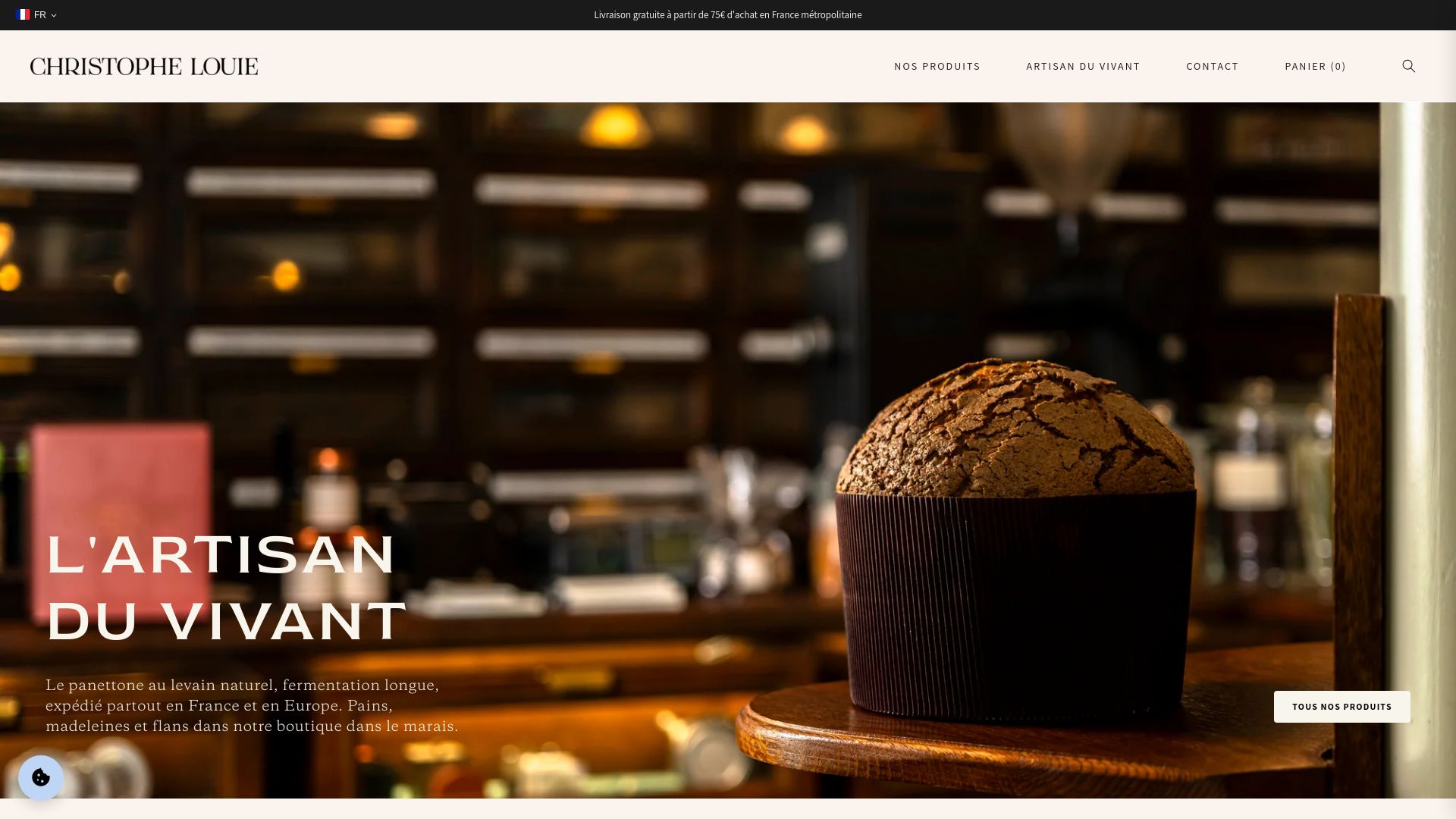
The signature orange blossom version offers a fragrant alternative to the classic candied fruit version, while the Classico panettone with candied fruit remains the benchmark for lovers of Italian tradition. Both exist in various sizes, from the individual mini format to the gift-wrapped format for holidays or corporate gifting.
Ordering is done directly online, with pickup in the boutique in the Marais or home delivery everywhere in France. For a professional need—restaurant, hotel, works council—a dedicated B2B space allows you to order in volume. Reserve your panettone now, as artisanal batches are naturally limited by the fermentation time.
Sources
- Our selection of the best panettones in France
- Artisanal Panettone: 2026 Buying and Manufacturing Guide - Côté Saone Restauration
- Panettone captivates Paris: our best addresses
- How to choose an artisanal panettone