Storing homemade brioche: a guide to keeping it soft
A well-stored brioche remains soft for 2 to 3 days at room temperature, up to 7 days in the refrigerator, and up to 3 months in the freezer. Everything depends on a single habit: eliminating contact with air as soon as the brioche has cooled.
Here are the essential steps to take right after pulling it from the oven:
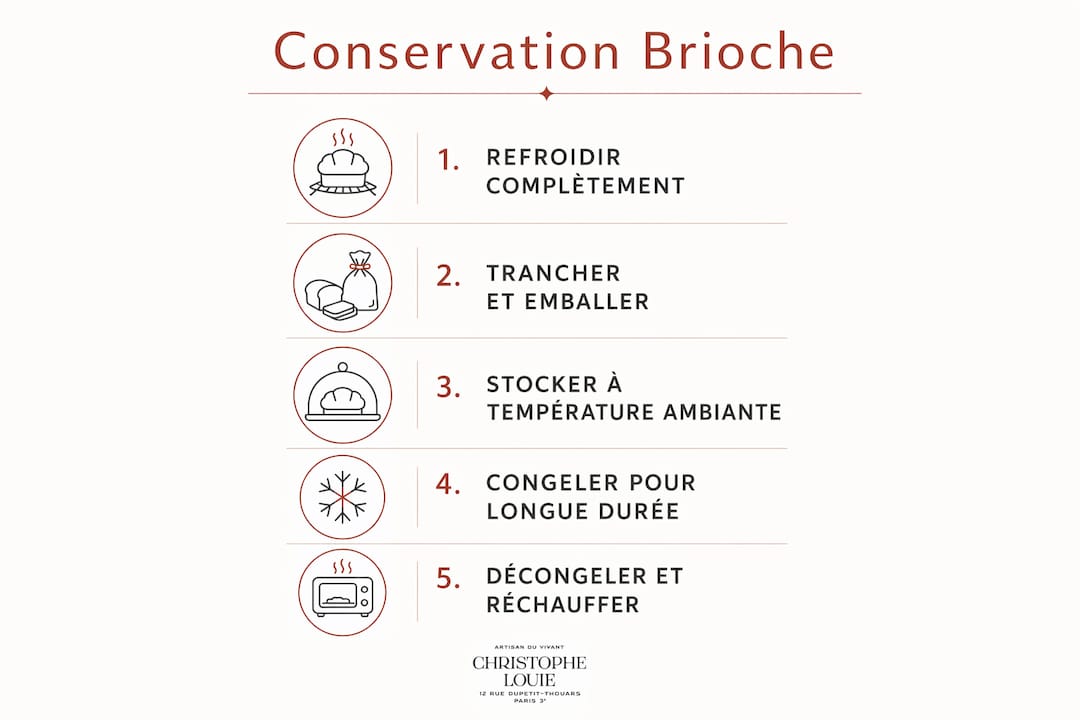
- Let the brioche cool on a wire rack before wrapping it.
- Wrap it tightly in plastic wrap or slip it into an airtight plastic bag, squeezing out the air.
- Avoid prolonged contact with air, which causes the crumb to harden in less than 24 hours if unprotected.
- Store at room temperature for consumption within 2 to 3 days.
- Slice it from the first day and wrap each portion individually for daily use.
Table of contents
- Why complete cooling changes everything before wrapping
- Room temperature or refrigerator: what you really lose in the fridge
- How to freeze brioche step-by-step to keep it for 3 months
- What Christophe Louie recommends for natural sourdough brioche
- How to reheat brioche without damaging its texture
- An artisanal brioche that stays fresh longer naturally
- Key points
Why complete cooling changes everything before wrapping
Wrapping a brioche while it is still warm means trapping water vapor inside. The resulting condensation softens the crust, encourages mold growth, and ruins the texture in a matter of hours. A wire rack is all you need: it allows residual moisture to evaporate evenly without the base of the brioche becoming "soggy."
Once cool, the wrapping must be as airtight as possible. Plastic wrap, applied in several tight layers, remains the most accessible solution. Airtight freezer bags work just as well, provided you remove the air before sealing. Conversely, a simple tea towel does not provide a sufficient barrier for several days: the fabric lets air through and accelerates drying.
Keep in mind: air is fresh brioche's number one enemy. Without an airtight seal, the crumb loses its internal moisture and hardens in less than a day.
Pro tip: Slice the brioche on the first day and wrap each slice separately in plastic wrap. This way, you only expose the portion you are eating, and the rest remains protected.
Room temperature or refrigerator: what you really lose in the fridge
At room temperature, a properly wrapped brioche lasts 2 to 3 days without any problem. This is the preferred method for quick consumption: the crumb stays soft, the crust retains its character, and no extra preparation is needed before serving.
The refrigerator extends shelf life but at the expense of texture. The cold accelerates the retrogradation of starch, a phenomenon where starch molecules recrystallize, making the crumb dry and crumbly much faster than at room temperature. The result: a brioche taken out of the fridge after two days may seem stale even though it is still perfectly safe.
In practice: the refrigerator is only justified during extreme summer heat, when the risk of fermentation at room temperature becomes real. In that case, take the brioche out 20 to 30 minutes before serving so it regains its softness.
How to freeze brioche step-by-step to keep it for 3 months
Freezing is the most effective method for long-term storage. When done correctly, it preserves the texture and flavor remarkably well.
Steps to follow:
- Let the brioche cool completely at room temperature.
- Slice the brioche into individual portions.
- Lay the slices flat on a tray and place in the freezer for about 2 hours: this pre-freezing prevents the slices from sticking to each other.
- Wrap each slice in plastic wrap, then group them in a freezer bag while squeezing out the air.
- Label the bag with the date.
- Store in the freezer for the long term.
For thawing, take the slices out the night before and let them return to room temperature in their packaging. You can also put them directly into the oven at 150°C (300°F) for 5 minutes: the gentle heat reactivates the moisture and restores the softness without drying out the crumb.
- Avoid thawing in the microwave: the intense heat makes the texture rubbery.
- Never refreeze a previously thawed brioche.
What Christophe Louie recommends for natural sourdough brioche
Natural sourdough brioches behave differently than industrial brioches when it comes to aging. Thanks to the long fermentation and organic acids produced by live sourdough, the crumb naturally stays softer and resists drying better. This is precisely why Christophe Louie’s sourdough panettone stays fresh for up to five weeks without additives.
Key principle: natural sourdough produces acids that slow down starch retrogradation and limit microbial development, thereby extending freshness without the use of industrial preservatives.
For homemade sourdough brioche, Christophe Louie advises against the refrigerator, which neutralizes the benefits of fermentation by accelerating staling. Freezing remains the best option for storage beyond 3 days: the complex aromas developed during fermentation are well-preserved in the cold, provided they are wrapped carefully and airtight. Artisanal sourdough baking relies on this expertise: mastering fermentation also means mastering the product's shelf life.
Pro tip: For sourdough brioche, favor reheating in the oven rather than letting it sit out. A few minutes at 150°C (300°F) wakes up the aromas and restores the signature stringy texture of sourdough.
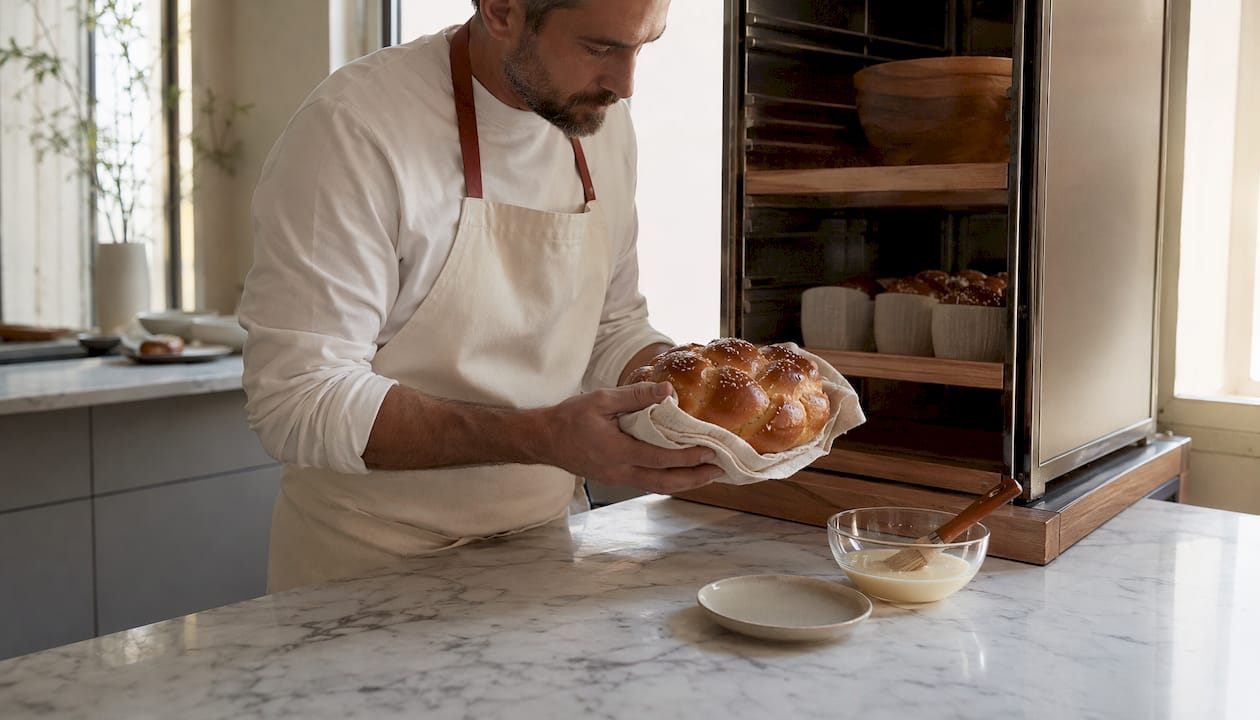
How to reheat brioche without damaging its texture
Reheating is often the neglected step, even though it can turn a well-stored brioche into a disappointment. A few simple rules help avoid the most common mistakes.
- The oven remains the best option: preheat to 150–180°C (300–350°F) and bake the brioche for 5 to 10 minutes. The dry heat reactivates internal moisture and revives the crust without burning it.
- The toaster works perfectly for individual slices: one or two minutes are enough to get a slightly crispy surface and a warm center.
- The microwave should be avoided: even 30 seconds at high power is enough to make the crumb elastic and unpleasant.
- If the brioche is very dry, lightly moisten the surface with a few drops of water before putting it in the oven. The steam generated during baking restores some of the lost softness.
An artisanal brioche that stays fresh longer naturally
If you are looking to avoid these storage constraints, the answer often lies in the quality of the brioche itself. At Christophe Louie, "Le petit Louie" natural sourdough brioches are made using the same long-fermentation process as the signature panettone: two doughs, 72 hours of work, and a live sourdough starter maintained daily.
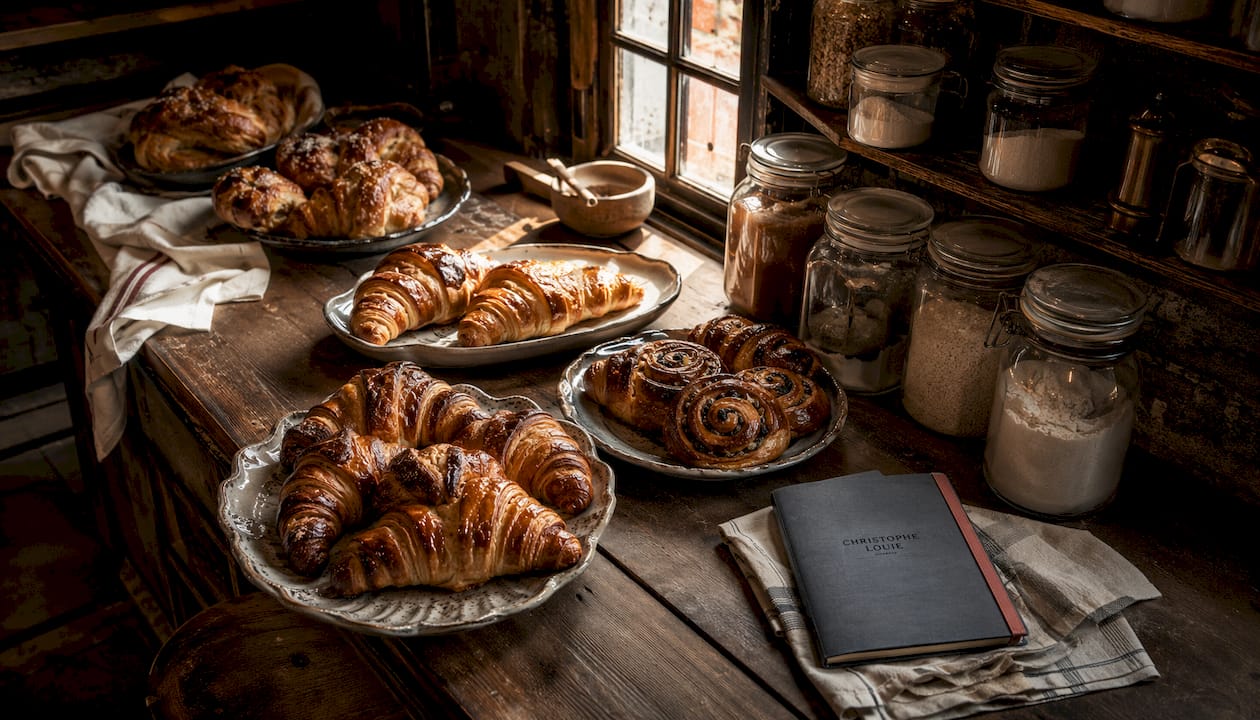
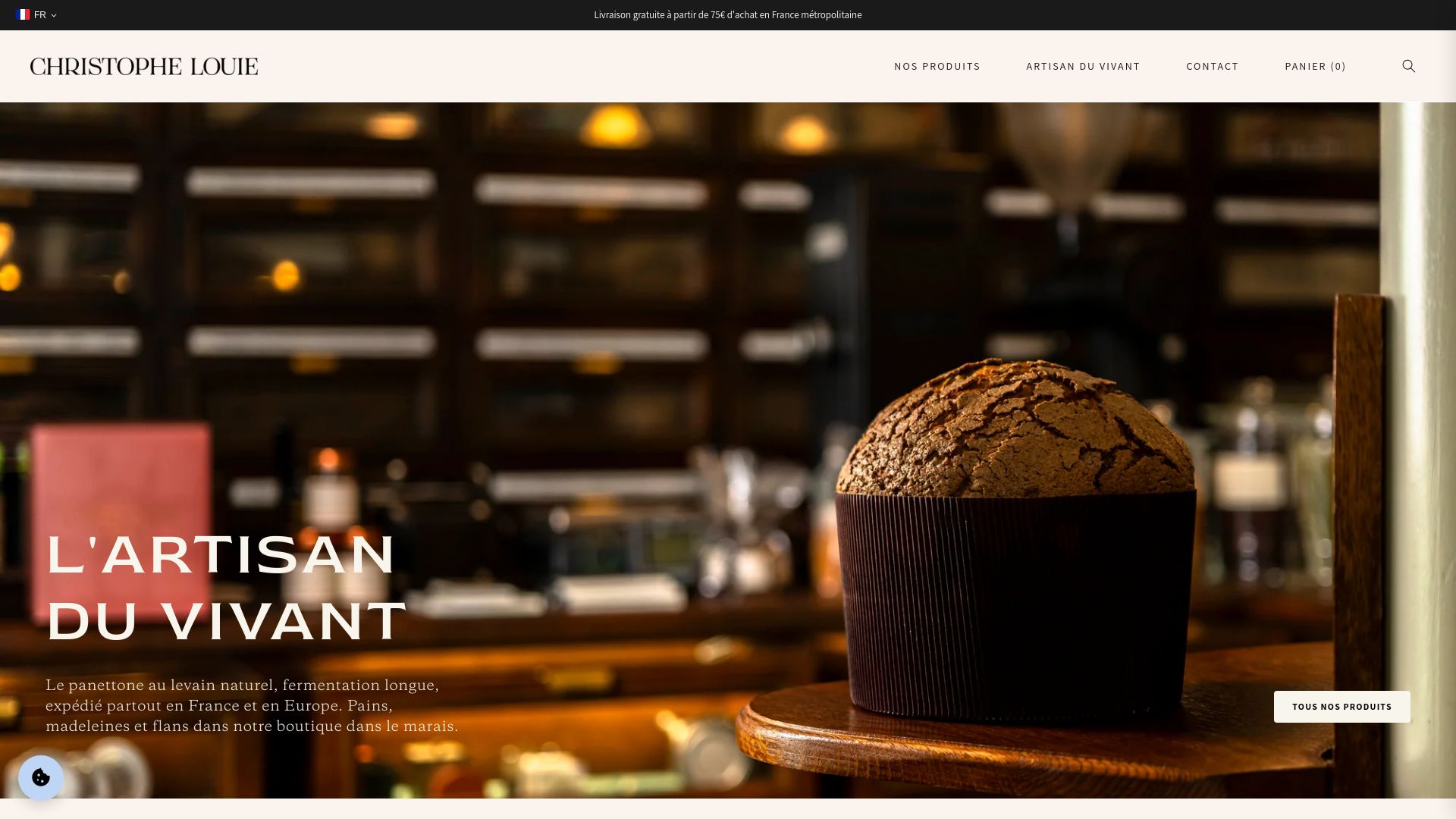
The result is a brioche whose crumb remains soft for much longer than an industrial version, with no added preservatives. Available in our boutique in the Marais or for online order with shipping throughout France, they freeze perfectly if you want to have a portion on hand at all times. To discover the full range, from orange blossom panettone to pink praline brioches, visit christophelouie.com.
Key points
The most effective method for storing brioche is immediate airtight packaging after it has cooled completely, combined with freezing for any storage longer than three days.
| Point | Details |
|---|---|
| Airtight packaging | Plastic wrap or airtight bag once fully cooled, to block out air. |
| Duration by method | 2–3 days at room temperature, up to 7 days in the fridge, up to 3 months in the freezer. |
| Refrigerator with caution | Cold accelerates starch retrogradation; take the brioche out 20–30 mins before serving. |
| Freezing in portions | Pre-freeze slices for 2 hours on a tray before wrapping to prevent sticking. |
| Christophe Louie | Natural sourdough brioches keep longer thanks to long fermentation, with no additives. |