Colomba vs panettone: how to choose based on the occasion?
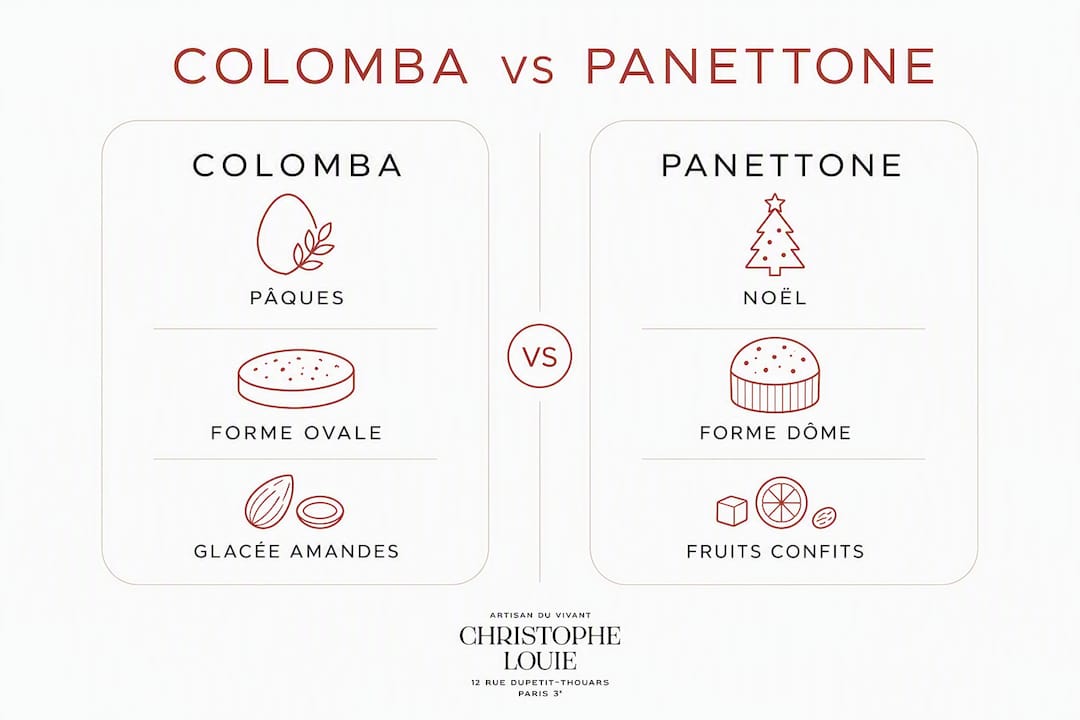
The colomba is the Easter brioche: oval-shaped, glazed with almonds, and centered on candied citrus. The panettone is the Christmas brioche: dome-shaped, enriched with raisins and candied fruits. They share the same base dough and the same natural sourdough required by Italian regulations—but they offer two radically different flavor profiles, seasons, and silhouettes.
| Dimension | Colomba | Panettone |
|---|---|---|
| Occasion | Easter | Christmas |
| Shape | Oval, dove wings | Tall, cylindrical dome |
| Inclusions | Significant proportion of candied citrus | Significant proportion of raisins + candied fruits |
| Glaze | Yes — egg white, sugar, almonds | No (except for regional variations) |
| Fermentation | Natural sourdough (pasta acida) mandatory | Natural sourdough (pasta acida) mandatory |
| Shelf life | Several weeks (artisanal with sourdough) | Up to five weeks (artisanal with sourdough) |
Natural sourdough, known as lievito madre in Italy, is the cornerstone of both products: it determines the stringy texture, complex aromas, and long shelf life without the need for preservatives.
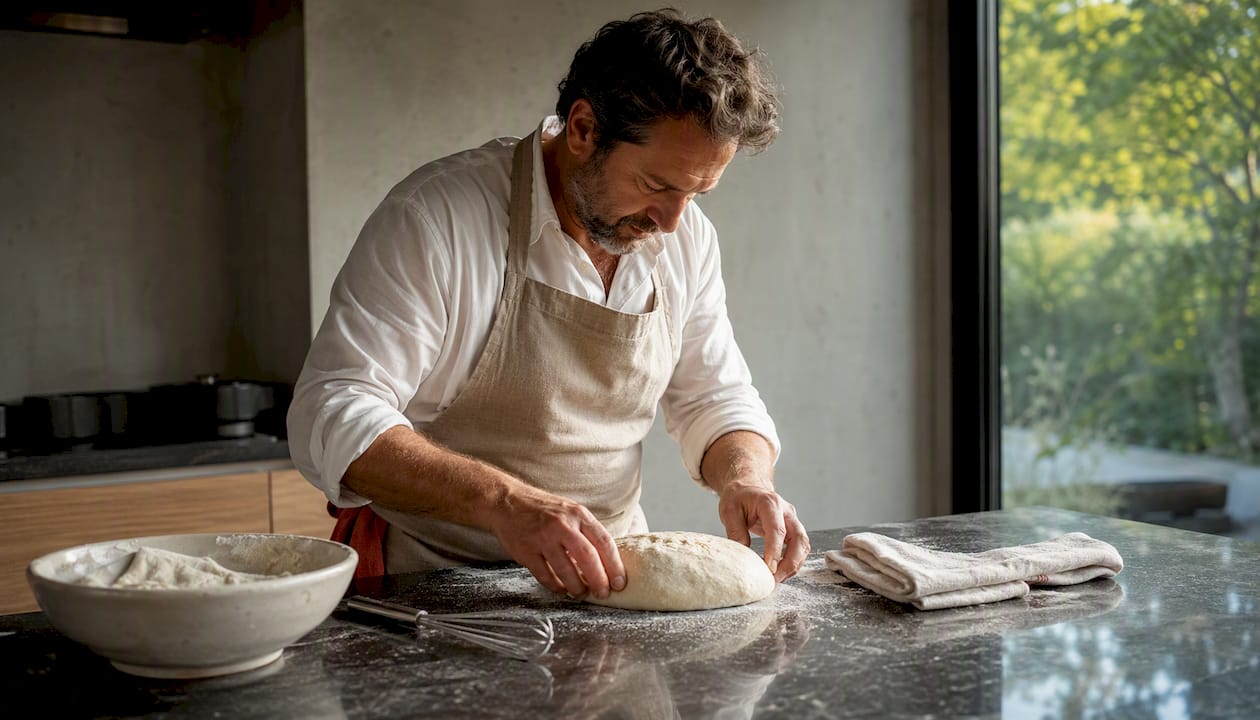
Table of contents
- Why is panettone linked to Christmas and colomba to Easter?
- Ingredients and inclusions: what really changes the taste?
- How to visually distinguish colomba from panettone?
- Sourdough, fermentation, and texture: why is the crumb so different?
- The colomba glaze: much more than just a decoration
- Modern variants: how far can you stray from the classic?
- How to store and serve colomba and panettone?
- What does the Italian decree D.M. 22/07/2005 say about these two products?
- Why does sourdough really make a difference, according to an artisan?
- Colomba or panettone: which one to choose for your situation?
- Key points
- What I have learned after years of working with sourdough
- Artisanal sourdough panettone: an alternative to industrial versions
- Sources and further reading
Why is panettone linked to Christmas and colomba to Easter?
Panettone is a Milanese brioche with ancient origins, surrounded by medieval legends and etymologically linked to panetto (small loaf) followed by the augmentative suffix -one, literally meaning "large loaf." Its consumption became a Christmas tradition in Lombardy and Piedmont before conquering all of Italy.
The colomba is a much more recent creation. In the 1930s, the Motta company—already a producer of panettone—sought to make its production lines profitable during the spring. Dino Villani, the brand's art director, designed an Easter brioche in the shape of a dove, using the same machines and a very similar dough. The colomba was therefore born as an industrial variant of the panettone, designed to fill the gap between the two seasons.
The colomba is not an ancestral recipe passed down through generations: it is a 20th-century marketing invention that, within a few decades, became an Easter symbol as powerful as panettone is at Christmas.
In Italy, seasonality is strictly observed: one is rarely found during the other's period. In France, availability is more flexible—delicatessens and specialized artisans sometimes offer both year-round—but the bulk of the offering remains aligned with the corresponding holidays.
Ingredients and inclusions: what really changes the taste?
The basic structure is identical: wheat flour, eggs, butter, sugar, and natural sourdough. What happens afterward is what sets the two products apart.
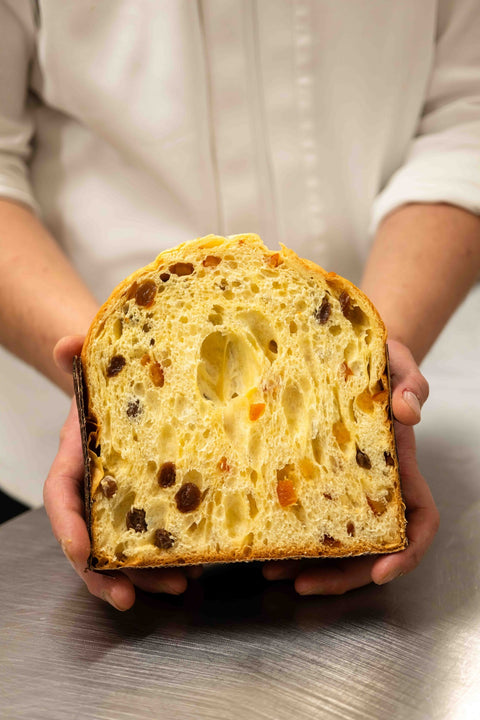
- Panettone: raisins and candied citrus peels must represent at least 20% of the total weight according to the Italian decree D.M. 22/07/2005. This raisin + citrus blend gives a complex aromatic profile, slightly wine-like, with a persistent fruity chewiness.
- Colomba: inclusions are limited to candied citrus (minimum 15% according to the same decree), without raisins. The almond glaze completes the whole with a toasted, sweet note. The result is cleaner, brighter, and focused on zest and almond.
- Summary of flavor profile: the colomba leans toward citrus + almond; the panettone toward dried fruits + candied fruits, with a denser aromatic complexity.
Pro tip: On an artisanal colomba, verify that the label explicitly mentions almonds in the composition of the glaze. The decree requires at least 2% almonds calculated at the time of decoration—a product that lists only "icing sugar" as a topping does not comply with the traditional specifications.
For more details on panettone ingredients and their proportions, the Christophe Louie house details the technical choices that make the difference between an industrial product and an artisanal one.
How to visually distinguish colomba from panettone?
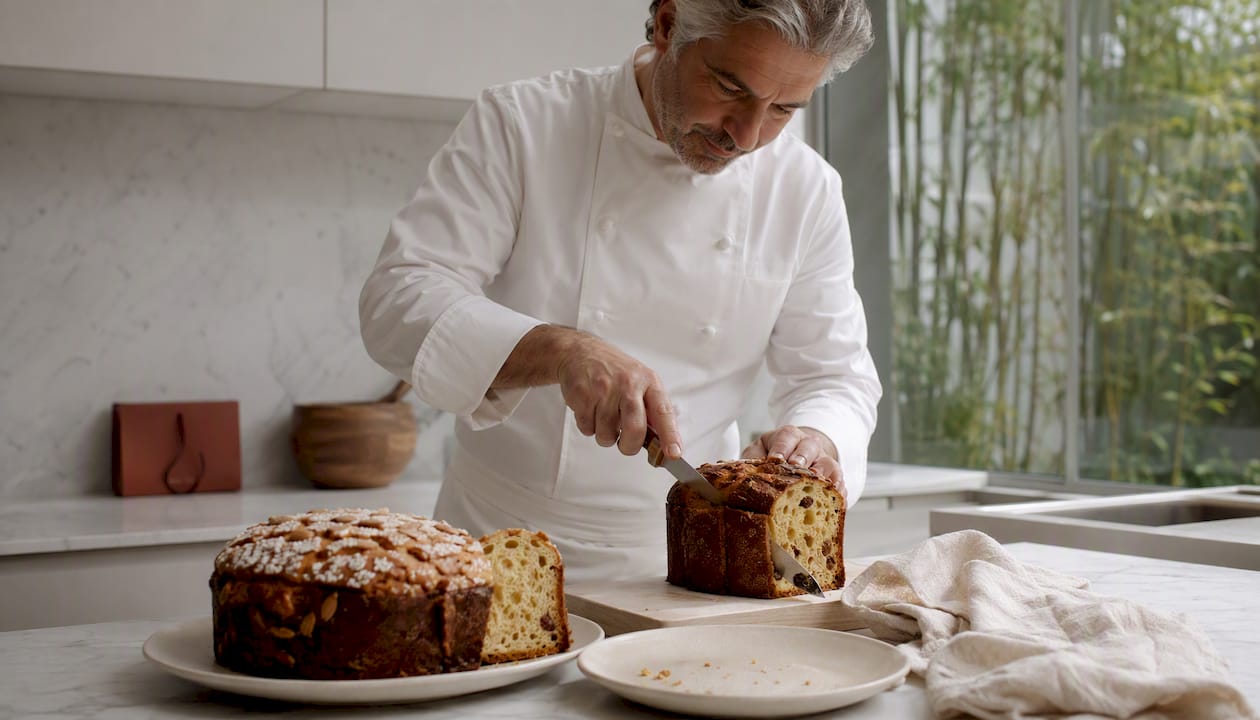
The silhouette is generally enough to tell them apart. Panettone appears as a tall, slightly domed shape with a cross-scored crust on top—this incision is not decorative; it allows the dough to expand freely during baking. The box is cylindrical, often closed with a ribbon.
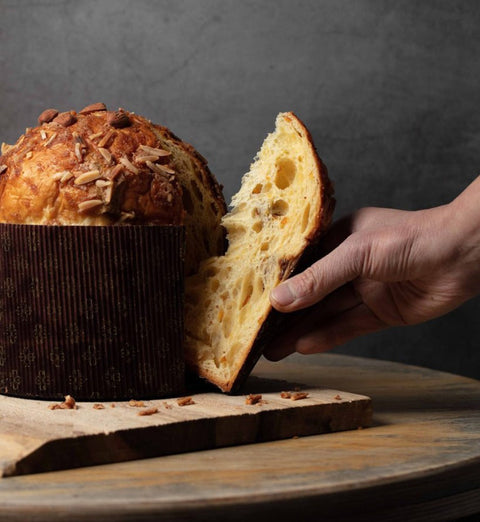
The colomba adopts a stylized oval shape evoking the wings of a dove in flight. The packaging follows this elongated silhouette, and the white glaze sprinkled with sugar grains and whole almonds is visible as soon as the box is opened.
On a label, three clues are enough to identify the product: the mention of the shape (cylindrical or oval), the presence or absence of almond glaze, and the list of inclusions (raisins or not). A panettone without raisins or glaze is still a panettone; a colomba without almond glaze falls outside the regulatory framework.
In shops or online, be wary of products that adopt the shape without respecting the ingredients: a "panettone" without natural sourdough or a "colomba" without candied citrus does not meet the official definition.
Sourdough, fermentation, and texture: why is the crumb so different?
Natural sourdough (pasta acida) is the central technical element for both products, as explained in Le Blog — Gin de Chimay · Cocktails, recettes & spiritueux artisanaux. Unlike baker's yeast, it produces organic acids during fermentation that develop complex aromas, strengthen the gluten structure, and naturally extend shelf life.
Manufacturing follows a double impasto: a first dough fermented for several hours, followed by a second incorporation of fats, eggs, and inclusions. The key steps are the preparation of the pasta acida, the long fermentation, the porzionatura (portioning), the pirlatura (shaping into a ball to tighten the gluten network), baking, and finally cooling.
- Sourdough preparation: refreshed several times over 24 to 48 hours to reach the necessary fermentative strength.
- First impasto: flour, sourdough, sugar, egg yolks, butter—10 to 12 hours of fermentation at a controlled temperature.
- Second impasto: incorporation of inclusions and flavors, followed by further fermentation.
- Pirlatura and molding: the shaping creates surface tension that determines the final honeycomb structure.
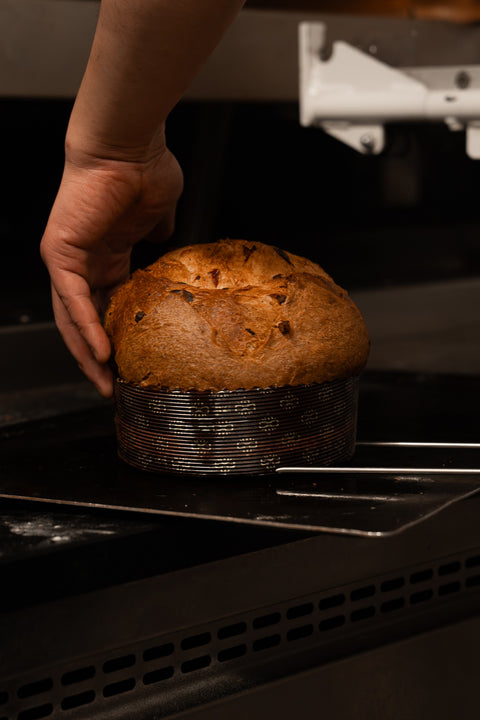
- Baking and upside-down cooling: for panettone, inverting the product immediately after baking prevents it from collapsing and preserves the height of the dome. The colomba, in its flat oval mold, does not require this step—which explains why the crumb of the two products, even from a similar dough, is perceived differently in the mouth.
To remember: artisans who work with natural sourdough generally dedicate 48 to 72 hours to the entire process. The French gastronomic press regularly highlights this technicality as a mark of quality, in contrast to industrial versions produced in a few hours using chemical yeast.
The colomba glaze: much more than just a decoration
The glaze is the visual and gustatory signature that immediately distinguishes the colomba from the panettone. Its typical composition combines egg white, sugar, almond flour, and whole almonds. After baking, it forms a slightly crunchy crust that contrasts with the soft crumb underneath.
The presence of the glaze alters the perception of sweetness: even if the base dough is identical to that of the panettone, the sweet-almond crust of the colomba gives an impression of a more indulgent, confectionary-like dessert. It is as much an effect of texture as it is of taste.
Traditional panettone has no glaze. Some regional or artisanal versions add a macaron-style crust—based on almond flour and sugar—but this remains a variant, not the norm. A glazed panettone therefore looks visually like a colomba, which can lead to confusion when buying online: always check the shape of the mold indicated on the product page.
Modern variants: how far can you stray from the classic?
Both products have generated a profusion of contemporary variations, driven by pastry chefs and artisanal houses seeking to renew interest beyond the holidays.
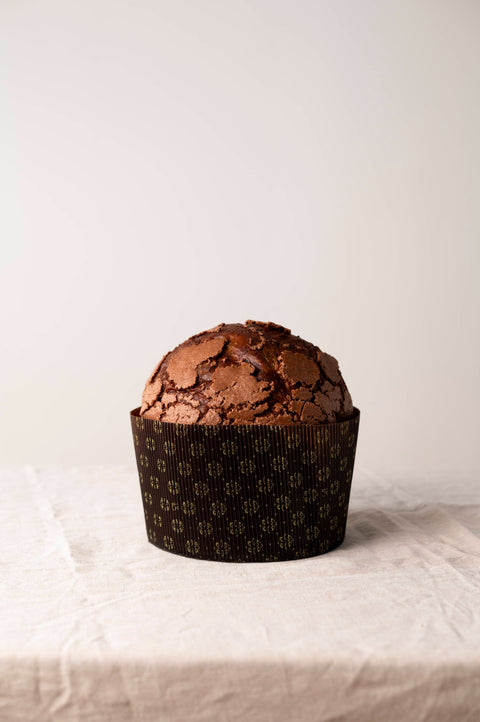
- Panettone: dark chocolate, lemon and basil, pistachio, mandarins, salted caramel, savory versions (truffle, cacio e pepe).
- Colomba: filled with pistachio cream, red fruits, white chocolate, with a praline glaze instead of the traditional almond glaze.
- Raisin-free versions: frequent for panettone, they meet a real demand but technically depart from the disciplinare framework if they retain the name "classic panettone."
The decree allows for enriched versions provided the base impasto respects minimum proportions. A chocolate panettone can therefore legitimately be called panettone if it retains the pasta acida and the regulatory percentages—but a product that entirely replaces traditional inclusions with other ingredients should bear a distinct denomination.
For a first purchase or a gift, the classic version remains the benchmark: it allows one to evaluate the quality of the sourdough and the dough without indulgent inclusions masking potential flaws.
How to store and serve colomba and panettone?
Artisanal natural sourdough panettone or colomba will keep for several weeks at room temperature, away from light and humidity, in their original packaging. The butter and sourdough play a protective role here: organic acids produced by fermentation naturally slow down the development of mold.
For an artisanal sourdough product, expect three to five weeks of optimal freshness once the packaging is opened if you reseal it carefully. An industrial product made with chemical yeast rarely lasts more than ten days under the same conditions.
Freezing is possible: slice the product, wrap each slice in plastic wrap, and freeze. Thawing at room temperature for two hours is sufficient. A 30-second pass in the toaster restores the crispness of the crust.
For serving, slice at room temperature with a serrated bread knife. Drinks: a caffè lungo or ristretto for breakfast, a Moscato d’Asti or Prosecco for a festive dessert, or a lightly smoked black tea for the colomba, whose citrus notes pair well with the tannins.
What does the Italian decree D.M. 22/07/2005 say about these two products?
The ministerial decree of July 22, 2005, is the reference text that regulates the production and sale of panettone and colomba in Italy. It reserves these designations for products obtained exclusively through natural fermentation using pasta acida—chemical yeast alone is not enough.
The decree specifies: for panettone, raisins and candied citrus peels must represent at least 20% of the total weight of the finished product. For colomba, candied citrus must reach at least 15%, and the glaze must contain at least 2% almonds calculated on the total weight. These thresholds are not indicative: a product that does not respect them cannot legally bear these names in Italy.
For the French buyer, this text is a useful tool for reading labels. A product imported from Italy bearing the mention "panettone" or "colomba" must theoretically comply with these requirements. A product made in France under these names is not legally bound to them, but serious artisans comply by choice.
Note: this article presents the regulatory framework for informational purposes. For any questions regarding commercial compliance, consult official texts or a competent professional.
Why does sourdough really make a difference, according to an artisan?
Natural sourdough fermentation is not a matter of tradition for the sake of it. It is a matter of chemistry and time. During the 48 to 72 hours a full artisanal process lasts, lactic bacteria and wild yeasts produce organic acids, esters, and aromatic compounds that industrial baker's yeast simply does not generate on this scale.
A well-managed sourdough develops a gentle acidity that balances the richness of the butter and egg yolks. It also strengthens the gluten network gradually, which results in that characteristic stringy crumb—the "threads" you see when you tear apart a good panettone. With chemical yeast, you get an aerated crumb, but never that elastic and silky texture.
At Christophe Louie, the choice of Italian flours — Grassi and Dalla Giovanna — is no coincidence: these high-protein flours withstand long fermentations without the gluten network collapsing. Temperature control at every stage, manual pirlatura, and controlled cooling are the techniques that transform a recipe into an exceptional product. This level of care is directly reflected in the shelf life: a well-managed, live sourdough starter allows for five weeks of freshness without any preservatives.
Colomba or panettone: which one to choose for your situation?
The answer often comes down to three criteria: the occasion, the flavor profile, and the desired shelf life.
- You prefer citrus and almond notes: the colomba is for you. Its crunchy glaze and candied peels provide a fresher, less dense profile than panettone.
- You enjoy the complexity of dried fruits: panettone, with its raisins and candied fruits, offers a richer chew and a deeper aroma.
- You are looking for a Christmas gift: panettone is the clear choice, with its elegant cylindrical box and strong symbolic weight.
- You are organizing an Easter brunch: the colomba, which is lighter on the palate thanks to the absence of raisins, is better suited to a spring table.
- You need a long shelf life: both artisanal sourdough products last for several weeks; panettone has a slight advantage due to its tall shape, which limits air exposure.
- You are buying in France out of season: panettone is easier to find year-round at specialized artisan shops, whereas colomba is often restricted to the weeks leading up to Easter.
In the shop, three clues are enough to choose with confidence: the mention of natural sourdough on the label, the presence of almonds in the glaze for the colomba, and the indicated percentage of inclusions. A product that hides this information warrants caution.
Key points
Colomba and panettone share the same technical foundation — natural sourdough, double fermentation, enriched dough — but are distinguished by their inclusions, their glaze, and their season, two differences made official by the Italian decree D.M. 22/07/2005.
| Point | Details |
|---|---|
| Two distinct seasons | Panettone is linked to Christmas, colomba to Easter; colomba was an invention of the 1930s. |
| Different inclusions | Panettone contains raisins and candied fruits (≥ 20%); colomba, only candied citrus (≥ 15%). |
| Almond glaze | Colomba bears a regulatory almond-based glaze; traditional panettone does not. |
| Mandatory sourdough | The decree D.M. 22/07/2005 requires pasta acida for both denominations. |
| Christophe Louie | The bakery offers a natural sourdough panettone fermented for 72 hours, available in-store in Paris and online. |
What I have learned after years of working with sourdough
I am often asked which of the two I prefer. The question seems poorly framed to me. What matters is understanding that colomba and panettone are not in competition: they serve different moments and different cravings. The colomba is more direct, more luminous — the almond glaze and candied citrus give it a crisp, almost mineral quality. The panettone is more complex, with a longer finish on the palate and the depth that only a long sourdough fermentation can build.
What I find underestimated in this debate is the impact of the mold on the final texture. The same dough, in a tall cylindrical mold versus a flat oval mold, will not yield the same crumb. The height of the panettone creates vertical pressure during proofing that stretches the air pockets differently. The colomba, being more spread out, has a slightly tighter crumb by proportion — which, paradoxically, makes it easier to slice cleanly.
What I also observe: many enthusiasts focus on the inclusions when choosing, whereas the real differentiator is the sourdough. An industrial raisin panettone has nothing in common with an artisanal panettone made with lievito madre, even if the listed ingredients are identical. Slow fermentation is what turns an enriched brioche into something exceptional.
Artisanal sourdough panettone, an alternative to industrial versions
If you are looking for a panettone that truly embodies what this article is about — live sourdough, 72-hour fermentation, selected Italian flours, natural shelf life of up to five weeks — Christophe Louie is the direct answer. While industrial versions shorten the process with chemical yeast, the bakery stays the course: double impasto, manual pirlatura, and controlled cooling.
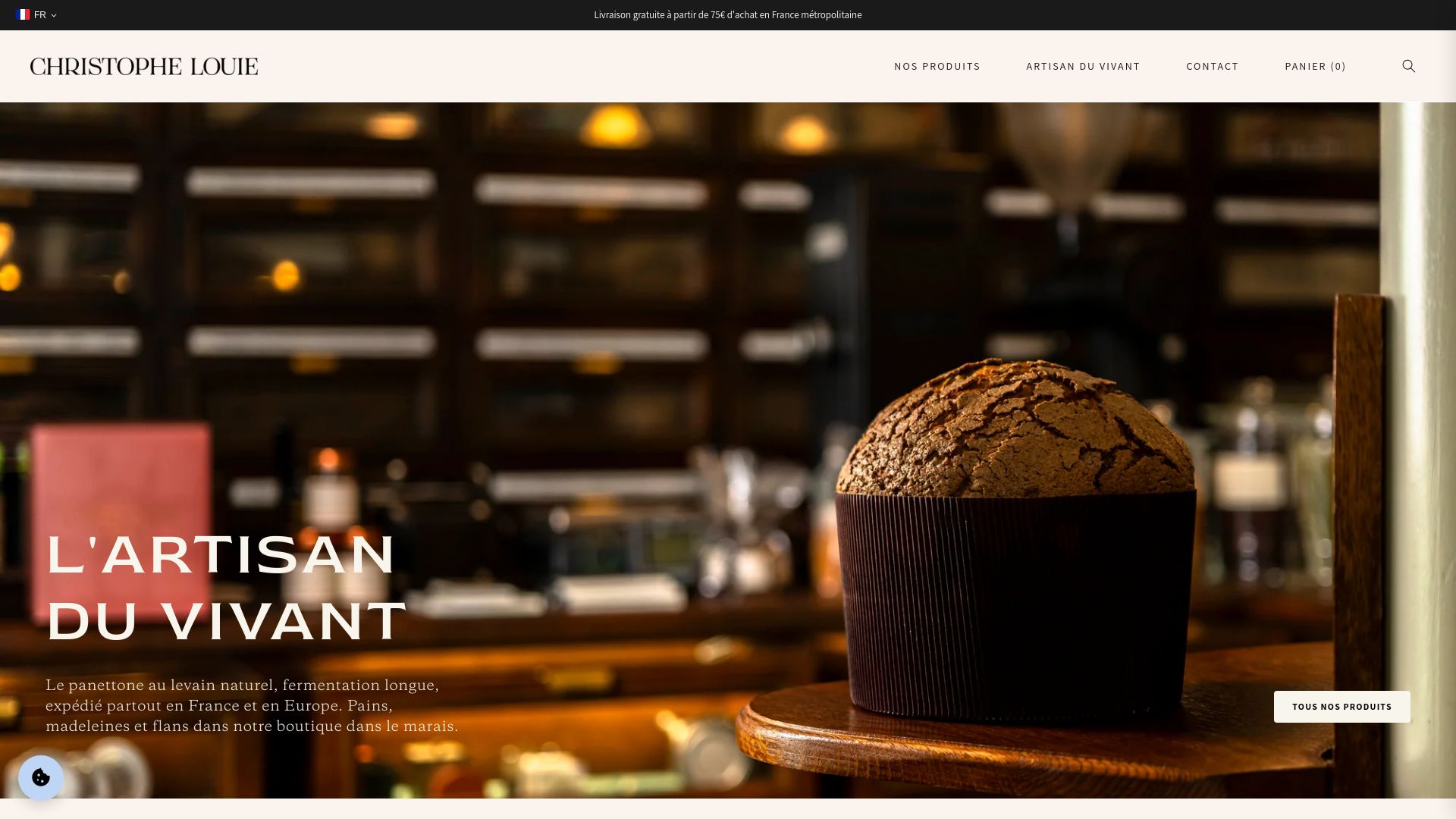
The range covers the traditional panettone with candied fruits, the orange blossom panettone, and several signature creations. Everything is available in the boutique in the Marais (12 rue Dupetit-Thouars, 75003 Paris) and for online order with delivery in France. To choose based on your taste preferences and occasion, the bakery’s buying guide helps you gain clarity in a few minutes.
Sources and useful reading
- Panettone — Wikipedia (fr): historical context, etymology, and regional traditions.
- Panettone, the Christmas brioche without borders — Le Monde: French gastronomic perspective on the technicality and international spread of panettone.
- Panettone: its history and our favorite addresses — Gault&Millau: the role of live sourdough in long-term preservation, selection of artisanal shops.
- Panettone history: origins, legends, and artisanal method — Christophe Louie: artisanal approach to the manufacturing process and historical context.