Sourdough brioche: traditional and fluffy recipe
A successful sourdough brioche means a stringy crumb, a slightly milky fragrance, and a shelf life far superior to that of a classic yeast brioche. The secret lies in three elements: an active and well-fed starter, quality flour (T45 or Italian strong flour), and a long fermentation that develops the flavors without rushing the rise.
Essential ingredients for about 8 people:
- 500g T45 flour (or Italian strong flour like Grassi)
- 150g active sourdough starter (100% hydration, fed several hours beforehand)
- 4 whole eggs (approx. 200g)
- 80g sugar
- 8g fine salt
- 200g unsalted butter at room temperature, in pieces
- 60ml lukewarm whole milk
The main steps: kneading with a mixer, progressive incorporation of the butter, bulk fermentation at room temperature for a few hours, a night in the refrigerator, shaping, final proof for a few hours, egg wash, and baking at 170°C. Here, the sourdough replaces commercial yeast and defines the texture of the crumb as much as its taste.
Natural sourdough or hybrid sourdough: which to choose for your brioche?
The fundamental distinction between these two ferments lies in their biological nature. Natural sourdough houses a mixed flora of lactic acid bacteria and wild yeasts; hybrid sourdough combines a starter with a small dose of baker's yeast to accelerate the rise.
Natural sourdough produces a slow lactic fermentation, which generates organic acids responsible for a more complex taste and better digestibility. The crumb is more aerated, and the shelf life is naturally extended. However, it requires demanding mastery: a starter that is too acidic or insufficiently active can compromise the entire batch.
Hybrid sourdough offers an accessible compromise. The yeast guarantees a regular rise even if the starter lacks vigor, making it a good entry point for bakers who are new to fermentation. The result is less aromatically complex, but more predictable.
A few benchmarks for choosing:
- Natural sourdough alone: for a brioche with a distinct aromatic signature, extended shelf life, and confirmed technical skill
- Hybrid sourdough: for a first attempt or when the starter is still young (less than 3 months)
- Milk starter: a regional variation that replaces water with milk in feeding the starter, resulting in a softer crumb and a less tangy taste
Pro tip: Before incorporating your starter into the dough, drop a small spoonful into a glass of water at room temperature. If it floats, it is ready. If it sinks, wait another 1–2 hours and feed it again.
How to prepare your sourdough brioche step by step
Feeding the starter
Take out your starter 6–8 hours before you begin. Feed it in equal parts by weight (starter + flour + water) and let it double at 24–26 °C. A well-active starter is the primary condition for successful fermentation.
Kneading and incorporating the butter
Mix the flour, eggs, sugar, salt, and milk in the bowl of a stand mixer fitted with the dough hook. Knead for a few minutes at low speed, then add the starter. Increase to medium speed for several minutes until the dough pulls away from the sides. Then incorporate the butter in small pieces, one by one, waiting for each addition to be absorbed before the next. This phase generally lasts several minutes. The dough should be smooth, supple, and slightly shiny.
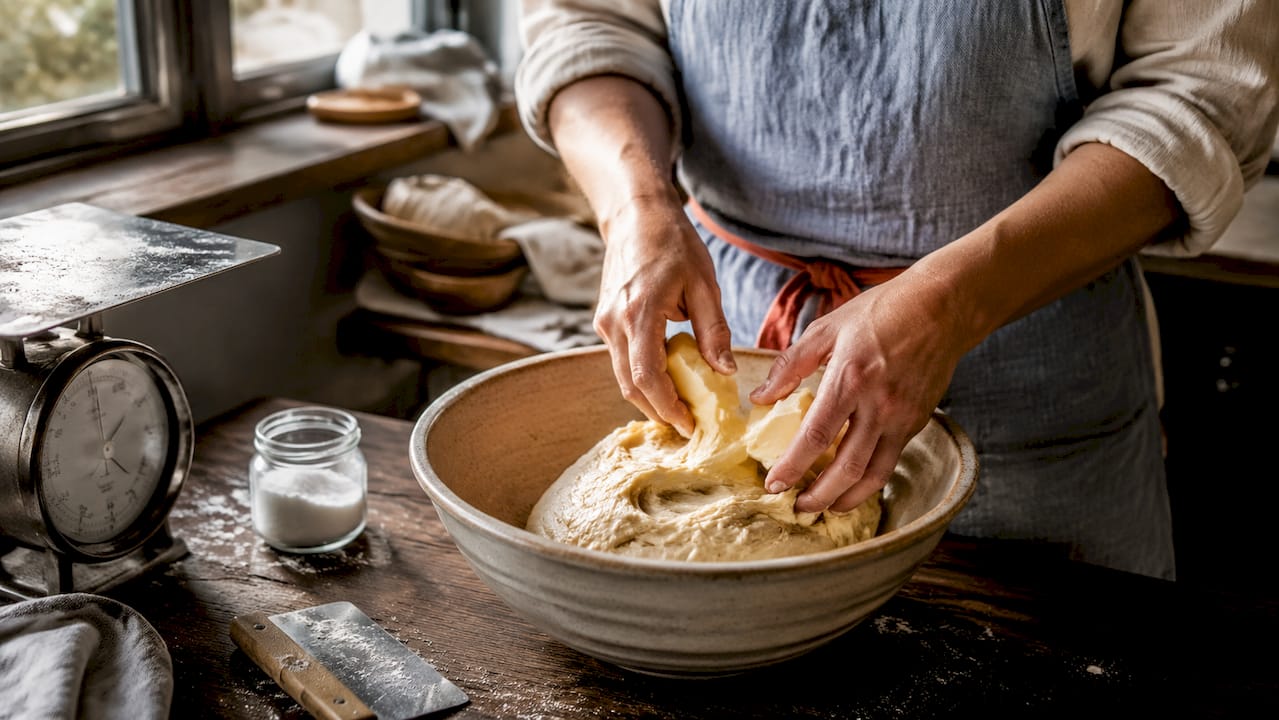
The choice of T45 or Italian flour is not trivial: flour rich in gluten better supports the incorporation of butter and long fermentation without tearing.
Managing the initial fermentation (bulk proof)
Cover the dough and let it proof at room temperature (22–24 °C) for 3–4 hours, until it has increased by about 50%. Fold it once halfway through to strengthen the gluten network. Then place the bowl in the refrigerator for a full night in the cold: this cold slows down the fermentation and develops the flavors without the risk of over-fermentation.
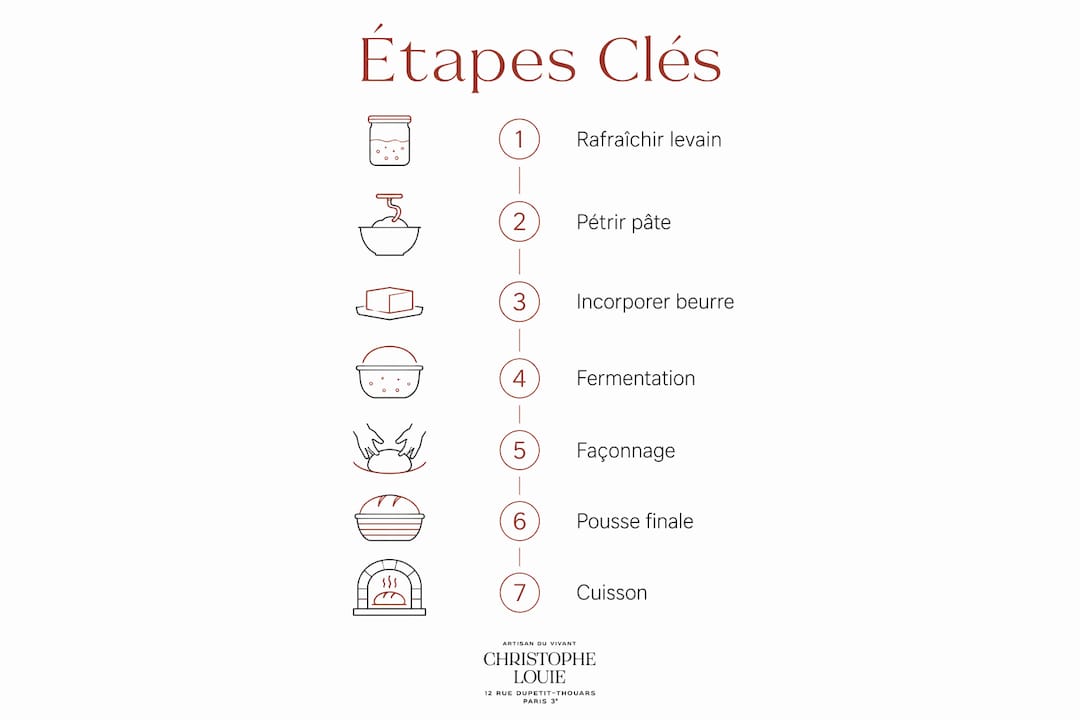
In winter, when the room temperature drops below 20 °C, extend the bulk proof at room temperature by an extra 30–60 minutes before refrigerating. In summer, reduce it accordingly and refrigerate sooner.
Pro tip: To check that the gluten network is well-developed, take a small piece of dough and stretch it between your fingers. If it forms a translucent film without tearing, the kneading is sufficient. If not, continue for 3–4 minutes.
Shaping, final proofing, and baking: the details that make the difference
Shaping the brioche
Take the cold dough out of the refrigerator and work it quickly so it stays firm. Divide it into equal portions according to the desired shape: balls for a brioche à tête, logs for a braid, or individual portions for small brioches. Shaping while cold makes it easier to work and limits stickiness.
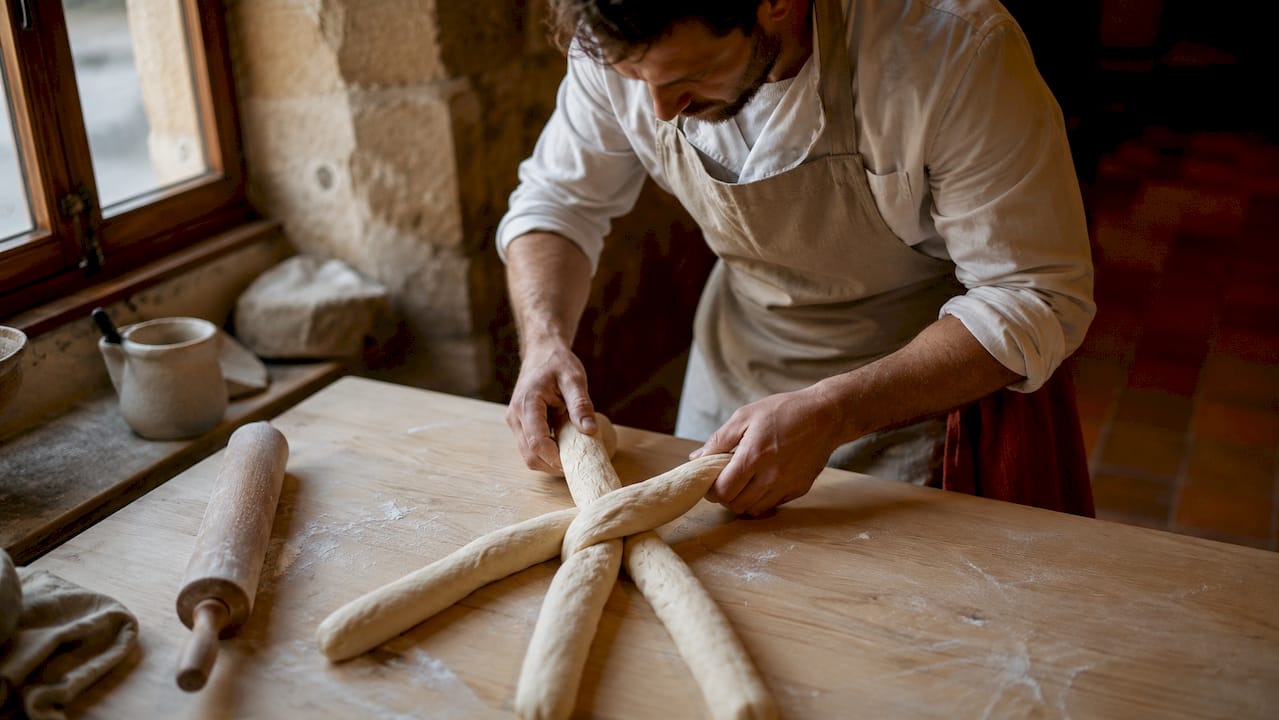
For a braid, roll three logs of equal length, braid them while tightening slightly, and seal the ends underneath. Place in a buttered loaf pan.
Final proof
Cover with a damp cloth and let rise for several hours at room temperature. The brioche is ready to bake when it has doubled in volume and the dough, when pressed lightly with a finger, slowly springs back. If the indentation remains, the fermentation is too advanced; if it springs back too quickly, wait a bit longer.
Seasonal variations play a real role here: in warm weather, the final proof may be finished in 90 minutes; in winter, count on 4 hours. Adapt by monitoring the appearance of the dough rather than strictly following the timer.
Egg wash and baking
Gently brush the surface with a mixture of an egg yolk and a tablespoon of whole milk, avoiding the edges of the pan so as not to hinder the rise. Bake at a controlled temperature for about twenty minutes depending on the size. The crust should be golden and a knife inserted in the center should come out clean.
Pro tip: Place a container of hot water in the bottom of the oven during the first 10 minutes. The steam delays the formation of the crust and allows the brioche to develop freely before browning.
Traditional French techniques recommend baking at a controlled temperature rather than high heat: a brioche baked too quickly colors on the surface before it is cooked through.
Christophe Louie, the Parisian artisan who pushes sourdough to its most demanding level
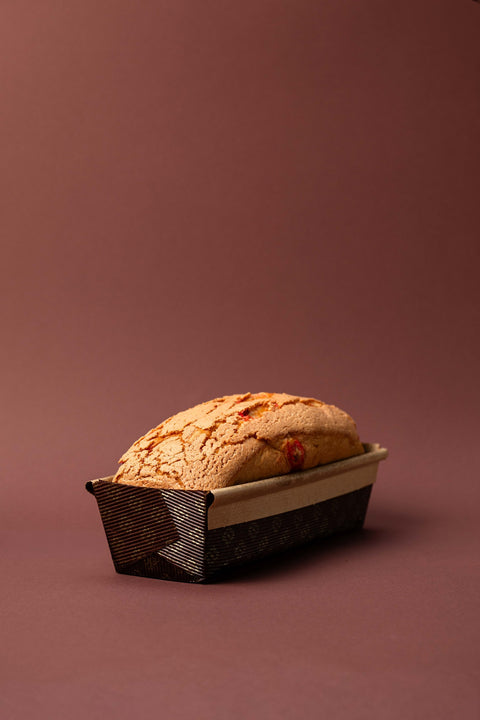
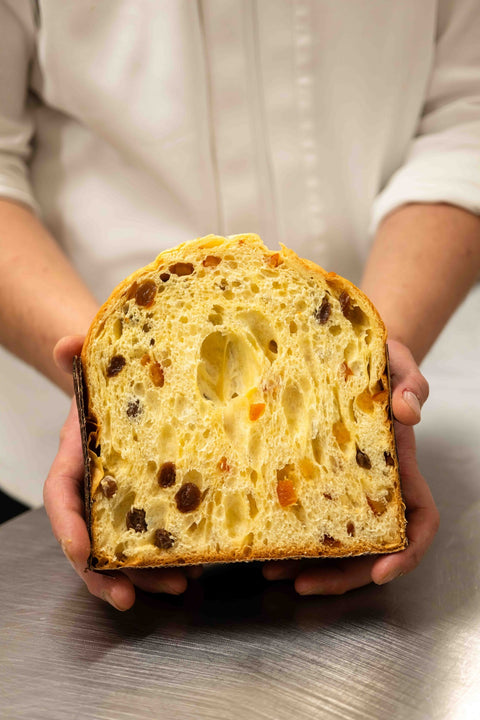
At Christophe Louie, natural sourdough is not a marketing gimmick. It is the heart of the process, maintained daily and used for every production, from the "Le petit Louie" brioches to the panettone made over 72 hours using the traditional two-dough method.
The bakery, located in the Marais (12 rue Dupetit-Thouars, 75003 Paris), was founded by a pastry chef who worked at the Jules Verne and the Grande Épicerie de Paris. This high-level training is evident in the details: Italian flours selected for their technical specificity (Grassi, Dalla Giovanna), entirely manual shaping, and precise temperature control at every stage.
The company's highlights:
- Live starter (lievito madre) maintained continuously, without industrial yeast
- Long fermentation guaranteeing a stringy crumb and natural preservation for up to five weeks for the panettone
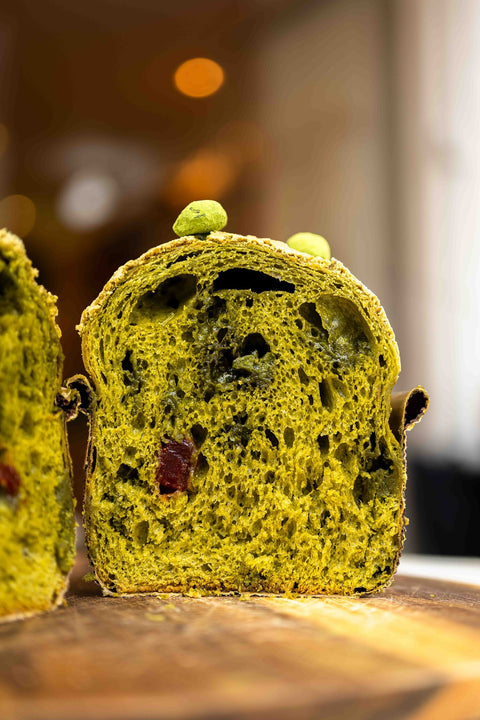
- Sourdough brioches available in pink praline and matcha, delivered throughout France and Europe
- Ingredients sourced in France with the exception of Italian flours, for their irreplaceable technical quality
- Collaborations with renowned houses: Petrossian, Café Verlet, Dammann, Les Airelles
- Distribution in premium fine grocery stores (Grande Épicerie, Galeries Lafayette)
- Responsible approach: low-consumption electric ovens, zero waste thanks to long shelf life
The lactic fermentation induced by natural sourdough improves digestibility and develops a taste that industrial yeast cannot replicate. This is precisely what Christophe Louie puts at the center of every product, from brioches to country breads made with ancient grains.
Discover the sourdough brioches and pastries by Christophe Louie
The Christophe Louie bakery offers its sourdough brioches and pastries in the Marais shop and via national delivery. Each piece is shaped by hand, slowly fermented, and baked at a controlled temperature, according to the same requirements as those described in this article.
Key points
Sourdough brioche is a success thanks to an active starter, strong flour, slow incorporation of butter, and a two-stage fermentation (bulk proof at room temperature then a night in the cold).
| Point | Details |
|---|---|
| Active starter above all | Feed the starter 6–8 hours before use and check its buoyancy in water. |
| Strong flour | A T45 or an Italian Grassi-type flour better supports long fermentation and butter incorporation. |
| Butter in progressive pieces | Add the butter piece by piece after kneading so as not to destabilize the gluten network. |
| Double fermentation | Bulk proof at room temperature then a night in the refrigerator: flavors develop without risk of over-fermentation. |
| Baking at 170 °C with steam | Steam at the beginning of baking delays the crust and allows the brioche to develop freely. |