The price of artisanal sourdough bread in France: what you need to know
How much does an artisanal sourdough bread cost in France?
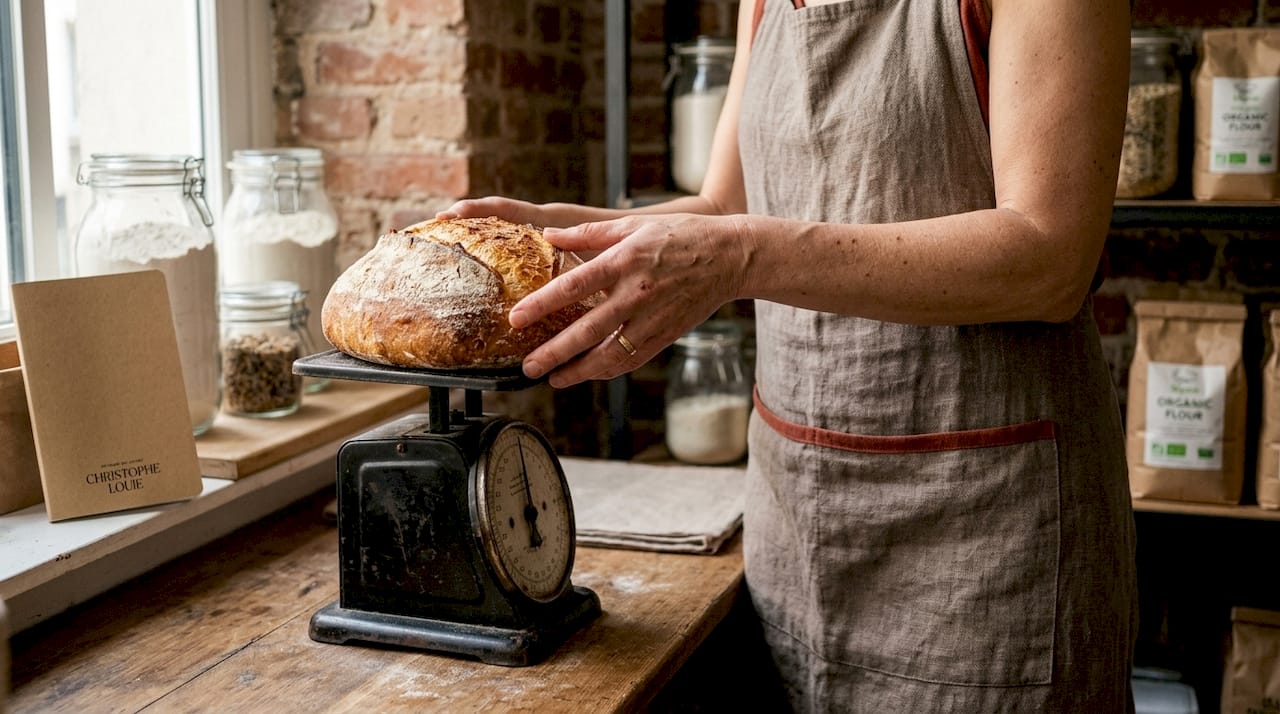
A 500g artisanal sourdough loaf typically sells at a price that varies depending on the ingredients, the region, and the baker's craftsmanship. This range varies according to the ingredients, the region, and the baker's expertise.
Some concrete benchmarks from French artisanal bakers:
- Plain T80 or T150 bread, 500g: at a basic, generally accessible price
- Seeded bread (sunflower, sesame, poppy), 500g: at a higher price linked to the additional ingredients
- Walnut or hazelnut bread, 500g: offered at a higher rate corresponding to the walnuts and hazelnuts
- Einkorn (engrain), 500g: present in a higher price range due to the ancient flour
- Country loaf (miche) 1 kg: found in a price range accessible for this type of bread
- Raisin-hazelnut bread 1 kg: offered at a higher price due to the dried fruits
- Einkorn 1 kg: included in a premium range with a more substantial price
The price per kilo remains the most useful metric for comparison, as formats vary greatly from one bakery to another, ranging from several hundred grams to more than a kilogram. A plain bread has a moderate price per kilo, while a special bread with dried fruits or einkorn is higher.
Table of contents
- What factors influence the price of sourdough bread?
- What types of sourdough bread are found in shops and online?
- Why is sourdough bread better for health?
- Christophe Louie's expertise with natural sourdough
- Christophe Louie, for those who want the best of natural sourdough
- Key points
What factors influence the price of sourdough bread?
The price of an artisanal sourdough loaf is not set randomly, particularly with the support of a partner specialized in artisanal baking. Several elements add up to justify the gap compared to supermarket bread.
- Expertise and long fermentation: natural sourdough requires several hours of work, often more than 4 hours of fermentation in artisanal settings. This time cannot be compressed without degrading the result.
- Flour quality: stone-ground flour, ancient varieties (spelt, einkorn, engrain), certified organic flour. Each choice increases the cost of the raw material.
- Additional ingredients: walnuts, hazelnuts, seeds, dried fruits, or spices increase the bill. A walnut bread mechanically costs more than a plain bread of equal weight.
- Location: in Paris, the fixed costs of an artisan are significantly higher than in rural areas, and the prices reflect this.
- Absence of additives: without industrial enhancers or preservatives, the artisanal baker absorbs the risk of unsold goods that a supermarket transfers to the supply chain.
The added value of artisanal sourdough bread lies in the taste quality, texture, and natural shelf life, three criteria that mass-market bread cannot replicate at that price.
The difference between an artisanal bakery and a supermarket is not just the displayed price. It relates to the natural shelf life, the absence of flavor correctors, and the traceability of ingredients. A well-made sourdough loaf keeps for four to five days without becoming overly hard, whereas industrial bread goes stale in twenty-four hours.
Pro tip: Always compare the price per kilo, not the price per piece. A €3.20 loaf for 500g comes to €6.40/kg, which is often cheaper than a special bread sold at €5.20 for 650g (€8.00/kg).
What types of sourdough bread are found in shops and online?
The range available from French artisans is wider than one might think. Here are the main categories, with their usual price ranges:
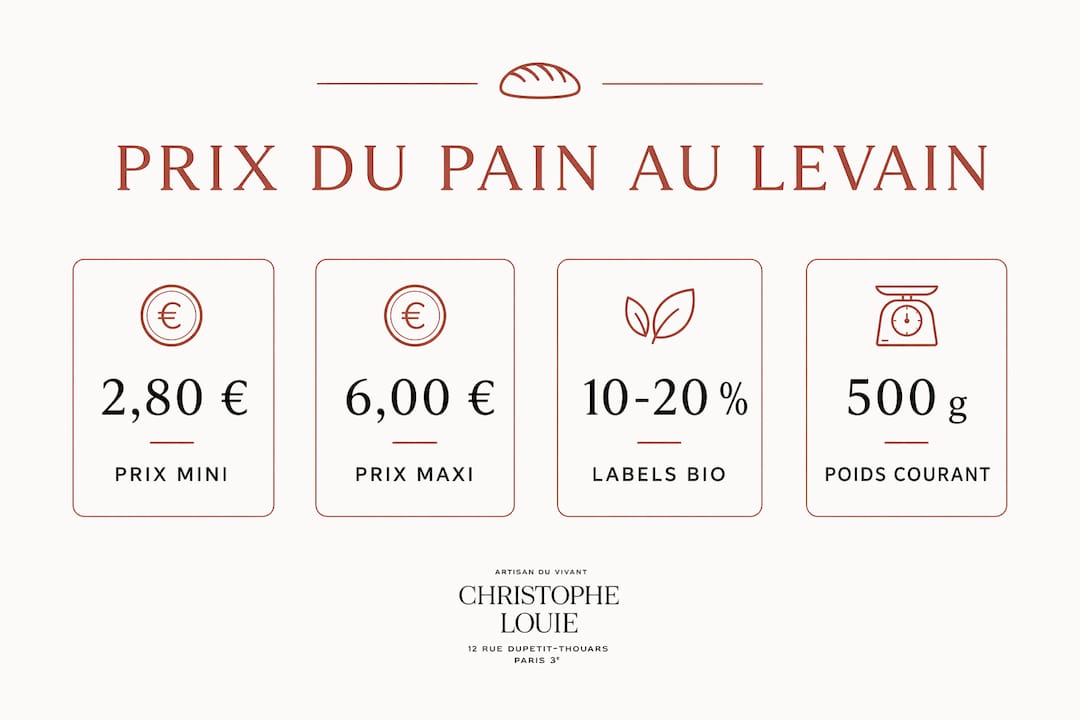
- Plain or country bread: the most accessible, based on T65 to T80 flour, natural sourdough. Between €2.80 and €5.90 depending on the weight.
- Whole wheat or semi-whole wheat bread: T150 or T110 flour, more rustic profile. Around €3.20 to €6.60 for 500g to 1kg.
- Seeded bread: sunflower, sesame, flax, poppy. Often offered in 500g between €3.80 and €5.20.
- Dried fruit bread: raisins, hazelnuts, figs. Prices rise to €8.30–€9.08/kg, as the ingredients are a heavy cost factor.
- Spelt and einkorn: highly prized ancient flours, among the most expensive, up to €10.10 per kilo.
- Rye bread or rye loaf: pronounced taste, good shelf life. Around €6.00/kg.
- Sourdough brioche: a category of its own. According to data from the Bakery-Pastry Observatory published by the French National Confederation of Bakery and Pastry, the average price of a 400g plain brioche is between €4.20 and €6.80 in 2025, with a national average of €5.40.
Organic or fair-trade labels generally add between 10% and 20% to the selling price due to the cost of certifications and the relevant raw materials. Online availability has expanded: many artisans now offer remote ordering with delivery or in-store pickup, making it possible to buy an artisanal sourdough bread without having to travel.
Why is sourdough bread better for health?
Natural sourdough fermentation is not just about taste. It modifies the very structure of the bread, with measurable effects on digestion.
The natural sourdough improves the digestibility of bread by breaking down some of the gluten during fermentation, which lasts at least 4 hours with a serious artisan. The organic acids produced lower the bread's glycemic index, which slows down the absorption of sugar into the blood. Nutritionists actually recommend the daily consumption of sourdough bread for its better digestibility as part of a balanced diet.
Another concrete advantage: shelf life. Without additives or preservatives, good sourdough bread keeps naturally for three to five days thanks to the acidity of the starter, which slows the development of mold. This is precisely what industrial white bread cannot do without resorting to preservatives. For people sensitive to gluten without being celiac, long-fermentation sourdough bread is often better tolerated than bread made with classic yeast.
Christophe Louie's expertise with natural sourdough
Christophe Louie is an artisanal house based in the Marais, at 12 rue Dupetit-Thouars (75003 Paris). Its founder, a pastry chef who worked at the Jules Verne and the Grande Épicerie de Paris, has built rare expertise around living sourdough, the Italian-origin lievito madre.
“The two-dough process over 72 hours guarantees complex aromas and natural preservation without chemical additives. Selected Italian flours, Grassi and Dalla Giovanna, bring a technical specificity impossible to replicate with standard flours.”
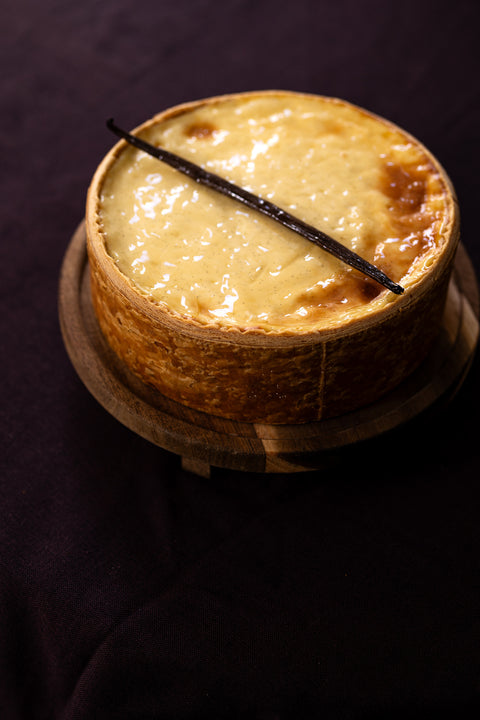
The range goes beyond just panettone. Christophe Louie offers natural sourdough breads, “Le petit Louie” brioches with pink pralines or matcha, madeleines, cakes, and flans, all available in-store and online with national delivery. The model combines direct sales and selective distribution via the Grande Épicerie, Galeries Lafayette, and high-end hotel partners.
- Long fermentation: minimum 72 hours for panettone, living starter maintained daily
- Selected flours: Italian for panettone (Grassi, Dalla Giovanna), French for other products
- Zero additives: natural shelf life of up to five weeks for panettone
- CSR approach: low-consumption electric ovens, no night work, short supply chains prioritized
- Accessibility: loyalty programs and click & collect options available in-store
Pro tip: To recognize authentic sourdough bread, check the ingredient list: it should only contain flour, water, salt, and sourdough. The absence of baker's yeast or enhancers is the sign of true artisanal work.
Christophe Louie, for those who want the best of natural sourdough
Are you looking for an artisanal sourdough bread or a panettone made with the same care as a grand cru? Christophe Louie offers exactly that, without compromise on ingredients or fermentation time.
The house delivers throughout France via its site, with products available in two to three days. The Marais boutique also welcomes customers for click & collect for Parisians. Whether you wish to discover the sourdough breads in the range or offer an orange blossom panettone crafted over 72 hours, each product reflects the same level of requirement. Visit christophelouie.com to place an order or explore the entire artisanal range.
Key points
The price of an artisanal sourdough loaf in France varies, for a 500g format, between €2.80 and €6.00, and for 1kg from €5.00 to €10.10 depending on the ingredients and the region, with special breads potentially exceeding €8.00/kg.
| Point | Details |
|---|---|
| Price range | Between €2.80 and €6.00 for 500g, and from €5.00 to €10.10 for 1kg depending on ingredients. |
| Main price factor | Long fermentation, flour quality, and absence of additives justify the gap compared to supermarkets. |
| Best comparison indicator | The price per kilo allows comparing very different formats between artisans. |
| Nutritional benefit | Sourdough fermentation improves digestibility and lowers the bread's glycemic index. |
| Christophe Louie | Parisian artisanal house specialized in natural sourdough, national delivery, range of breads and panettone available all year round. |