Sourdough bread for hotels: the B2B procurement guide
For most establishments, the best option is to source premium sourdough bread from a B2B artisan, or to build a hybrid model combining a supplier with light in-house production. Industrial frozen bread remains simpler on paper, but it is more expensive than one might think and adds nothing to the customer experience.
Three reasons motivate this choice:
- An estimated saving of -30% compared to industrial frozen bread, thanks to better material costs and the elimination of single-use plastic packaging.
- Natural shelf life that can reach five weeks, which drastically limits unsold items in breakfast buffets.
- A significantly higher perceived value among a clientele that now associates industrial bread with a low-end offering.
The action to take this week: contact a specialized B2B supplier and test a batch for a service, buffet, or room service, before deciding between external sourcing and internal production.
Key points
| Point | Details |
|---|---|
| Measurable savings | Sourcing sourdough costs about 30% less than industrial frozen bread. |
| No-night-shift organization | Fermentation in a cold room allows for fresh bread every morning without nighttime staff. |
| Long shelf life | Well-fermented sourdough bread keeps for several weeks, limiting unsold items. |
| Model choice | Supplier, in-house production, or hybrid models are chosen based on volume and available staff. |
| Recommended solution | Christophe Louie offers a range of 72-hour fermented sourdough, deliverable via B2B throughout France. |
Table of contents
- What concrete benefits does sourdough bread bring to a hotel?
- How to choose between a supplier, in-house production, and a hybrid model?
- How to organize production without night work or HACCP breaks?
- How to showcase sourdough bread to your customers?
- Christophe Louie's B2B offering for hotels in France
- What most hotels realize too late about sourdough bread
- How to order premium sourdough bread for your establishment
- Frequently asked questions about sourdough bread for hotels
- Sources
What concrete benefits does sourdough bread bring to a hotel?
The economic argument comes first, but it is not the only one. Switching to natural sourdough reduces material costs and eliminates a good portion of the costs associated with the individual packaging of frozen bread.
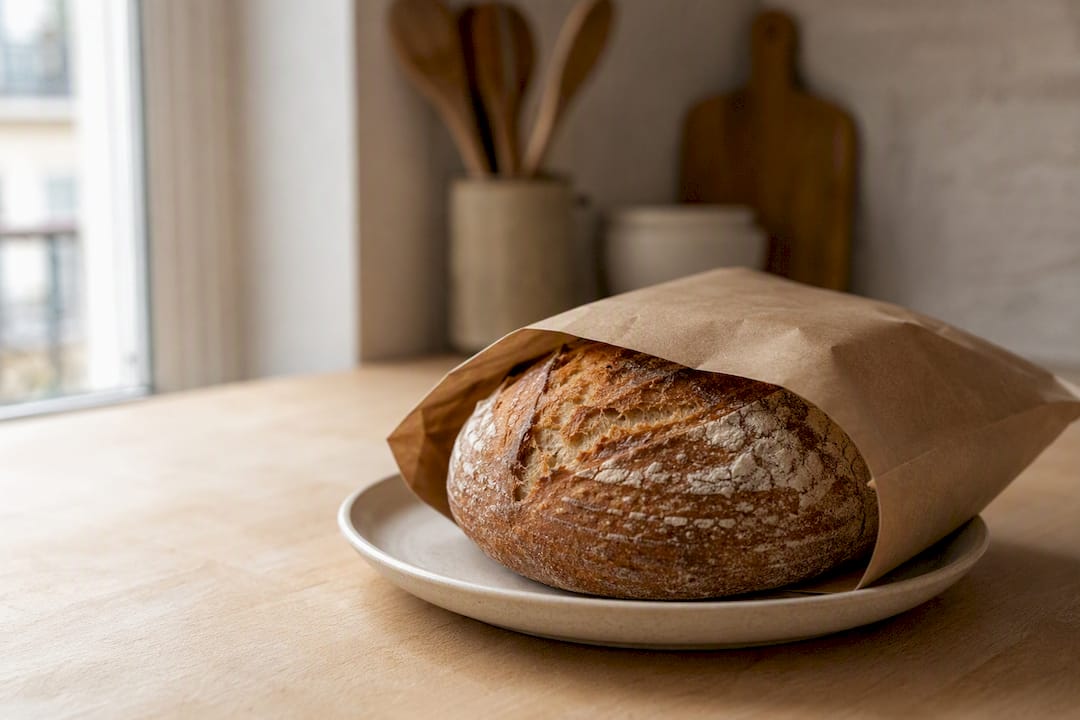
The measured saving reaches approximately -30% compared to industrial frozen bread, according to the Référentiel restauration collective, which details the cost items avoided: better-utilized raw materials, less baking waste, and the elimination of individual plastic bags. For an establishment serving several dozen breakfast covers every morning, the difference is quickly visible on the “food and beverage” budget line.
Sourdough bread also changes the perception of service:
- It becomes a storytelling point in the dining room, which staff can explain in a word: Italian flour, active starter, long fermentation.
- It improves the average rating of customer reviews on platforms, which often implicitly mention the quality of the breakfast.
- It naturally fits into an EGAlim compliance approach for establishments subject to responsible procurement obligations by reducing packaging waste and favoring short supply chains.
Bread that keeps better and costs less is already a good argument. The fact that it also improves the establishment’s image is what makes it a rare lever capable of hitting both targets at once: margin and customer satisfaction.
How to choose between a supplier, in-house production, and a hybrid model?
Three models compete, and the right choice depends less on the hotel's size than on its actual logistical capacity.
- B2B sourcing from an artisan is suitable for the majority of establishments, especially those that do not have a dedicated bakery or whose kitchen team is already under pressure. It provides regularity, controlled volumes, and consistent quality without tying up additional staff.
- In-house production requires specific prerequisites: a suitable oven, a cold room for fermentation, and, above all, a team trained in the specificities of active sourdough, which is very different from classic yeasted dough. Organizations like Etoiles Academy offer training dedicated to hospitality professionals on this precise point.
- The hybrid model distributes volumes: a base supplied by an artisan for consistency, supplemented by in-house production for signature creations or periods of high demand. This distribution limits the risk during seasonal peaks without requiring a heavy investment in equipment.
Pro tip: before investing in a deck oven or a proofing chamber, first test a supplier partnership for three months. You will then know if the actual volume justifies a switch to in-house production, rather than guessing a need that may not exist.
The criterion that should decide the matter is not the size of the establishment, but the ratio between daily volume and the availability of qualified kitchen staff.
How to organize production without night work or HACCP breaks?
Sourdough bread has a reputation for being logistically demanding. This is largely unfounded once fermentation is planned correctly.
A typical cycle takes place over three days:
- D-2: Refreshing the starter, checking its activity and acidity.
- D-1: Kneading, cold room fermentation overnight, which specifically avoids any human presence during that period.
- Day D: Shaping and final proofing in the early morning, with baking scheduled to be ready before breakfast service.
This organization of cold-fermentation allows for the elimination of night work while maintaining fresh bread every morning—a point that many establishments underestimate before getting started.
Regarding food safety, a few rules structure everything else:
- Track the starter (refresh date, flour batch used, storage temperature).
- Monitor and record temperatures at each key stage, from proofing to baking.
- Cool all finished products in less than 30 minutes before storage, as required by standard HACCP regulations.
- Systematically label allergens, including for “homemade” breads served in self-service buffets.
- Favor compostable or reusable packaging rather than single-use plastic, in line with the establishment’s CSR policy.
None of this requires a high-tech lab. It requires a clear checklist, posted in the kitchen, and a person responsible for following it.
How to showcase sourdough bread to your customers?
Good bread that is poorly presented remains ordinary bread in the eyes of the customer. Staging counts as much as the recipe.
Preferred formats vary depending on the moment of consumption:
- Slices ready to serve for the breakfast buffet, cut slightly thicker than industrial bread to highlight the aerated crumb.
- Mini-portions or individual loaves for room service, easier to charge for individually.
- A whole loaf or panettone offered as a welcome gift in suites, a gesture that leaves a greater impression than a simple welcome note.
Regarding pairings, a few simple combinations are enough to transform a mundane buffet: high-quality semi-salted butter, local artisanal jam, and filter specialty coffee rather than pods. This trio costs little and completely changes the perception of breakfast.
Pro tip: for corporate gifting, focus on sober design and sustainable packaging rather than volume. A business client remembers a refined object more than a large quantity of bread that they will never finish.
Christophe Louie's B2B offering for hotels in France
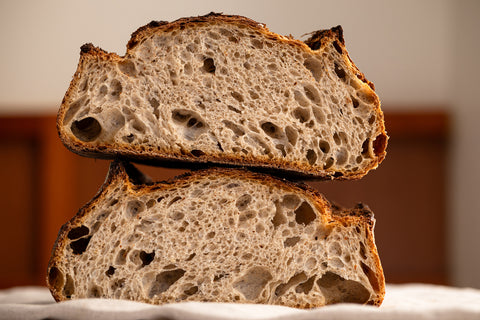
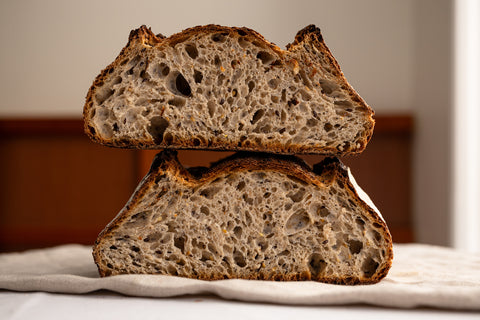
Christophe Louie makes his sourdough bread using a two-dough process spread over 72 hours, with a live starter maintained daily and flours selected for their technical quality. This long fermentation results in a more digestible crumb, a more complex aroma, and above all, a prolonged natural shelf life without additives or industrial accelerated processes.
The bakery, located in the Marais in Paris, offers beyond the signature panettone an entire range adapted for hotel use:
- Natural sourdough breads available all year round, without seasonal treatment.
- Artisanal brioches (“Le petit Louie”) in several varieties, adapted for both room service and buffet.
- Sweet and savory panettones, perfect for corporate gifting or high-end welcome gifts.
- Nationwide delivery, with B2B terms designed for the recurring volumes of hotels.
| Criterion | What Christophe Louie offers |
|---|---|
| Process | Long 72-hour fermentation with a live starter |
| Shelf life | Up to five weeks without additives |
| Range | Breads, brioches, sweet and savory panettones, available all year round |
| Delivery | Nationwide B2B distribution, adapted to hotel volumes |
What most hotels realize too late about sourdough bread
Most establishment managers approach sourdough bread as a logistical problem to solve: oven, staff, hours. The opposite angle works better. The real problem is not making sourdough bread; it is continuing to serve frozen bread when the real cost of that solution, including unsold items and customer perception, far exceeds its apparent purchase price.
The classic mistake is wanting to internalize everything from the first month, deck oven included, before even knowing if the volume justifies it. A well-chosen B2B partnership, possibly supplemented by small in-house production for signature creations, costs less to test and reveals much faster what actually works in your establishment.
What I recommend as a priority: start small, on a single service, with a supplier who masters long fermentation rather than with a frozen range that promises simplicity. The quality of the bread shows on the plate, never on the spec sheet.
How to order premium sourdough bread for your establishment
Christophe Louie is the concrete alternative to industrial frozen bread for hotels in France: bread fermented for 72 hours on a live starter, deliverable in B2B volumes, without the packaging costs or quality drops of frozen products.
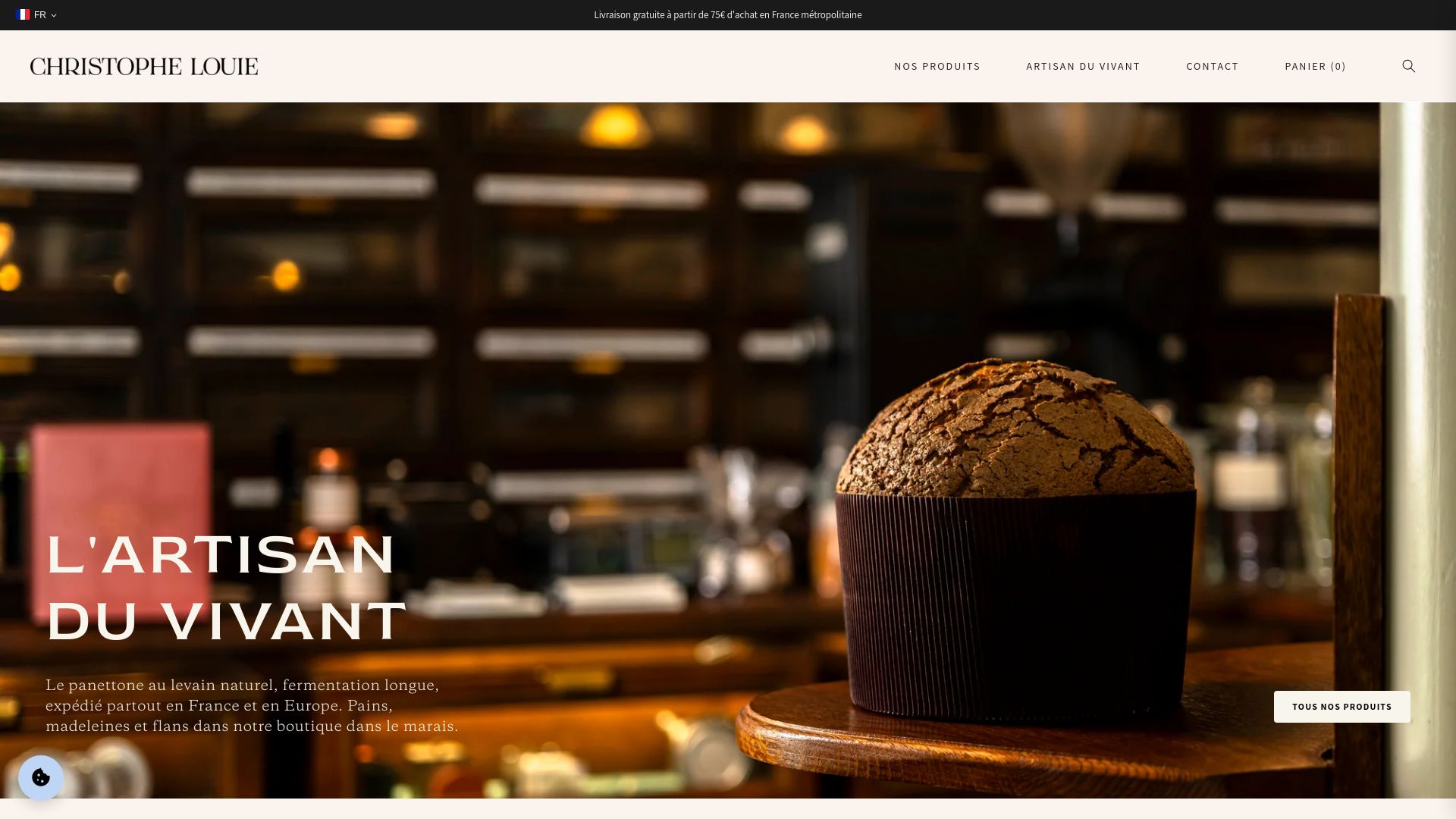
The bakery makes its range in its Marais workshop in Paris and organizes its distribution nationwide, with terms designed for recurring hotel orders: adapted volumes, corporate gifting options, and potential co-branding for establishments that want a signature offer. The orange blossom panettone is a great example of a high-end welcome gift, while the guide to choosing a panettone helps select the right format for the occasion: breakfast, room service, or gifting.
The next step is simple: contact Christophe Louie to test a first batch for a service or buffet, and evaluate the difference directly with your customers before committing to a larger volume.
Frequently asked questions about sourdough bread for hotels
Does sourdough bread really cost less than frozen bread for a hotel?
Yes, the measured saving is around -30% compared to industrial frozen bread, thanks to better material costs and the elimination of individual packaging.
Is it necessary to train staff to produce sourdough bread in-house?
Yes, natural fermentation requires a specific technique that organizations like Etoiles Academy or BRO Bread teach hotel teams in a few days.
Does sourdough bread keep as well as frozen bread?
Better, under certain conditions: well-fermented natural sourdough bread can be kept for several weeks without additives, which significantly reduces unsold items compared to classic fresh bread.
Can night work be avoided when producing sourdough bread at the hotel?
Yes, by organizing the cold-room fermentation overnight and reserving shaping and baking for the morning, without any nighttime human presence.
Which sourcing model is best for a medium-sized hotel?
The hybrid model, combining an artisanal supplier for consistency with small in-house production for signature creations, limits risk while maintaining constant quality.
Sources
To delve deeper into the method or train an internal team, a few resources are references:
- Organic sourdough bread | Collective recipe | Zero additives
- Training in sourdough bread making | BRO Bread
Recommendation
- Sourdough bread in hospitality: B2B sourcing guide – Christophe Louie
- Panettone for restaurants: natural sourdough B2B buying guide – Christophe Louie
- Natural sourdough bread: the guide for demanding clients – Christophe Louie
- Sourdough bread in Parisian coffee shops: where to go and how to choose – Christophe Louie