Sourdough bread in Paris coffee shops: where to go and how to choose
To find artisanal sourdough bread in Paris, the short answer is: head to Christophe Louie, at 12 rue Dupetit-Thouars, in the Marais (75003). The bakery works with live sourdough and a slow fermentation process, which is reflected directly in the crumb, aroma, and shelf life of the bread. This is exactly what you should look for when you want a proper sourdough bread in a Parisian coffee shop or artisanal bakery.
What you need to know before you go:
- Address: 12 rue Dupetit-Thouars, 75003 Paris (Marais)
- Selection: natural sourdough breads, 72-hour sourdough panettone, brioches, madeleines, cakes
- Click & collect: available at Christophelouie
- Delivery: Paris and throughout France via e-commerce
- Best time to visit: in the morning, right when they open, for fresh batches
Pro tip: Order via click & collect the day before if you want to be sure to get your bread. The slow artisanal fermentation can take up to 48 hours, which limits the quantities available for spontaneous walk-in purchases.
Key points
Artisanal sourdough bread in Paris can be found and chosen based on specific criteria: live sourdough starter, a stated slow fermentation process, a short ingredient list, and morning baking for maximum freshness.
| Point | Details |
|---|---|
| Recommended address | Christophe Louie, 12 rue Dupetit-Thouars, 75003 Paris, with click & collect and national delivery. |
| Purchasing criteria | Short ingredient list (flour, water, salt, sourdough), stated slow fermentation, crispy crust, and open crumb. |
| Best time to purchase | In the morning at opening; pre-order online to avoid sell-outs, especially on weekends. |
| At-home storage | Cloth or fabric bag at room temperature; slice and freeze; reheat at 180–200 °C (350–390 °F) for 6–8 minutes. |
| Ordering from Christophe Louie | Breads, 72-hour panettones, and brioches available in-store, via click & collect, and nationwide delivery. |
Table of contents
- Where to find good sourdough bread in Paris: resources and practical tips
- How to judge sourdough bread at a coffee shop counter
- Prices, hours, and pairings: what is served with sourdough bread in a coffee shop
- Why Christophe Louie stands out in the Parisian artisanal landscape
- How to store and reheat your sourdough bread after purchase
- Want to try making your own sourdough bread?
- Special batches and seasonal editions: what Parisian artisans offer
- Ordering from Christophe Louie: options and practical steps
- Sources
Where to find good sourdough bread in Paris: resources and practical tips
Searching for high-quality sourdough bread in the capital requires a bit of method. Not all bakeries that display "natural sourdough" are the same, and even fewer coffee shops offer it on their menu.
Useful resources for finding good spots:
- The national map of organic sourdough bakeries lists over 700 bakeries using natural sourdough in France, with a filter by department.
- Instagram remains the most responsive tool: search for keywords like "pain au levain Paris fournée" (sourdough bread Paris batch) or "levain naturel + arrondissement" to find announcements about the day's batches.
- Google Maps with the "artisanal bakery" filter and a search for "natural sourdough Paris 3e" (or your district) provides local results with hours and reviews.
- The where to find sourdough bread in Paris page by Christophe Louie lists pickup locations and click & collect options.
Signs to look for in the window or on the label:
- The mention of "natural sourdough" or "live sourdough" (not just "sourdough")
- Short ingredient list: flour, water, salt, sourdough — nothing else
- Indication of the time the bread came out of the oven or the baking day
- "Organic" label or a reference to a specific mill (a sign of traceability)
| Type of resource | What it provides |
|---|---|
| National map of organic bakeries | Geographic location, regional filters |
| Instagram / shop pages | Real-time batch announcements, photos of the crumb |
| Google Maps + artisanal filter | Opening hours, customer reviews, nearby locations |
| Christophe Louie shop page | Available products, click & collect, delivery |
How to judge sourdough bread at a coffee shop counter
Sourdough, in the strict sense, refers to a living culture of lactic acid bacteria and wild yeasts that ferments the dough slowly, without added industrial yeast. This process gives the bread a mild acidity, an open crumb, and a naturally longer shelf life than bread made with commercial yeast. That is why real sourdough bread is recognizable by its smell as well as its ingredient list.
Quick checklist at the counter:
- Ingredients: flour (T65, T80, or stone-ground), water, salt, sourdough — short list, no additives
- No baker’s yeast if "natural sourdough" is displayed
- Type of flour indicated: a blend of T65/T80 with some rye often provides more flavor
- Stated slow fermentation (minimum 12 hours, ideally 24–48 hours)
- Small, limited batches: a sign that the baker does not mass-produce
Sensory cues to check:
- Slightly tangy but balanced aroma, never sour
- Thick, crispy crust that crackles under finger pressure
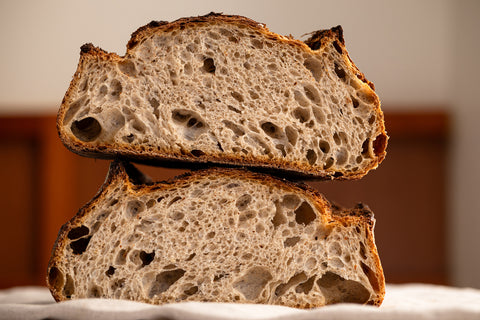
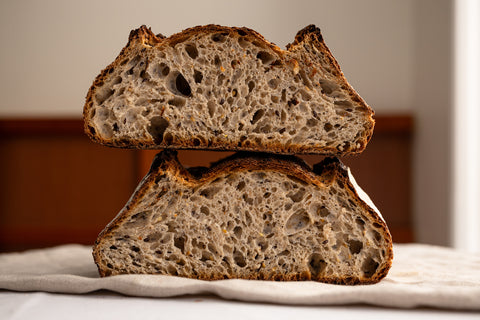
- Open crumb, moist interior with irregular holes
- Complex taste on the palate, with a slight lingering finish
Pro tip: Ask directly: "What is the fermentation time of your bread?" A serious artisan will answer without hesitation. A vague answer or being directed to the label is already a warning sign.
Prices, hours, and pairings: what is served with sourdough bread in a coffee shop
A slice served in a coffee shop with toppings (butter, jam, cream cheese) usually costs between €4 and €7. Sourdough pastries, such as a brioche or an enriched bun, can be found for between €3 and €6. For a detailed breakdown of the pricing structure, the article on the price of artisanal sourdough bread by Christophe Louie offers useful benchmarks.
When to buy so you don't miss the batch:
- Arrive at opening, between 8:00 AM and 10:00 AM, for that day's breads
- On weekends, demand is higher: pre-order or arrive early
- On weekdays, some bakeries bake a second batch in the late morning
Coffee shops that offer sourdough bread on their menu usually pair it with farm-fresh butter, artisanal jams, or cream cheese. As for drinks, the most common pairing remains filter coffee, whose slightly fruity or floral notes dialog well with the mild acidity of the sourdough. A bold espresso also works well, especially with savory toast. Black tea or green tea work similarly with sweet versions.
Slow fermentation can take up to 48 hours in serious artisanal production, which explains the limited stock and the value of pre-ordering.
Ordering options: walk-in (slice or whole loaf), click & collect, home delivery for some shops. At Christophe Louie, both options are available.
Why Christophe Louie stands out in the Parisian artisanal landscape
Chef Christophe Louie honed his skills at Le Jules Verne and the Grande Épicerie de Paris before founding his own house in the Marais. This experience is directly reflected in his methods: the natural sourdough panettone is crafted over 72 hours using a double-dough process, with a live sourdough starter (lievito madre) maintained continuously. The flours are sourced from Italy (Grassi, Dalla Giovanna) for their technical specificity; all other ingredients are sourced within France.
What this means for you:
- Regular availability of sourdough breads and panettones year-round (not a seasonal product)
- Complex aromatic profile, elastic texture, natural shelf life of up to five weeks for the panettone
- Click & collect available, delivery in the Île-de-France region and across France
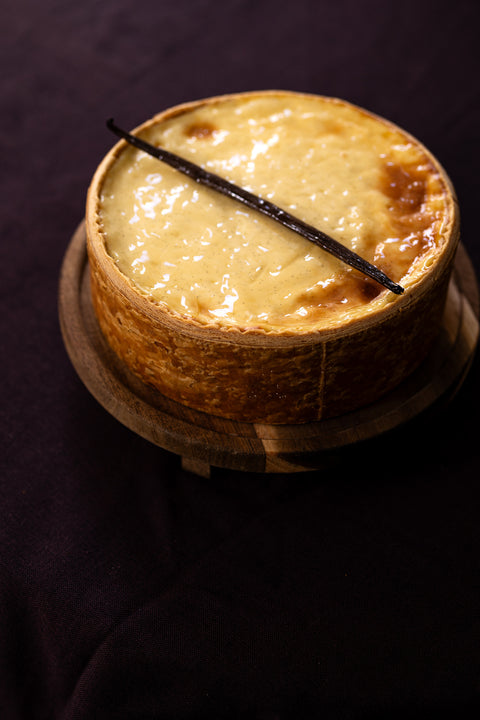
- Expanded range: sourdough brioches, madeleines, cakes, flans — to enjoy more than just bread
Pro tip: Christophe Louie’s 72-hour sourdough panettone is a great test of mastery over live sourdough. If you have never tasted an artisanal panettone next to an industrial version, the difference in texture and aroma is immediate.
To order or pick up in-store:
- Shop: 12 rue Dupetit-Thouars, 75003 Paris
- Click & collect: christophelouie.com
- National delivery: available on the website
How to store and reheat your sourdough bread after purchase
- Transport: bring your bread home in a paper bag, never plastic, as it creates condensation and softens the crust.
- Storing at room temperature: wrap in a clean kitchen towel or keep in a fabric bag. Avoid the refrigerator, which accelerates staling. According to storage advice, the refrigerator should be avoided for daily storage.
- Freezing: slice the bread before freezing so you can take out only what you need. Recommended duration: up to two months.
- Defrosting: let slices thaw at room temperature or pop them directly in the toaster.
- Reheating to restore crunch: oven at 180–200 °C (350–390 °F) for 6–8 minutes for a half-loaf, or 1–2 minutes in the toaster for slices. Do not exceed these times, or the crumb will dry out.
Pro tip: To refresh a semi-stale loaf, quickly run a drizzle of cold water over the crust (not the crumb), then bake at 200 °C (390 °F) for 8 minutes. The internal steam restores the crunch without drying it out.
Want to try making your own sourdough bread?
Making sourdough bread at home requires patience, not sophisticated equipment. Here are the essential steps for a first weekend attempt.
- Create or activate your sourdough: (5–7 days for a new starter, according to this beginner's guide). Wait until it doubles in volume and shows active bubbles before using it. The suggested starting hydration is about 68%.
- Autolyse: mix flour (T65 or T80, with some rye for more aroma) and water, let rest for 30–60 minutes. No sourdough at this stage.
- Add the sourdough: add the active sourdough and salt, mix until homogeneous.
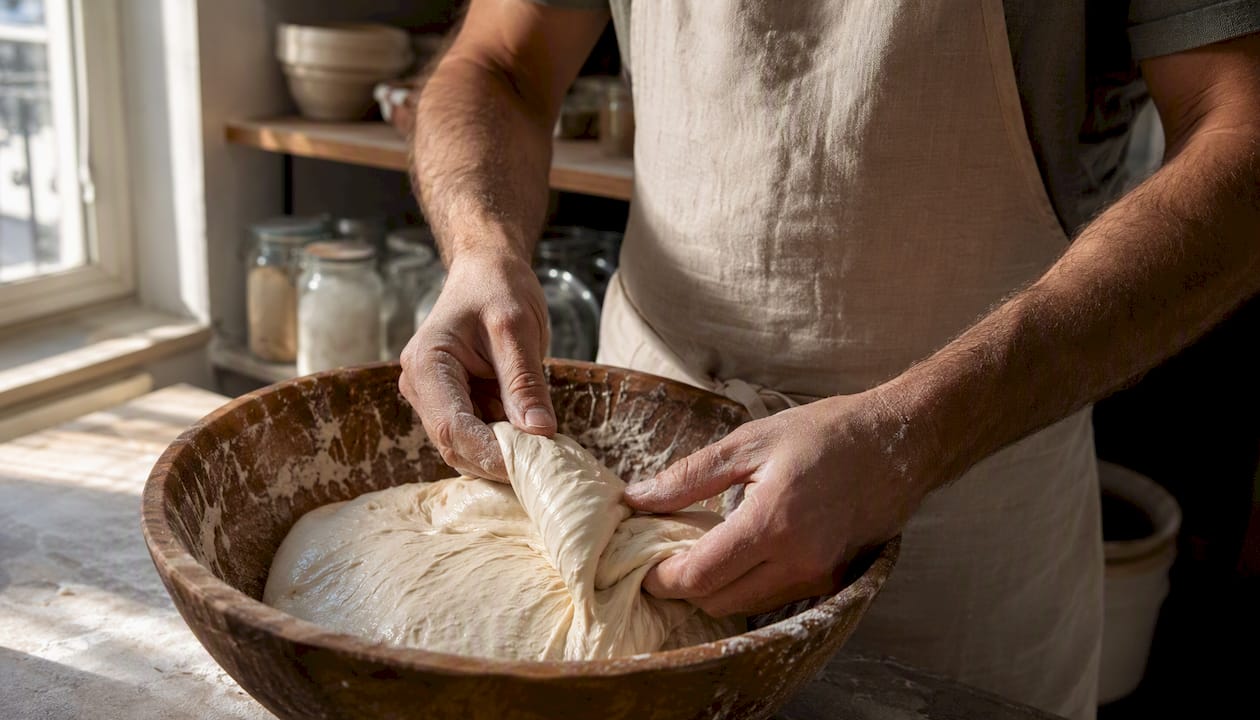
- Stretch and fold: every 30 minutes for 2–3 hours, stretch and fold the dough over itself. Four sets are enough for a beginner.
- Proofing in a banneton: shape, place in a floured banneton or a kitchen towel, let ferment in the refrigerator overnight.
- Baking in a Dutch oven: preheat the cast-iron pot to 250 °C (480 °F) for 40–45 minutes. Place the bread inside, lid on, then remove the lid after 20 minutes to brown the crust. Total active time for the whole protocol is about 45 minutes, for a total cycle of about 24 hours.
Minimal equipment: kitchen scale, cast-iron Dutch oven, banneton or kitchen towel, oven thermometer.
- Start with one loaf, not two
- Note the time and room temperature at each step
- A starter that is at its "peak" when kneading is the best indicator of success
Special batches and seasonal editions: what Parisian artisans offer
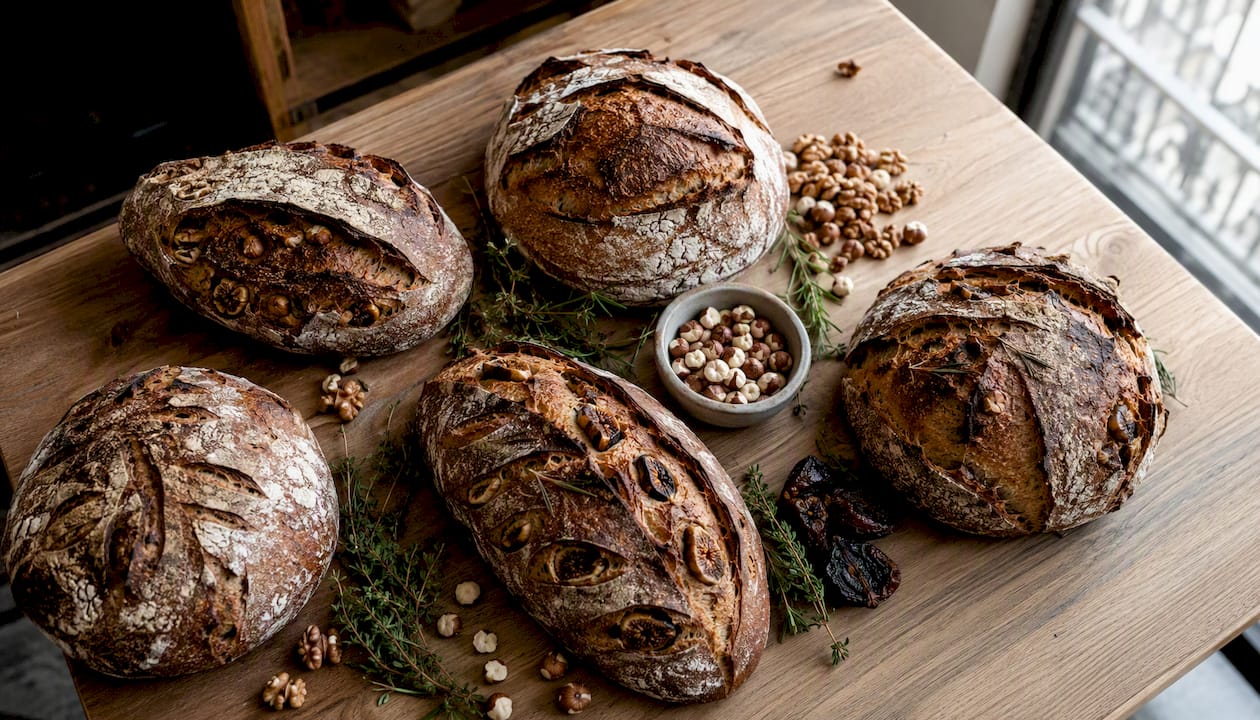
In autumn and winter, loaves with walnuts, hazelnuts, or dried figs appear. In spring, some artisans incorporate fresh herbs or ancient grain flours (spelt, khorasan) for lighter, more aromatic breads.
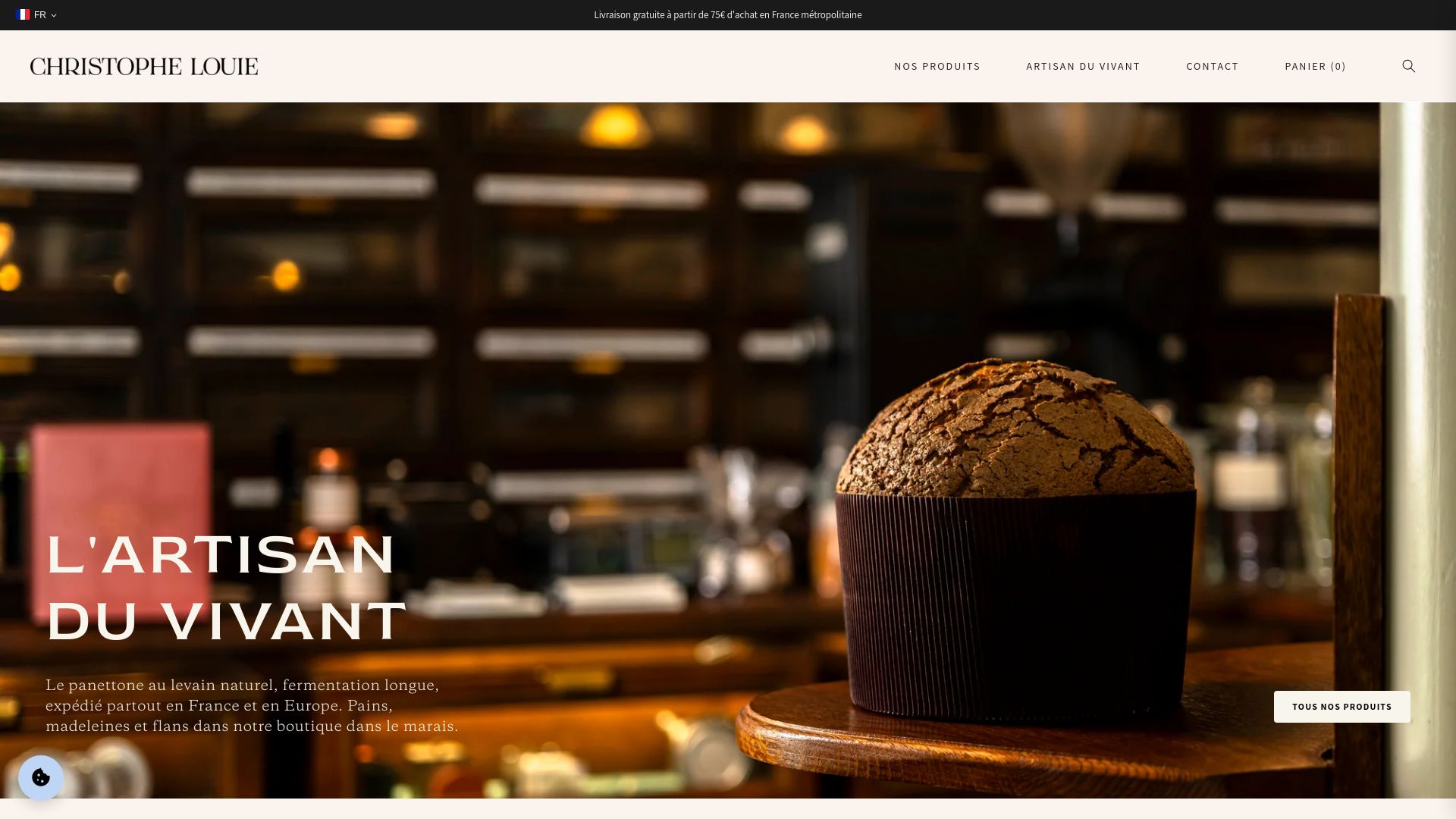
At Christophe Louie, this approach to seasonal variety is taken further. Sourdough panettone, often reduced to an end-of-year product elsewhere, is available year-round in sweet versions (classic, chocolate, tangerine, orange blossom) as well as savory versions (truffle, cacio e pepe). Occasional collaborations with houses like Petrossian, Café Verlet, or Dammann create limited editions worth trying. The sourdough brioche follows the same logic, available with pink pralines or matcha depending on the season.
For coffee shops that source artisanal sourdough bread, these special editions allow them to refresh their menu without changing suppliers. This is a practical advantage for both professionals and individuals who return regularly.
Sourdough adds depth to the coffee shop experience
A coffee shop serving quality sourdough bread does more than just complete its menu. It changes the nature of the break. A good Ethiopian filter coffee, with its notes of bergamot or red fruits, highlights the mild acidity of a sourdough crumb in a way that industrial sandwich bread never could. The pairing works both ways: the bread reveals the coffee just as much as the coffee reveals the bread.
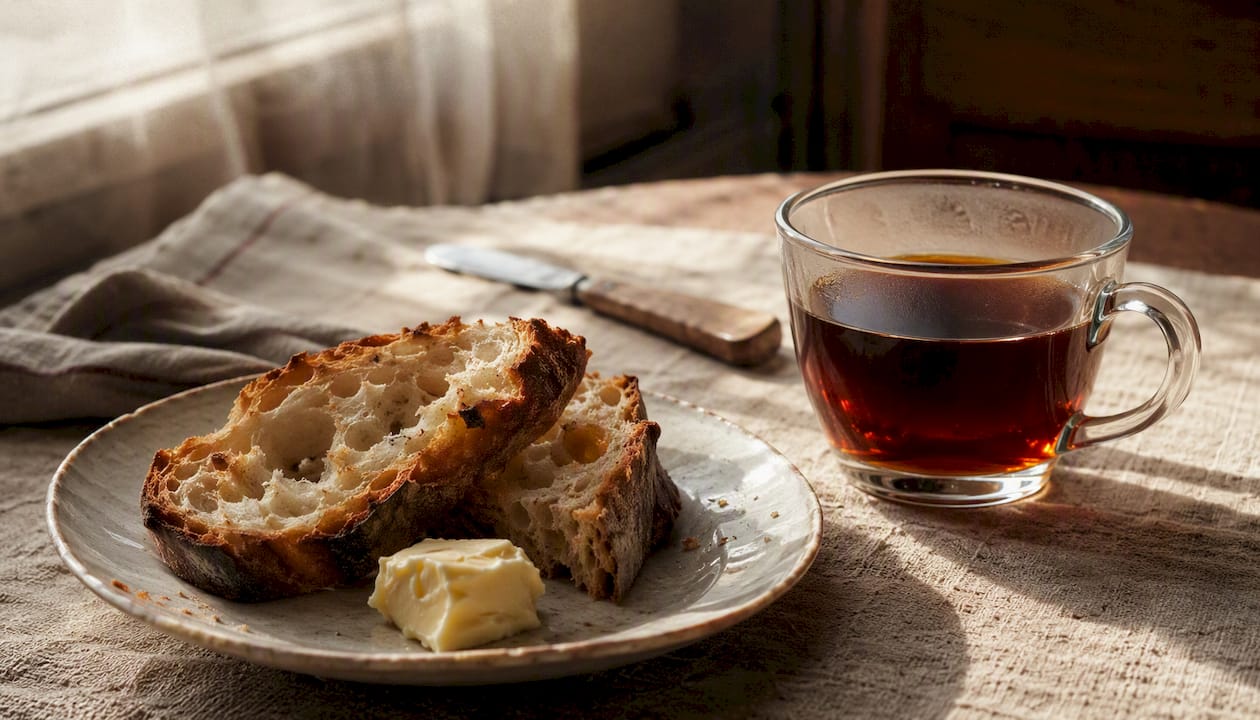
What strikes me is that many Parisian coffee shops invest in specialty beans at €30 for 250g, yet serve mundane bread alongside them. It’s an imbalance that is easily corrected, provided you find an artisan who works with active sourdough with the same rigor as the roaster. Christophe Louie, with his long fermentation process and selected ingredients, is exactly that type of partner for professionals and enthusiasts alike who want to test the combination in-store.
Ordering from Christophe Louie: options and practical steps
Christophe Louie offers a concrete alternative to the mad rush for fresh batches in Paris: order online or via click & collect, and pick up at the shop in the Marais without risking a stockout.
To order:
- Online: visit Christophelouie to choose from the available sourdough breads, panettones, brioches, and pastries.
- Click & collect: select your products on the click & collect page and pick them up directly at 12 rue Dupetit-Thouars, 75003 Paris.
- Delivery: available in Paris and throughout France via the e-commerce site.
For breakfast, opt for a sourdough bread or a brioche. For a gift, the panettone classico with candied fruit or the orange blossom panettone are the most requested items. Every product is crafted with active sourdough, slow fermentation, and ingredients selected in France or Italy for their technical quality. Order on the site or stop by the shop in the morning for the day’s batches.
Sources
- Easy sourdough bread recipe: succeeding with your first loaf
- Lesbonnesrecettes
- Homemade sourdough bread: simple method to get started
- Letiroirapain — note on the production of artisanal sourdough breads