Madeleines without artificial flavors: professional recipe, 3–12 hour rest time
Yes, you can find madeleines without artificial flavorings on the market, and you can also make them successfully at home. You just need to read the ingredient list (look for "no artificial flavorings," "organic," or real zest rather than flavorings) and, for the homemade version, follow a simple lemon recipe with chilling time and thermal shock. This is exactly the approach championed by an artisan bakery like Christophe Louie.
In brief:
- The claim "no artificial flavorings" must be backed up by an ingredient list to guarantee the absence of synthetic or reconstituted flavors.
- Using organic citrus zest or natural extracts, such as vanilla or orange blossom water, allows you to add flavor without synthetic additives.
- The success of a madeleine depends on resting the batter, the baking temperature, and thermal shock to achieve the famous hump.
- Extended fermentation and a metal mold are essential for ensuring a moist texture and a beautiful rise.
- Rigorous artisan production prioritizes raw ingredients, controlled sourcing, and precise labeling, guaranteeing the absence of artificial flavorings.
Table of contents
- What does "no artificial flavorings" mean on a label?
- How to flavor a madeleine without industrial flavorings?
- Recipe for lemon madeleines without artificial flavorings
- How to achieve the hump and store your madeleines without additives?
- Why does an artisan bakery better guarantee the absence of artificial flavorings?
- What you really need to know about madeleines without artificial flavorings
- Christophe Louie homemade madeleines, with no compromises on ingredients
- Sources
What does "no artificial flavorings" mean on a label?
The statement itself is never enough. A product can claim "no artificial flavorings" while containing a flavor reconstituted in a laboratory—chemically similar to the original molecule but extracted or synthesized from any natural source, not necessarily the fruit mentioned on the packaging. The real guarantee is found in the complete ingredient list, not in marketing slogans.
Here is what to look for before buying:
- "Natural lemon flavoring" means the aromatic molecule actually comes from a lemon; "natural flavoring" on its own could come from another plant.
- "Flavoring" without clarification is almost always synthetic.
- Additives to watch out for often carry E-numbers (e.g., E122, E102 for dyes associated with artificial flavors), which are rarely present in an honest product.
- An organic label requires the exclusion of artificial flavorings and most synthetic additives, making it a reliable benchmark, even if it doesn't guarantee taste quality on its own.
Several mixes sold in France have understood this well: an organic madeleine mix explicitly states "no colorings, no artificial flavorings, no preservatives." This is the type of formulation a reliable label should carry, without ambiguity or asterisks.
How to flavor a madeleine without industrial flavorings?
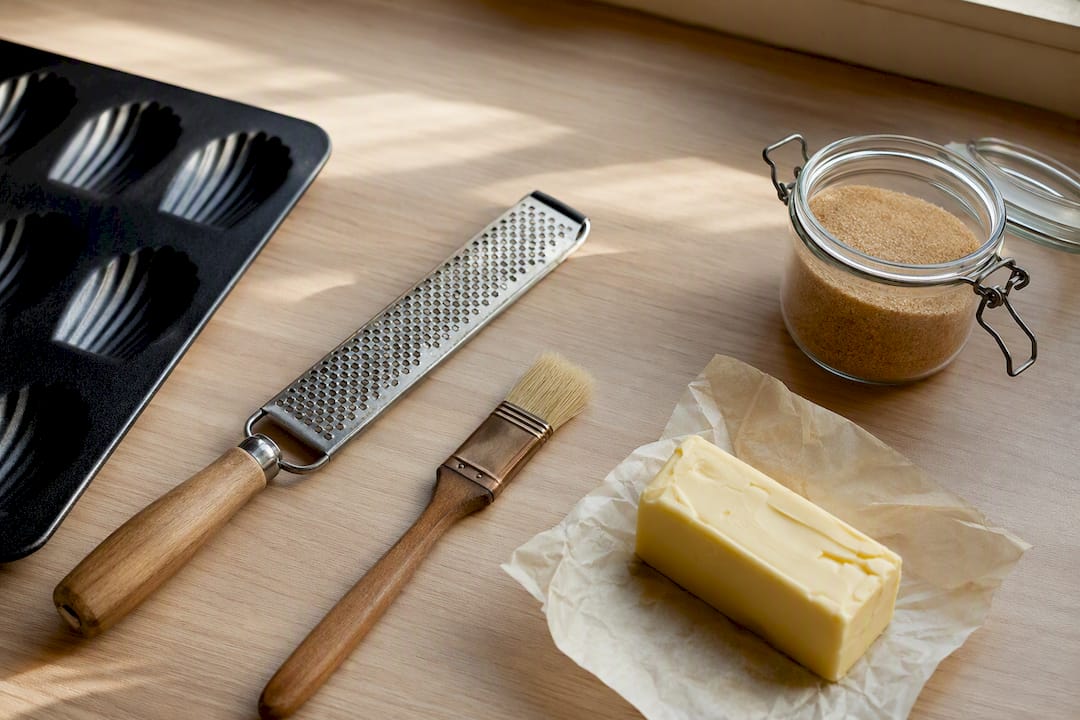
A successful madeleine relies on four simple ingredients: eggs, butter, flour, and sugar. Each plays a precise role. Melted butter (ideally an AOP like Charentes-Poitou for its more distinct taste) provides moisture and some of the flavor; eggs structure the batter; sifted flour prevents lumps that would ruin the texture.
For flavor, forget industrial extracts. Natural alternatives work just as well, and often better:
- Finely grated zest of an organic, untreated lemon or orange (the peel concentrates the essential oils).
- A split and scraped vanilla bean, or vanilla infused in melted butter.
- A hint of orange blossom water, rose water, or sweet spices like cinnamon or cardamom.
- Raspberry or pineapple purée for a fruity version, to be folded in at the end.
Pro tip: always prioritize untreated citrus for zest; treated fruits carry pesticide and wax residues concentrated on the peel, which is exactly where the flavor is.
Regarding allergens, a classic madeleine contains eggs, gluten, and dairy. For a gluten-free version, a mix of rice flour and cornstarch can replace wheat flour without betraying the texture, provided you adjust the hydration slightly.
Recipe for lemon madeleines without artificial flavorings
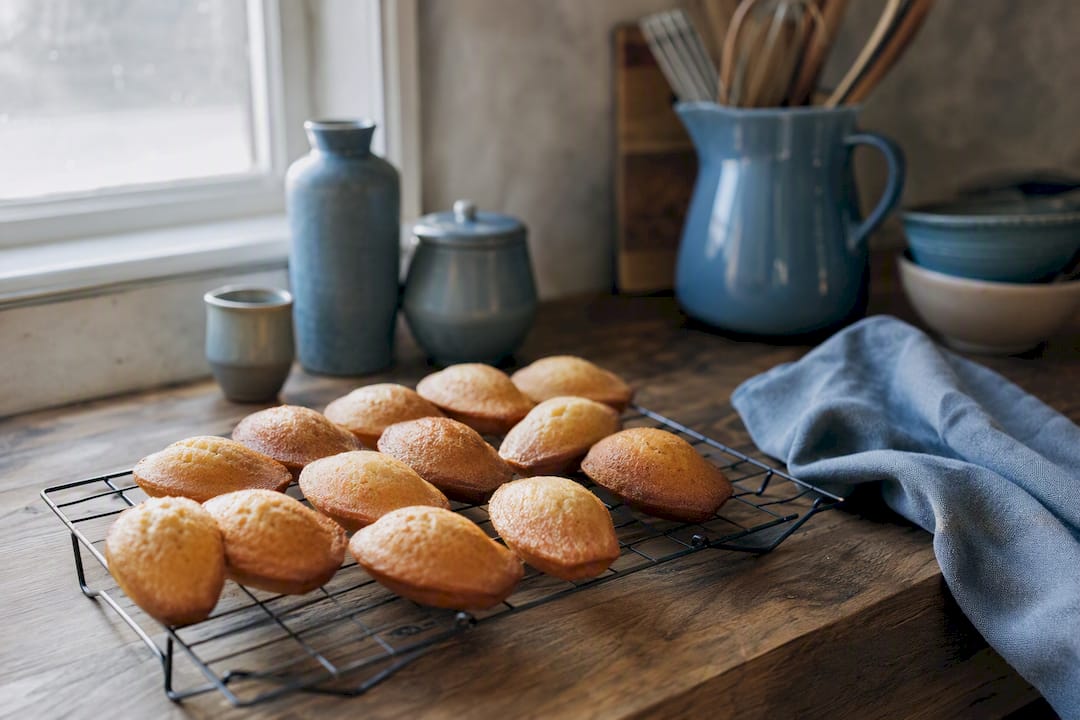
This method, inspired by techniques used by professional pastry chefs, produces moist madeleines with a real hump, without a single synthetic flavoring.
Ingredients (for about 20 madeleines):
- 3 eggs
- 150g sugar
- 150g flour
- 150g melted butter
- 1 tsp baking powder
- Zest of 1 organic lemon
- A pinch of salt
Steps:
- Whisk the eggs with the sugar until the mixture lightens and doubles in volume.
- Add the sifted flour and baking powder, folding in delicately.
- Pour in the warm melted butter, then the lemon zest and salt; mix until you obtain a smooth batter.
- Cover with plastic wrap pressed directly against the surface and let it rest in the refrigerator for between 3 and 12 hours. Traditional lemon recipes even recommend resting for up to 12 hours so the flavor fully infuses into the batter.
- Preheat the oven to 240°C (464°F), fill the buttered molds, bake for 2 minutes, then lower to 190–200°C (375–390°F) and continue for 8 to 10 minutes.
- Unmold while warm onto a rack.
For variety, replace the lemon zest with orange blossom water or raspberry purée, keeping the same proportions. Never try to "boost" the flavor with store-bought extract; adjustments should be made through the amount of zest or resting time, never through additives. Expect about 20 minutes of preparation, an ideal overnight rest, and 12 minutes of baking.
How to achieve the hump and store your madeleines without additives?
The famous hump is not a mystery: it is a matter of temperature and resting time. The thermal shock—a very hot oven at the start followed by a lowered temperature—forces the cold batter to swell abruptly in the center. This is exactly the logic described by pastry chef Fabrice Gillotte in his method for moist madeleines.
A few useful benchmarks:
- Resting the batter with plastic wrap directly on the surface prevents a dry crust from forming and allows the flour to hydrate evenly, a necessary condition for a consistent hump.
- A metal mold promotes caramelization and rise better than a silicone mold, which insulates too much against the heat.
- Always butter and flour the mold, even if it is non-stick, for clean unmolding and beautifully golden edges.
Pro tip: add a teaspoon of honey to the batter to extend the moisture for several days without resorting to preservatives.
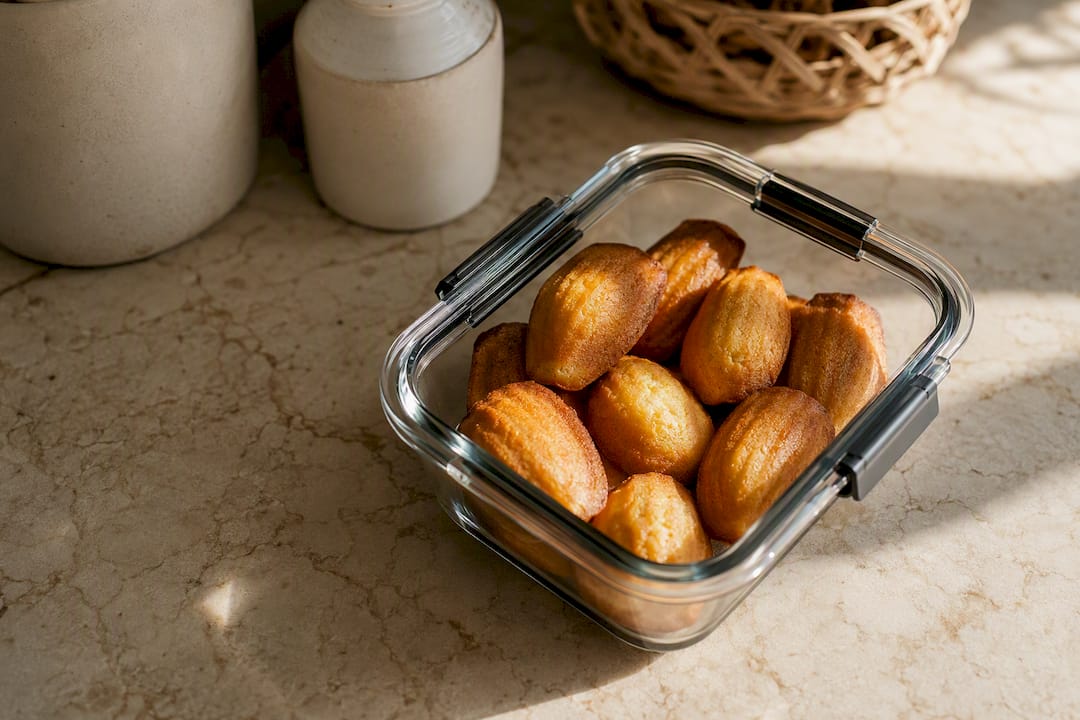
Without additives, a homemade madeleine will keep for two to three days in an airtight container at room temperature, or several weeks in the freezer once cooled. Thaw at room temperature, then place them in the oven for 30 seconds to regain the crisp edge.
Why does an artisan bakery better guarantee the absence of artificial flavorings?
A serious guarantee does not come from a word on the packaging, but from a method. Christophe Louie, a Parisian house located in the Marais, is led by a pastry chef who worked at Le Jules Verne and La Grande Épicerie de Paris, known for his work with natural sourdough and long fermentation applied to his entire range, including madeleines.
This rigor is reflected concretely:
- Direct selection of suppliers rather than sourcing standardized aromatic powders.
- Internal recipes built around raw ingredients, zest, and real vanilla, never synthetic extracts.
- Clear labeling on the website and in the physical boutique, with no ambiguity regarding composition.
The madeleines are available at the boutique in the Marais or for order on the house's website, a format that directly addresses the need for pastries without artificial flavorings without having to decipher a label yourself.
What you really need to know about madeleines without artificial flavorings
Common wisdom suggests you must choose between blind trust in a label and systematic suspicion of any industrial product. Both stances are lazy. An organic label rules out synthetic flavorings by definition, but it says nothing about the technique, the resting time, or the quality of the butter. A madeleine can be perfectly compliant on paper and completely bland in the mouth.
What artisan experience teaches, and few articles highlight, is that resting the batter matters almost as much as the choice of flavor. A batter rested for twelve hours develops a rounder, more integrated lemon flavor than a rushed batter rested for three hours, even with the exact same zest. Most quick recipes in circulation sacrifice this time to go faster, and that is precisely what drives some manufacturers to compensate with more powerful flavorings.
Priority number one for anyone who wants real, unadulterated madeleines: read the label to the very end, and if you are baking, never compromise on resting time.
— Christophe
Christophe Louie homemade madeleines, with no compromises on ingredients
Christophe Louie applies the same level of expectation to his madeleines as he does to his sourdough panettones: raw ingredients, rigorous sourcing, and a range of natural flavors—orange blossom, lemon, raspberry, pineapple—without ever resorting to synthetic flavorings.
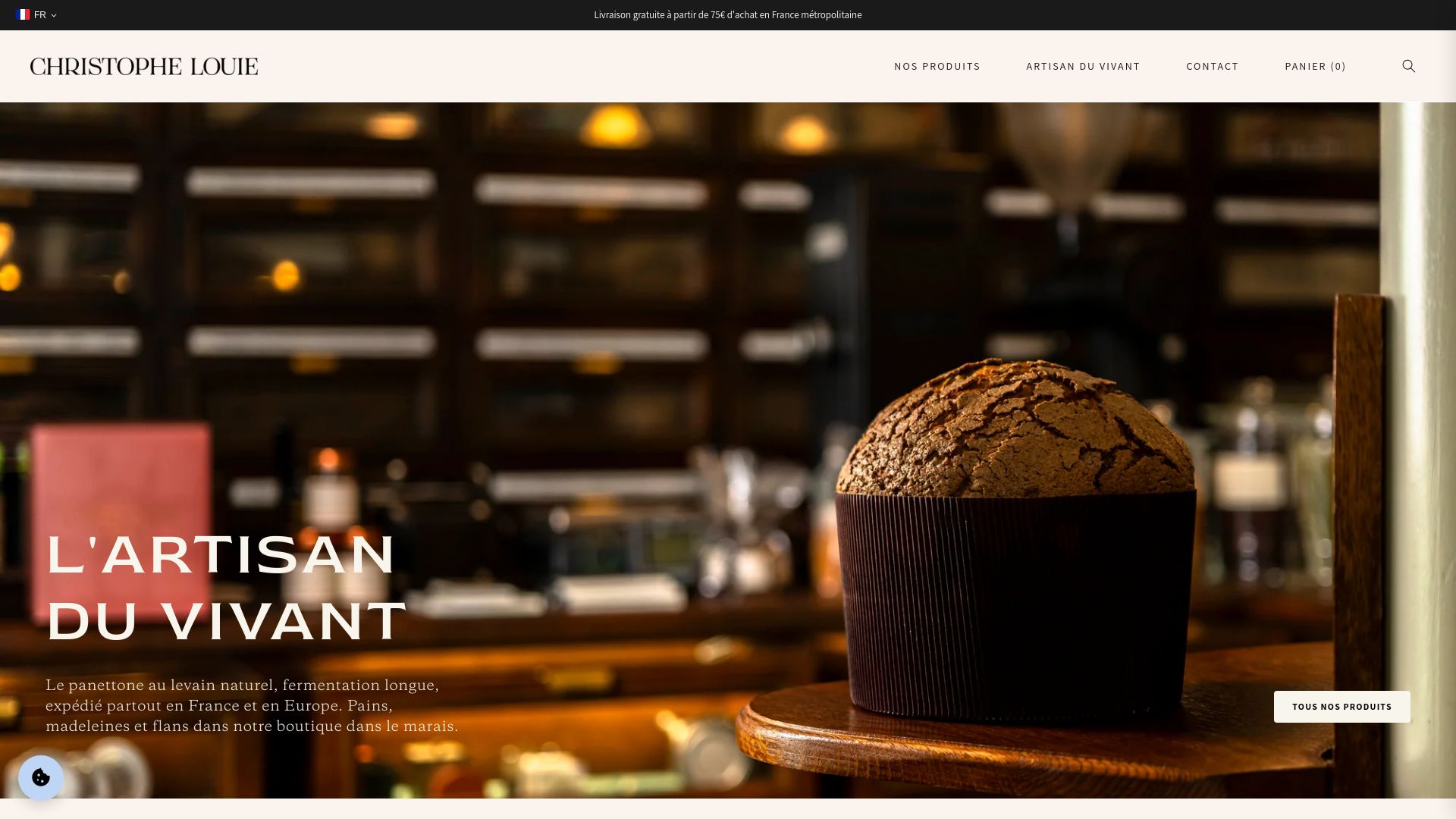
The madeleines are available at the boutique in the Marais, via Click & Collect, or for delivery through the house's e-commerce site. Each flavor follows the same logic as the recipe detailed above—real zest, long rest, mastered baking—with complete traceability regarding the choice of raw materials, from butter to flour. For those who enjoy more original flavors, a combination like the maca, coconut, and lemon fudge clearly illustrates that you can create a distinct flavor profile without ever touching artificial flavorings.
Want to find this level of quality across the entire range? Browse all the house's products and place your order online or in the boutique.
Sources
- Madeleine mix 130g | Baking aids
- Lemon madeleines | Marmiton
- Moist madeleine recipe — Fabrice Gillotte