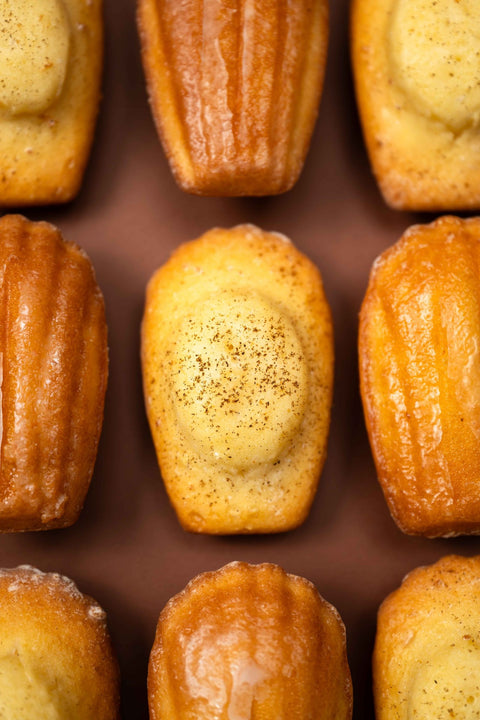
Madeleines and tea: the method and pairings that really work
To succeed at making tea-scented madeleines, there is only one method that truly counts: infusing the tea directly into the milk, letting the batter rest for several hours in the cold, and then inducing a thermal shock in the oven to obtain the characteristic hump. An experienced pastry chef applies this principle of slow fermentation to their entire artisanal production. The recipes and pairings that follow detail every step, from the infused milk to the choice of tea to serve alongside.
In brief:
- The tea-infused batter must rest for at least one hour, ideally between 12 and 24 hours, to optimize texture and rise.
- The madeleine’s characteristic hump results from a thermal shock between cold batter and a very hot oven, starting at 220°C then reducing to 180°C.
- Using a metal mold improves thermal conduction and strengthens the effect of the thermal shock to achieve the famous hump.
- The choice of tea must pair well with the richness of the batter, for example, an Earl Grey with a plain madeleine or a matcha for a low-sugar version.
- For optimal enjoyment, moderate your daily consumption of madeleines and favor low-caffeine teas in the evening, especially for children and pregnant women.
Table of contents
- Madeleine and tea recipe: precise ingredients and steps
- Quick variations: matcha, chai, orange blossom, and honey
- Why thermal shock creates the perfect hump
- Which tea to choose to accompany a madeleine?
- How many madeleines per day, in moderation
- What artisanal experience changes in the recipe
- Where do madeleines come from?
- Tea madeleines around the world
- Which tea to drink depending on the time of day
- What the real difficulty of madeleines reveals
- Want to taste without heading to the stove?
- Sources
- Frequently asked questions
Madeleine and tea recipe: precise ingredients and steps
The basis of a good tea-flavored madeleine relies on a well-measured infused milk, not just adding tea powder to the batter. Here are the proportions that work for about twenty classic madeleines.
Ingredients:
- 125 g flour
- 125 g butter
- 110 g sugar
- 2 eggs
- 5 g baking powder
- 45 to 50 g whole milk
- 5 to 7 g loose-leaf tea (Earl Grey, black tea, or green tea depending on the desired result)
- 1 pinch of salt
Step-by-step preparation:
- Bring the milk to a boil, remove from heat, add the tea, and let it steep covered for 20 to 30 minutes. Strain to remove all leaves, otherwise the batter will retain an unpleasant bitterness.
- Melt the butter and let it cool. Melted butter rather than room-temperature butter incorporates better into this type of liquid batter and avoids lumps.
- Whisk the eggs with the sugar until the mixture lightens slightly, without trying to make it frothy like a sponge cake.
- Add the sifted flour with the baking powder and salt, then the cooled infused milk, and finally the melted butter. Mix just enough to combine, never more.
- Cover with cling film and place in the refrigerator. A rest of one hour minimum works, but the result improves significantly between 12 and 24 hours, as the flour hydrates and the fats stabilize.
- Preheat the oven to 220°C. Fill the molds with cold batter, place in the oven, then immediately lower the temperature to 180°C. Count on a baking time of about ten minutes depending on the power of the oven.
The contrast between the chilled batter and the heat of the oven is what triggers the famous hump. We'll return to that just after.
Quick variations: matcha, chai, orange blossom, and honey
Three variations lend themselves particularly well to the exercise, each with its own adjustment logic.
Matcha madeleines. Here, no infusion: work with powder, at a rate of one level teaspoon per 100 g of flour, sifted with the flour to avoid lumps. Reduce the sugar by about 10 to 15 g, as matcha is easily overwhelmed by a batter that is too sweet. Same baking, about 9 to 10 minutes at 200°C after the cold rest.
Chai madeleines. Infuse the milk with a chai blend (cinnamon, cardamom, ginger, pepper) for 15 minutes covered, then strain carefully. Since spices are powerful, keep the standard sugar dosage, otherwise the result becomes cloying.
Orange blossom and honey madeleines. Replace part of the sugar with liquid honey and add a teaspoon of orange blossom water to the warm milk, this time without tea infusion. The batter, denser with the honey, often requires 1 to 2 minutes of extra baking time.
For finishing, a grating of citrus zest on the still-warm madeleines or a veil of powdered sugar is enough to personalize without distorting the taste of the tea. The Christophe Louie house offers its own orange blossom madeleine for anyone wanting to compare a professional result to their home version.
Why thermal shock creates the perfect hump
The hump that distinguishes a good madeleine from a flat one is not a baking coincidence. It comes from a brutal temperature gap between cold batter and a very hot oven, which causes the batter to rise suddenly before the structure sets.
| Step | Parameter |
|---|---|
| Cold rest | 1 hour minimum, 12 to 24 hours ideal |
| Oven preheating | 220°C |
| Baking temperature | Lowered to 180°C as soon as placed in the oven |
| Total baking time | about ten minutes |
| Mold type | Metal, rather than silicone |
Long rest in the refrigerator hydrates the flour and stabilizes the fats, which strengthens the thermal shock effect. The batter can also be kept for 2 to 3 days in the cold, allowing you to prepare in advance and bake only the desired quantity.
Metal molds remain preferable to silicone: they conduct heat better and accentuate the thermal contrast that makes the batter rise.
Pro tip: Never mix the batter with an electric mixer once the flour is added. A hand whisk and a few motions are enough; over-mixing develops gluten and creates a compact crumb instead of a stringy, tender one.
Which tea to choose to accompany a madeleine?
- Earl Grey and plain madeleine: the bergamot of the tea echoes the butter, a classic and reliable pairing by resonance.
- Matcha and low-sugar madeleine: the vegetal notes of matcha fade if the pastry is too sweet; it is better to reduce the sugar in the recipe to let the tea shine.
- Spiced Oolong and honey madeleine: the roasted notes of oolong contrast pleasantly with the sweetness of the honey.
- White tea and orange blossom madeleine: two delicate profiles that do not compete with each other.
- Assam and chocolate or chai madeleine: a full-bodied tea that holds up against a denser batter.
As for steeping, count on 3 to 4 minutes at 85°C for an Earl Grey, 2 minutes at 70°C for a matcha, and up to 5 minutes at 95°C for an Assam. An often-overlooked point: avoid sweetening the tea itself when accompanying an already sweet pastry; the pairing quickly becomes cloying rather than balanced.
How many madeleines per day, in moderation
A madeleine remains a sweet and fatty pastry. Health authorities recommend limiting this type of product daily and favoring a varied snack of bread, fruit, and dairy products most of the time. Regarding tea, it is advised to moderate caffeine, which can disturb sleep and reduce the absorption of plant-based iron, particularly for children and pregnant women, for whom an herbal tea remains the best alternative.
What artisanal experience changes in the recipe
Christophe Louie has built his house around a simple conviction: the consistency of an artisanal gesture counts for more than the sophistication of a recipe. Regarding madeleines, just like sourdough panettone, he applies the same principle of long fermentation and precise temperature control. Concretely, this means testing a portion of batter on a tray before launching the entire batch to adjust the baking time for your own oven. The house details its complete method in an article on madeleines without artificial flavors, with resting times ranging from 3 to 12 hours depending on the recipe.
Where do madeleines come from?
The origin of the madeleine remains disputed, but the most widespread version locates it in Commercy, in Lorraine, in the 18th century. Legend attributes its creation to a young servant named Madeleine, who reportedly prepared this small shell-shaped cake for Duke Stanislas Leszczyński, then Duke of Lorraine and father-in-law of Louis XV. Seduced, he introduced it to the court at Versailles, where the pastry quickly gained popularity.
Marcel Proust did much more for the notoriety of the madeleine than any pastry chef: in In Search of Lost Time, the famous scene of the madeleine dipped in linden tea fixed the image of a pastry associated with memory and slow enjoyment forever. It is likely no coincidence that the madeleine and tea remain, more than a century later, one of the most natural pairings in French pastry.
The shell shape comes from the traditional ridged metal mold, still used today, which provides both its characteristic pattern and its ability to conduct heat well during baking. This dual function explains why pastry chefs continue to prefer metal over silicone, centuries after the recipe appeared.

Tea madeleines around the world
Outside of Lorraine, the madeleine has traveled and adapted to local ingredients, particularly in Asia, where the pairing with tea takes on a different dimension. In Japan, versions based on matcha sometimes incorporate red bean paste or yuzu, a local citrus, to strengthen the link with traditional green tea ceremony codes. The texture remains close to the French madeleine, but the aromatic profile leans closer to tea ceremony pastries.
In Great Britain, the afternoon tea culture gave birth to variants of madeleines infused with Earl Grey or Breakfast Tea, often served with jam or cream, as a continuation of the afternoon tea ritual. In the United States, some bakeries offer chai latte madeleines, which use the spices of Indian tea while keeping the original moist texture.
These variants do not replace the classic recipe; they enrich it. The principle remains identical everywhere: infuse the tea in a fatty liquid (milk or butter), respect a cold rest, and manage the thermal shock during baking.
Which tea to drink depending on the time of day
The choice of tea to accompany a madeleine depends as much on the time of day as on the profile of the pastry. In the morning, a full-bodied black tea like Assam or an English Breakfast holds up better against a buttery madeleine and awakens you without excessive aggression, provided you do not exceed one or two cups to remain within caffeine moderation guidelines.
In the mid-afternoon, the traditional snack time, Earl Grey or a lighter Darjeeling tea are particularly suitable: their complex aromatic profile accompanies a plain or orange blossom madeleine without crushing the delicate flavors of the butter.
In the evening, it is better to turn to a lightly steeped tea or an herbal tea, especially for those sensitive to caffeine. Rooibos or verbena infusion pair very well with a honey madeleine without disrupting sleep. This is also the preferred option for children or pregnant women, who must moderate their caffeine intake regardless of the time of day.
Between the two, matcha lends itself well to a break in the early afternoon: its theine, more progressive than that of coffee, provides a boost of focus without the nervous spike associated with a strong espresso.
What the real difficulty of madeleines reveals
Most online recipes present the madeleine as an easy, almost trivial cake. This is misleading. The real difficulty is not in mixing the ingredients, but in respecting time: the tea infusion time, the batter resting time, the exact timing of the thermal shock. Many failures come from batter that is put into the oven too soon, still warm, or from an oven that is not turned down quickly enough after baking begins.

Another underestimated point: the tea-madeleine pairing is rarely thought of in reverse. Often, we choose the tea last, almost out of habit, whereas the profile of the tea should sometimes dictate the sugar proportions of the recipe itself. A madeleine intended for a full-bodied oolong does not require the same balance as a madeleine intended for a subtle white tea.
If you take away only one thing: master the chilling period before worrying about the flavors. Well-rested batter can compensate for dosage imperfections. A botched batter will never be saved by a good tea, no matter how well-chosen it is.
— Christophe
Want to enjoy them without hitting the stove?
All the previous recipes require time, a reliable oven, and a few attempts before finding the right setting. Christophe Louie offers a direct alternative: artisanal madeleines crafted according to the same principles of long fermentation and rigorous selection of raw materials, available without going through the trial-and-error stage.
The house, located in the Marais district of Paris, offers its pastries both in-store and online, with click & collect pickup for those who want to avoid delivery wait times. Gourmets curious about other combinations can also discover the house's latest creations, including orange blossom, matcha, and seasonal fruit variants. To taste the result of artisanal craftsmanship directly without taking out the whisk and scale, head to the madeleine boutique in Paris or order online.
Sources
- Anses opinion on updating PNNS dietary guidelines
- The secret of thermal shock for a madeleine hump (LesGourmands2-0)
- Guide to tea and pastry pairings (La théière de Lulu)
Frequently asked questions
Is it good to eat madeleines regularly?
A madeleine remains a sweet and fatty pastry, to be consumed in reasonable quantities rather than daily. The PNNS (French National Nutrition and Health Program) recommends prioritizing a varied snack and reserving pastries for occasional consumption.
What are the benefits of tea paired with a madeleine?
Tea provides antioxidants and theine that is released more gradually than the caffeine in coffee, making it a suitable accompaniment for a gourmet break. Paired with a madeleine, it helps balance the richness of the butter thanks to its natural astringency, serving a more digestive than strictly nutritional role.
How to compose a sweet-and-savory appetizer around the madeleine?
For an appetizer format, opt for mini savory madeleines with parmesan or herbs, served alongside classic sweet versions to vary the profiles. Pairing them with a light tea, such as a white tea or a lightly infused oolong, allows you to transition from savory to sweet without a jarring change in taste.
How many madeleines can one eat per day without overindulging?
There is no official limit set for the number of madeleines, but nutritional guidelines suggest limiting sweet and fatty products on a daily basis rather than depriving oneself completely. Two to three madeleines occasionally, rather than every day, remains a good measure of common sense.
Do you really have to let the batter rest in the refrigerator?
Yes, resting in the fridge really changes the final result. A rest of 12 to 24 hours hydrates the flour and stabilizes the fats, which reinforces the characteristic hump and results in a more delicate, airy crumb when baked.