Sourdough bread benefits: nutrition, digestion, and health
Sourdough bread is defined as bread fermented naturally by lactic acid bacteria and wild yeasts, without the addition of industrial yeast. This slow fermentation profoundly transforms the composition of the bread: it predigests part of the gluten, reduces anti-nutritional elements, and improves the absorption of essential minerals. The sourdough bread benefits go far beyond taste: they impact digestibility, blood sugar levels, and the balance of the gut microbiota. Understanding these mechanisms allows for truly informed dietary choices.
What are the benefits of sourdough bread for digestion?
Sourdough fermentation measurably improves the digestibility of bread. Lactic acid bacteria produce enzymes that partially break down gluten even before you consume it. Dietitian Julie Boët points out that this enzymatic predigestion eases the intestinal workload, which is particularly helpful for people with digestive sensitivities.

A key mechanism concerns FODMAPs, and more specifically the fructans present in wheat. These fermentable carbohydrates cause bloating and pain in many people suffering from irritable bowel syndrome. A fermentation process longer than 4 hours significantly reduces fructan content, thereby improving intestinal tolerance.
The reduction of immunoreactive gluten is another concrete advantage. Gluten proteins, particularly gliadins, are partially degraded during fermentation. According to a 2019 study from the University of Bari, this degradation affects up to 47% of immunoreactive gluten. This figure explains why people with gluten sensitivity (excluding celiac disease) tolerate sourdough bread better than conventional bread.
Natural sourdough or industrial yeast: what is the difference?
Industrial yeast makes dough rise in a few hours. It produces CO₂ for volume but does not trigger the lactic fermentation necessary for nutritional transformations. Natural sourdough, meanwhile, combines wild yeasts and lactic acid bacteria in a slow fermentation that truly modifies the bread's matrix. Sourdough bread made with a short fermentation or accelerated by yeast loses a large part of its benefits.
Pro tip: Ask your baker for the exact fermentation duration. Real sourdough bread ferments for at least 12 hours. Anything less, and the digestive benefits are very limited.
To identify well-fermented sourdough bread, here are the signs to look for:
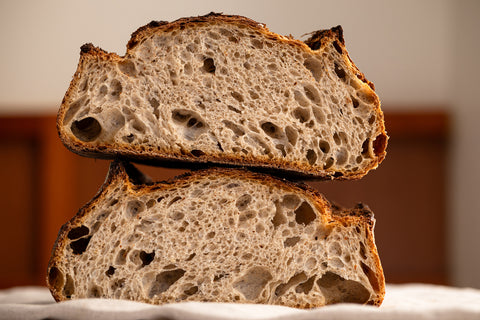
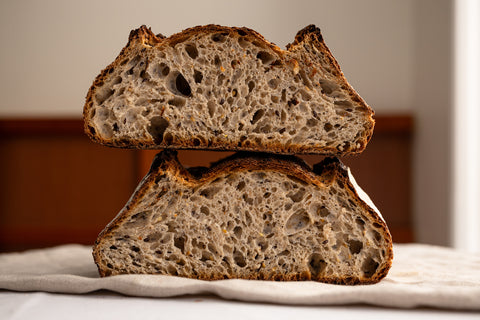
- An irregular crumb with large air pockets
- A thick, slightly cracked crust
- A slightly tangy taste, a sign of lactic and acetic acid
- A natural shelf life of 7 to 10 days, compared to 1 to 2 days for yeast bread
How does sourdough improve mineral bioavailability and blood sugar?
Sourdough fermentation reduces the phytic acid content of bread by 40 to 50%. Phytic acid, or phytate, is an anti-nutrient that binds to iron, zinc, and magnesium in the intestine, preventing their absorption. Its reduction releases these minerals and makes them assimilable by the body.
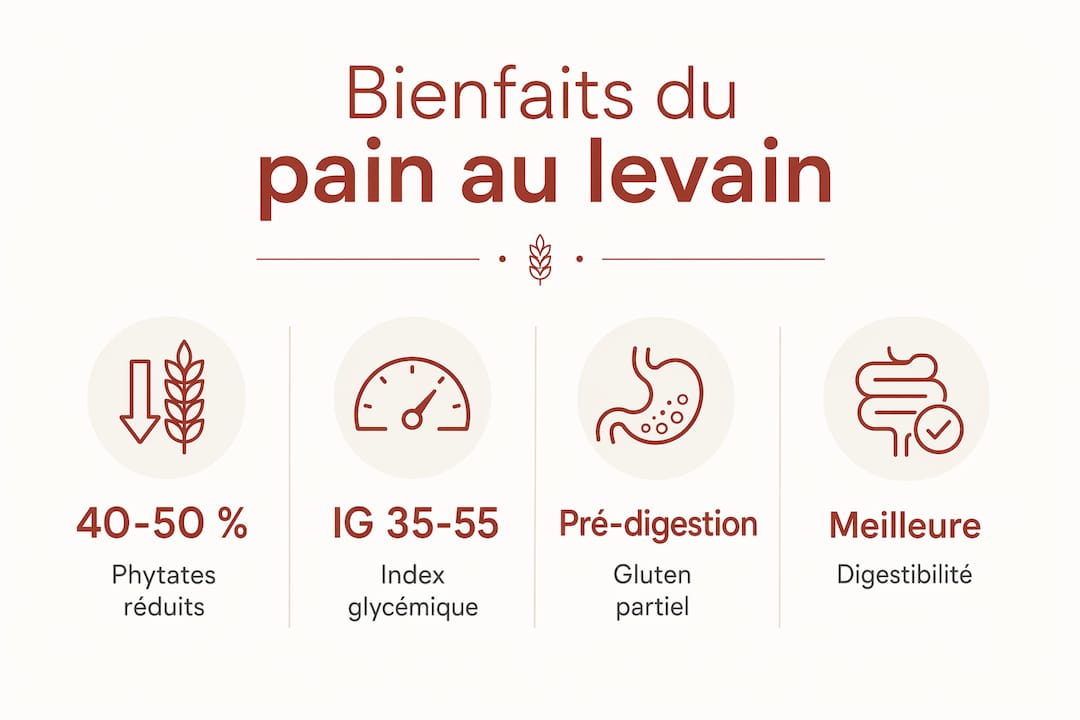
The impact on blood sugar is equally well-documented. Sourdough bread has a glycemic index (GI) of approximately 35–55, which is more than 30% lower than that of industrial whole wheat bread, which has a GI of around 70. A lower GI means a more gradual rise in blood sugar after a meal, which reduces insulin spikes and promotes better satiety.
| Type of bread | Estimated Glycemic Index | Phytate content |
|---|---|---|
| Industrial white bread | 70–80 | High |
| Industrial whole wheat bread | 65–70 | Moderate |
| White sourdough bread | 55–65 | Moderate |
| Whole wheat sourdough bread | 35–55 | Low (40–50% reduction) |
The organic acids produced during fermentation, notably lactic acid and acetic acid, play a direct role in these effects. They slow down gastric emptying and alter the structure of the starch, making it less rapidly digestible. The concrete result: more stable energy for several hours after a meal.
Pro tip: Choose sourdough bread made from whole grain or semi-whole grain flour. White sourdough bread retains a higher GI and lower fiber content, which reduces its nutritional advantages.
Is sourdough bread good for the gut microbiota?
Sourdough bread does not contain live probiotics after baking. Lactic acid bacteria do not survive baking temperatures. However, their metabolites favorably modify the bread's food matrix, with an indirect prebiotic effect confirmed by recent studies.
The lactic and acetic acids produced during fermentation act as natural prebiotics once in the intestine. They lower intestinal pH, creating an environment less favorable to pathogenic bacteria and more conducive to beneficial bacteria such as Lactobacillus and Bifidobacterium. Microbiota experts point out that these benefits come from the synergy between long fermentation and grain quality, not from some magical property of the bacteria.
To maximize the effect on the microbiota, pairing sourdough bread with other unheated fermented foods is an effective strategy. Here are some recommended combinations:
- Plain yogurt or kefir for breakfast
- Aged raw milk cheeses
- Lacto-fermented vegetables (raw sauerkraut, kimchi) as a side dish
- Miso or tamari as a seasoning
These foods provide live probiotics that sourdough bread cannot provide after baking. Together, they support the diversity of the microbiota in a complementary way.
How to choose and consume sourdough bread?
Real artisanal sourdough bread is distinguished from industrial bread labeled "sourdough" by several precise criteria. The designation "sourdough bread" is regulated in France, but some artisans accelerate fermentation with industrial yeast, which reduces the expected nutritional benefits. Vigilance is required.
Here are the criteria to check before buying:
- Fermentation duration. Ask if the fermentation lasts at least 12–24 hours. Slow fermentation is essential for reducing phytates and FODMAPs.
- Flour type. Prefer whole grain (T110, T130) or semi-whole grain (T80) flour. White sourdough bread has less beneficial effect than its whole grain counterpart, where fiber and minerals are more present.
- Absence of added yeast. Real natural sourdough does not need industrial yeast. Its presence in the ingredient list indicates a shortened fermentation.
- Visual appearance. Irregular crumb, thick crust, and dark golden color are reliable indicators of authentic fermentation.
- Shelf life. Well-fermented sourdough bread keeps for 7 to 10 days without molding, thanks to its natural acidity. A shorter shelf life suggests insufficient fermentation.
Regarding quantity, a portion of 60 to 80 grams per meal remains reasonable to enjoy the benefits without excess carbohydrates. People with celiac disease must avoid wheat sourdough bread: despite the partial reduction in gluten, it still contains an amount incompatible with this autoimmune condition.
To find sourdough bread in Paris that respects these criteria, artisanal bakeries specializing in long fermentation remain the best option.
Key points
Slow-fermented sourdough bread is the only bread that simultaneously reduces phytates, FODMAPs, and the glycemic index, provided that whole grain flour and at least 12 hours of fermentation are used.
| Point | Details |
|---|---|
| Mandatory long fermentation | A minimum fermentation of 12–24 hours is necessary to obtain real digestive and nutritional benefits. |
| Reduction of phytates | Fermentation reduces phytic acid by 40–50%, increasing the absorption of iron, zinc, and magnesium. |
| Lower glycemic index | The GI of whole grain sourdough (35–55) is significantly lower than that of industrial bread (70–80). |
| Indirect prebiotic effect | Fermentation metabolites promote a beneficial intestinal pH, without live probiotics after baking. |
| Whole grain flour essential | White sourdough retains a high GI and low fiber; whole grain flour amplifies all benefits. |
What I have learned from working with sourdough daily
Many people think that any bread labeled "sourdough" will provide them with the benefits described in studies. This is rarely the case. The reality I observe every day is that the quality of fermentation makes all the difference. Bread fermented for 6 hours with a little added yeast has almost nothing in common, nutritionally speaking, with bread fermented for 18 hours from a live sourdough starter maintained daily.
What also strikes me is the reaction of people sensitive to gluten. Several clients who have avoided bread for years are gradually reintroducing it thanks to a well-managed sourdough starter. This is not a solution for celiacs, and I state this clearly. But for undiagnosed sensitivities, the difference is often spectacular. Dr. Gérald Kierzek himself reminds us: varying food intake remains fundamental. Sourdough bread is an excellent choice, not a universal remedy.
My most concrete advice: if you make your own homemade sourdough bread, prefer ancient grains like spelt or einkorn. Their gluten content is naturally lower, and their mineral profile is richer. Combined with an active starter and long fermentation, they produce bread whose benefits are real and measurable. Grain quality and fermentation duration are the only two variables that really matter.
— Guillaume
The Christophelouie artisanal sourdough bakery in Paris
Christophelouie applies the principles of slow fermentation to its entire range, from natural sourdough breads to panettone crafted over 72 hours with a live lievito madre. Each product is based on a starter maintained daily, flours selected for their technical quality, and a fermentation process that allows no industrial shortcuts.

The bakery is located in the Marais at 12 rue Dupetit-Thouars (75003 Paris) and also offers online ordering with delivery. To discover the breadth of the artisanal range, from sourdough breads to sourdough pastries, everything is available on the site. Christophelouie is the Parisian response for those looking for a live starter, honest fermentation, and expertise passed down without compromise.
Frequently asked questions
Is sourdough bread better for digestion?
Yes. Lactic fermentation partially predigests gluten and reduces FODMAPs, which eases intestinal workload and improves digestive tolerance, especially in cases of wheat sensitivity.
Is sourdough bread suitable for people with gluten intolerance?
No, not in cases of celiac disease. Despite a partial reduction in immunoreactive gluten of up to 47%, wheat sourdough bread still contains gluten and remains discouraged for celiacs.
What is the glycemic index of sourdough bread?
The glycemic index of whole wheat sourdough bread is between 35 and 55, compared to 70 to 80 for industrial white bread. This difference promotes more stable blood sugar and better satiety after meals.
How to recognize real artisanal sourdough bread?
True sourdough bread has an irregular crumb, a thick crust, a slightly tangy taste, and naturally keeps for 7 to 10 days. The ingredient list should not mention added yeast.
Should I choose whole wheat sourdough bread instead of white?
Yes. Whole wheat sourdough bread contains more fiber and bioavailable minerals. Its phytate content is lower after fermentation, and its glycemic index is significantly lower than that of white sourdough bread.